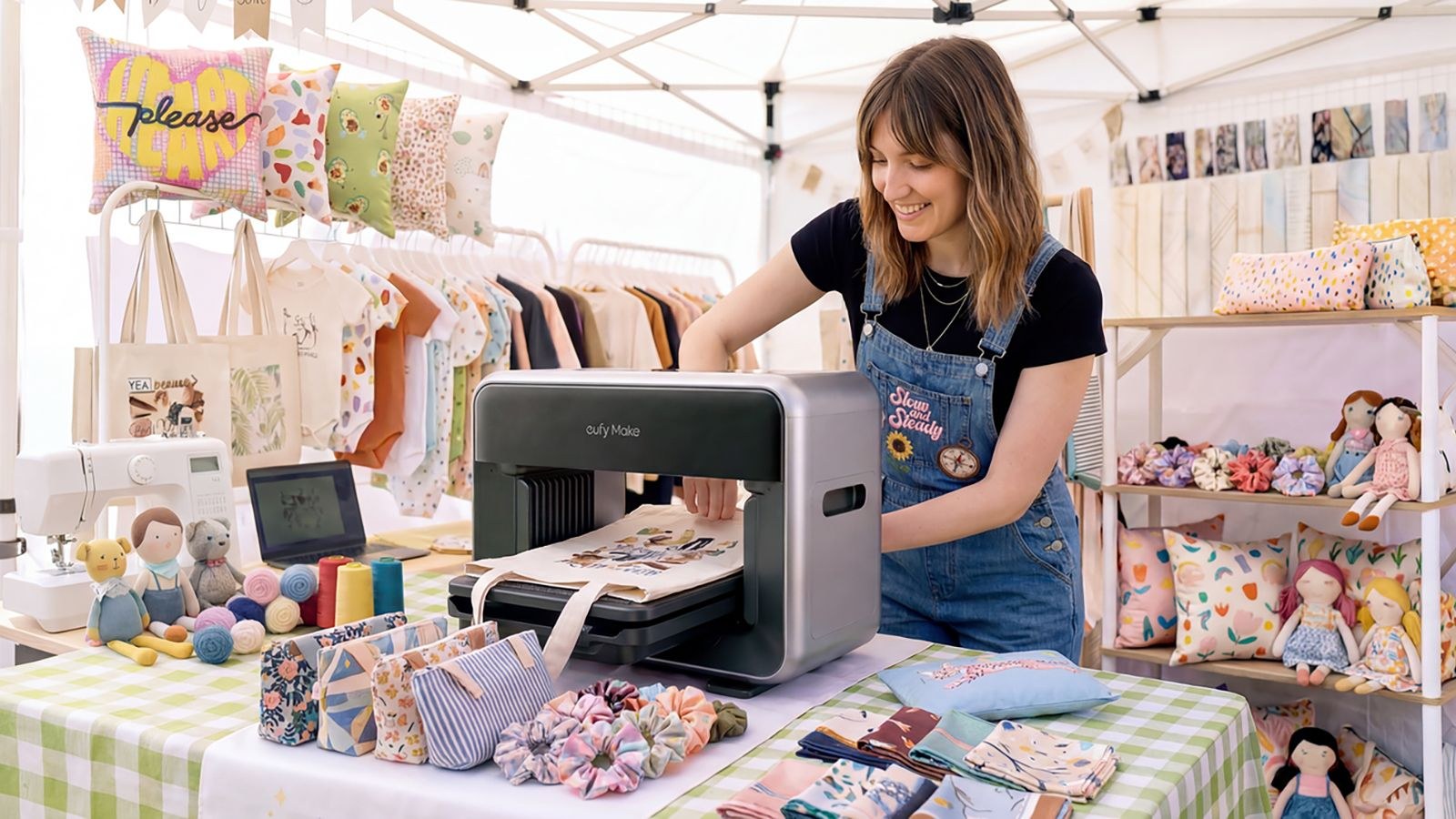
 ommercial clothing customization has always forced a miserable choice: order minimum batches of fifty identical shirts from a distant print shop or spend thousands on a refrigerator-sized industrial rig that eats an entire garage. Anker wants to break that cycle. At IFA, the company showed off a personal fabric printer under the soon-to-be-consolidated eufyMake label, condensing direct garment printing into the footprint of an everyday desktop 3D printer.
The machine supports both Direct-to-Garment (DTG) and Direct-to-Film (DTF) methods without demanding tedious chemical pretreatment for standard textiles. That means you can spray ink directly onto cotton tees or print onto transfer sheets for synthetic fabrics and tricky placements. As Anker framed it during the IFA showcase:
"Professional garment customization used to be locked inside expensive industrial machines. Now, we're bringing that magic right to your desk with a printer designed specifically for fabric printing."
Anker claims the hardware prints cleanly across light and dark textiles using a built-in top touchscreen to calibrate artwork without tethering to a dedicated RIP server.
The Real Cost of Desk Merch
Squeezing factory gear into a hobbyist chassis sounds brilliant for micro-brands and Etsy creators, but the economics of textile printing rarely stop at hardware depreciation. Specialized textile inks, wash fastness versus vinyl transfers, nozzle-clog maintenance, and indoor ventilation will dictate whether this actually belongs in a spare bedroom. Liquid textile pigment dries notoriously fast in idle printheads, meaning automated purge cycles will likely chew through proprietary cartridges whether you print daily or once a month.
Anker has not disclosed the machine's final retail price or ink bottle costs, slating the launch for the first quarter of next year. Alongside the hardware preview, Anker confirmed it is phasing out the eufyMake sub-brand to consolidate all maker tools under the core Anker umbrella, while rolling out a free firmware update for its UV Printer E1 to enable faster bidirectional passes. Promising an on-demand garment studio before sharing the cartridge pricing is classic consumer hardware theater, but for indie designers tired of outsourced bulk minimums, Anker's compact box makes the wait worth watching.