
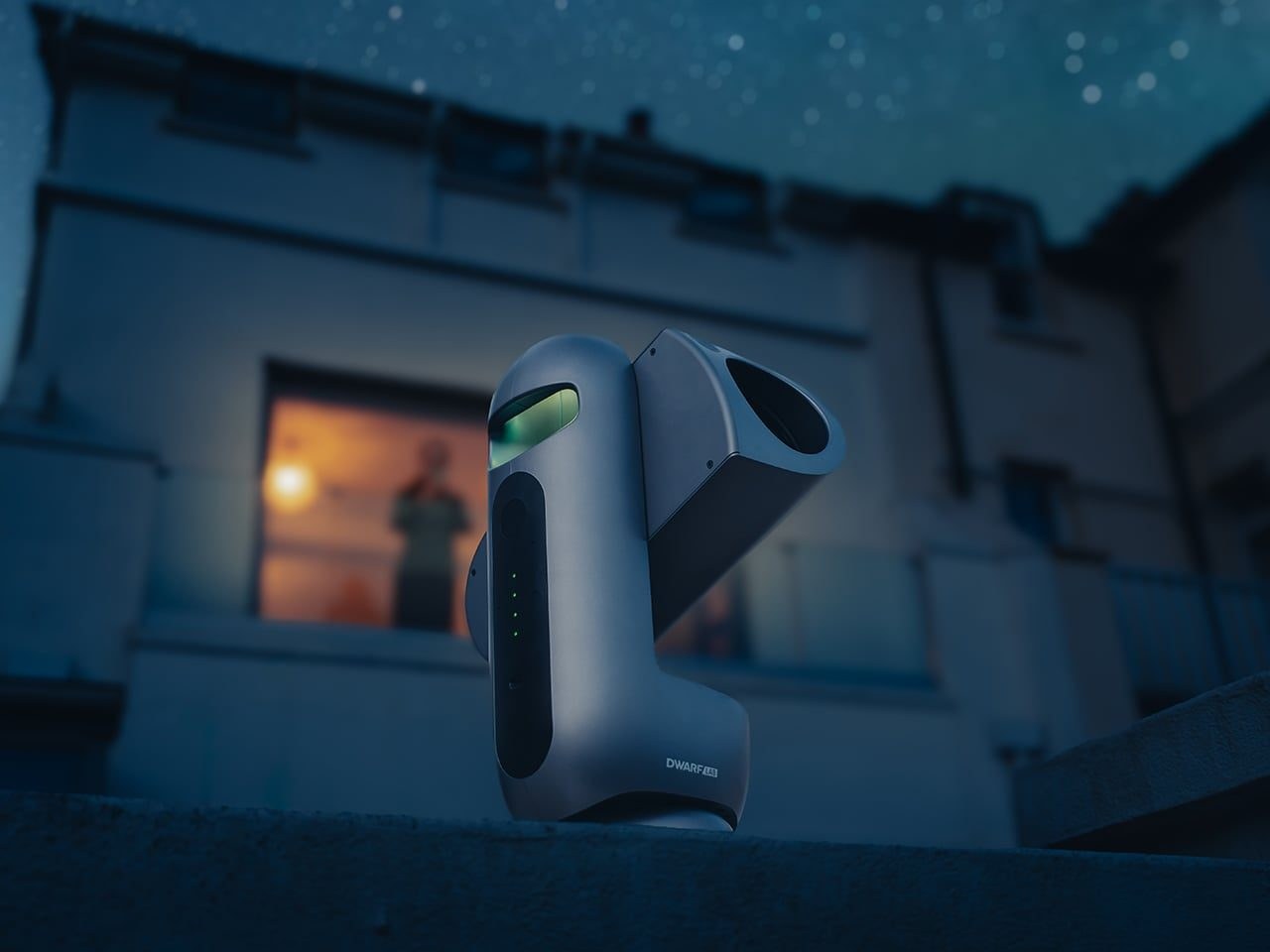
 f you have ever tried to spot a single nebula far away from city lights, you already know the drill: freezing cold, breathless fumbling with tripod screws, and a red flashlight wedged firmly between your teeth. Polar alignment—setting up a telescope to point precisely at the North Star—remains the mandatory and thoroughly tedious entry fee into the world of decent astrophotography. Without it, the earth's steady rotation turns every long exposure into a mess of smeared star trails.
DWARFLAB named its new flagship model Draco after the constellation, but the real point here is not mythology; it is the price tag and the cynical removal of routine maintenance. The device promises to save you from nocturnal optical witchcraft, but it asks for roughly fifteen hundred dollars in return. In practice, this is an attempt to squeeze professional observatory hardware into a package you can comfortably carry with one hand.
Automation Versus the Rotation of the Earth
The fundamental problem with any simple telescope on a standard mount is that our planet keeps spinning. Leave the shutter open for longer than a minute, and your image turns into mush. Dealing with this used to require a bulky stack of equatorial mounts, a guiding camera, a mess of cables, and a dedicated laptop.
Draco solves this mechanical headache differently: a CMOS sensor inside the camera physically rotates to match the movement of the sky. A separate monochrome camera tracks drift in real time and nudges the frame to keep things steady. According to DWARFLAB's specifications, the setup delivers single exposures of up to 300 seconds, while most compact rivals give up around sixty seconds.
The headline trick is a sensor that physically rotates to cancel out the sky’s spin
Inside the compact shell, DWARFLAB's engineers crammed the optics, mount, guiding system, filters, and even active cooling to keep the lenses from fogging up. For targets directly overhead, the base tilts into an equatorial mode, and the companion mobile app tells you the exact angle to set.
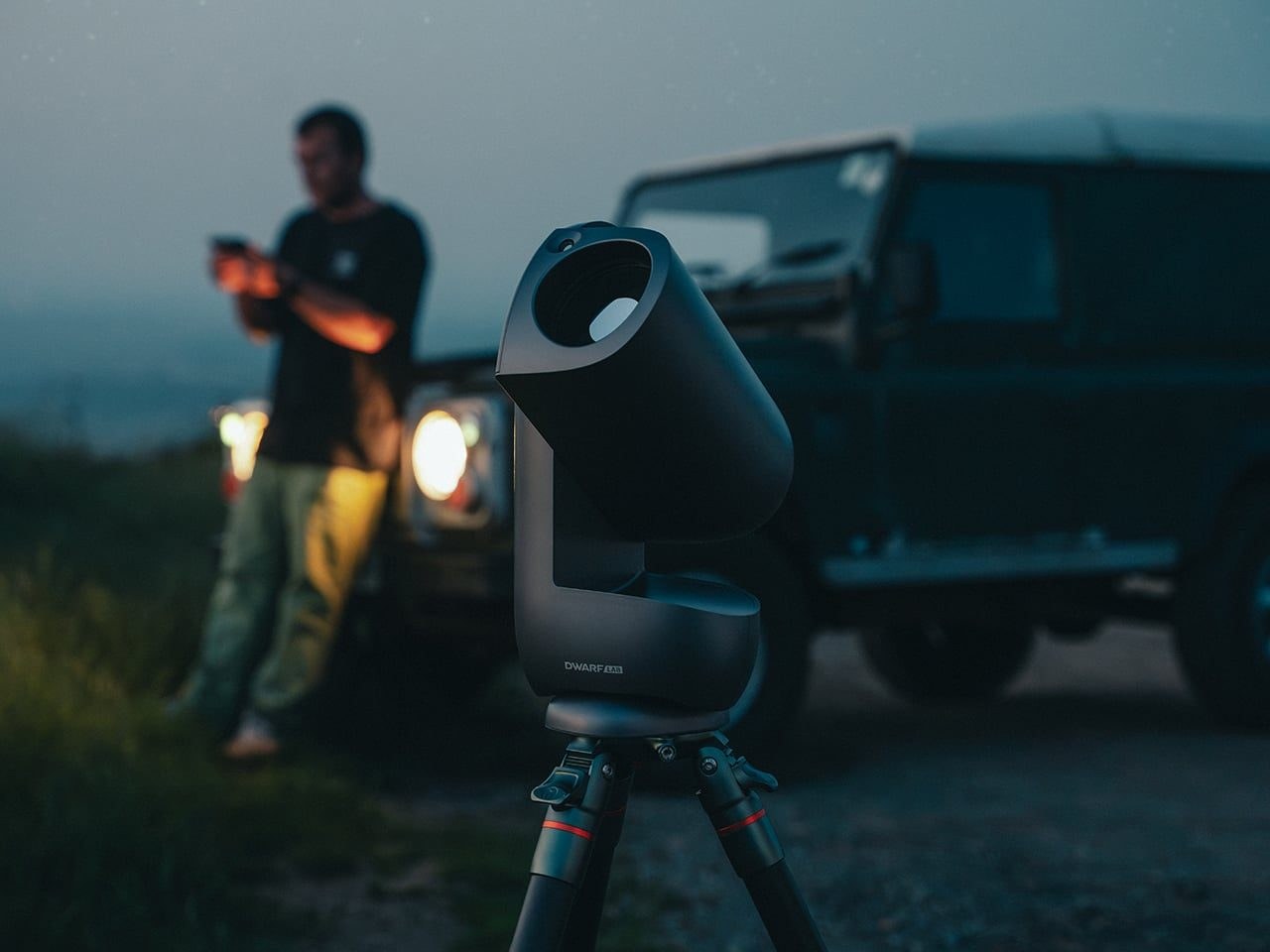
What You Get in Numbers and Dollars
When shooting faint nebulae and galaxies, the device bins pixels together to pull clean light over long stretches, then switches back to full resolution for the Moon and planets.
The SHO Edition costs $1,599 and is currently open for pre-orders, while the more basic Standard Edition priced at $1,399 is already sold out. For that kind of money, you get a filter kit designed to shoot deep-space structures straight out of the box, sparing you hours of wrestling with photo-editing software.
This is an expensive gadget for buyers who want instant results without spending years learning the optical engineering or freezing in a dark field. The heavy premium for automation is obvious, and the real cost isn't just financial—it requires putting absolute trust in an algorithm to handle your alignment in the dark.