
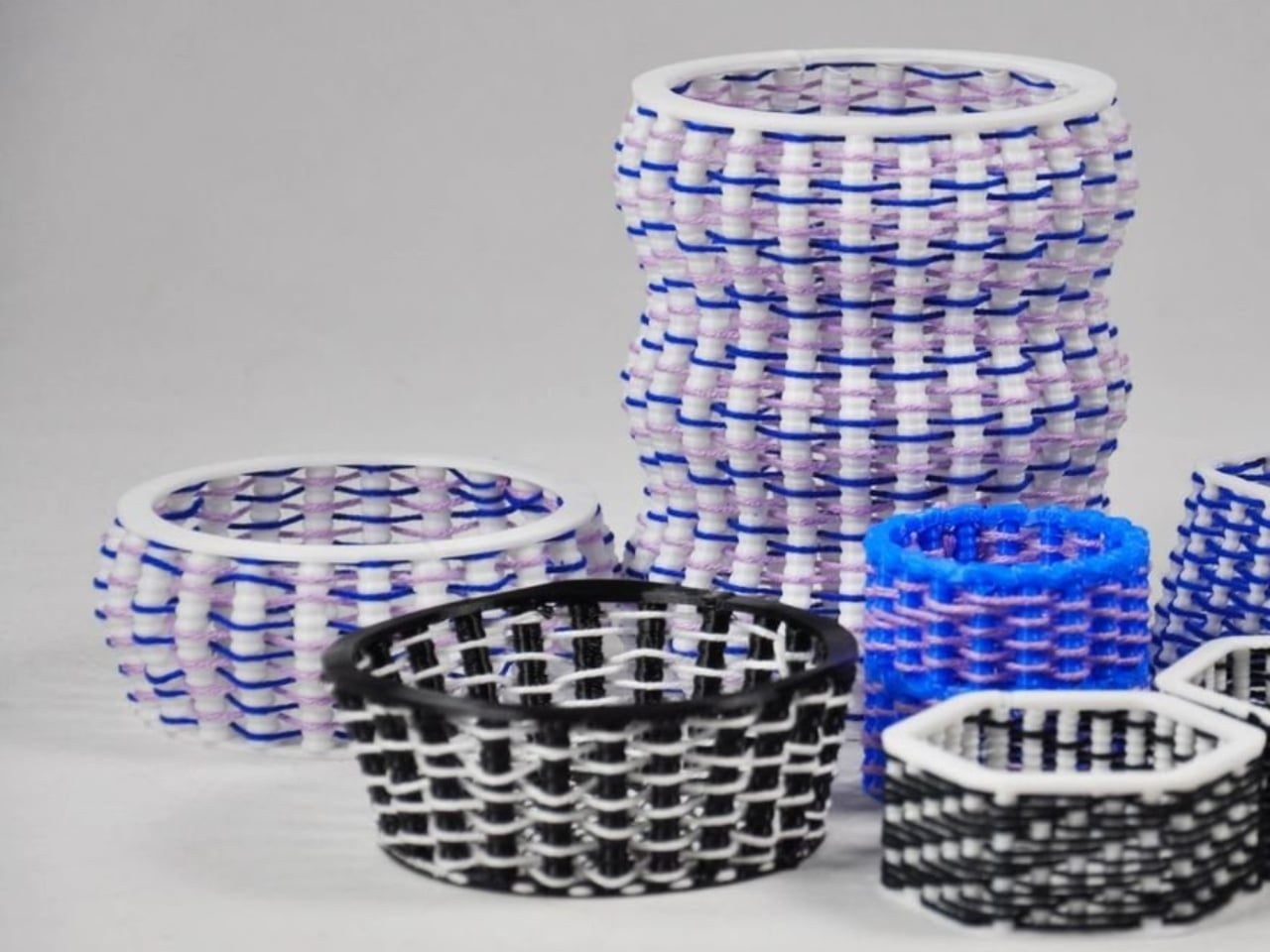
 lue and lilac yarn snakes through white plastic ribs in one of FilaLoom’s samples, giving the object a basketlike appearance that makes me want to pick it up. Buying a desktop 3D printer usually locks you into a world of rigid, utilitarian plastic parts that scream garage prototype at first touch. Industrial and computational designer Joram de Haas built FilaLoom for his master’s thesis in Integrated Product Design at TU Delft to fix that exact limitation. Instead of treating thread and plastic as separate worlds, FilaLoom lets a desktop 3D printer automatically weave yarn into printed objects. For anyone tired of smooth, lifeless plastic boxes on their desk, this project offers an intriguing bridge between digital fabrication and tactile textiles rather than another empty corporate promise about desktop manufacturing.
The prototype relies on a Bambu Lab A1 fitted with a yarn-depositing tool and a parking station. The machine builds plastic anchor points, picks up the tool, and guides yarn between them before parking the tool again to resume printing. That alternating sequence allows the structure and its textile elements to develop together, rather than requiring someone to thread a completed plastic skeleton afterward. Best of all, as Joram de Haas demonstrated, FilaLoom uses the printer’s existing movement system, with no additional electronics.
FilaLoom uses the printer’s existing movement system, with no additional electronics.
A mechanical coupling handles tool changes, while a spring-loaded spool provides adjustable yarn tension. The visual result avoids the monotonous look of standard prints: white vertical elements remain clearly legible while colored yarn establishes a contrasting horizontal rhythm. De Haas’s GitHub repository provides printable component files and Grasshopper scripts for generating compatible GCode, the instructions that direct the printer’s movements. Still, downloading a decorative planter file and pressing print is far simpler than assembling this setup, and most users will find the calibration overhead far higher than standard slicing software demands.
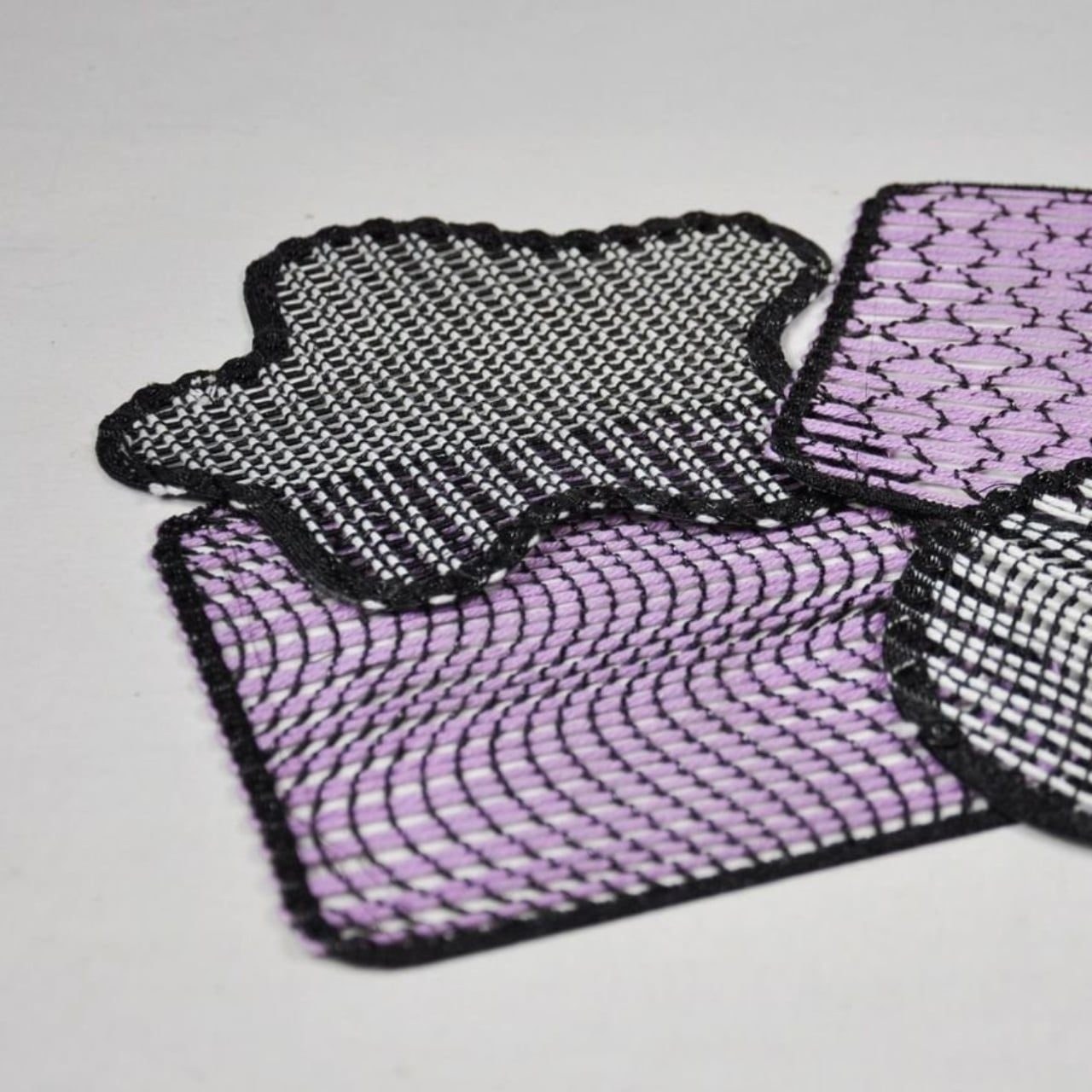
FilaLoom is a working research project, with DIY files available, rather than a finished consumer accessory. If you expect a plug-and-play gadget for your living room, you will be disappointed by the setup friction and physical trade-offs. According to the assessment of TU Delft researchers, the attachment reduces the A1’s usable combined printing-and-weaving volume to 54% of its original build volume. Yarn tension also requires careful management, because too much can deform a print or pull it off the build plate, wasting hours of filament and thread alike.
This project is not here to replace mass-manufacturing lines or serve as an instant home upgrade for casual users. Its immediate value lies in giving makers a way to test combinations they might otherwise have to assemble entirely by hand. If you have the patience to experiment with Grasshopper scripts and mechanical couplings, FilaLoom turns a standard desktop printer into a hybrid textile workstation. For everyone else, it remains a fascinating glimpse into how future hardware might finally ditch the sterile plastic aesthetic without requiring an engineering degree.