
 martphones have made taking pictures frictionless, but they have also turned our galleries into endless digital landfills of duplicate selfies and accidental pavement shots. Instead of memories, we get storage warnings.
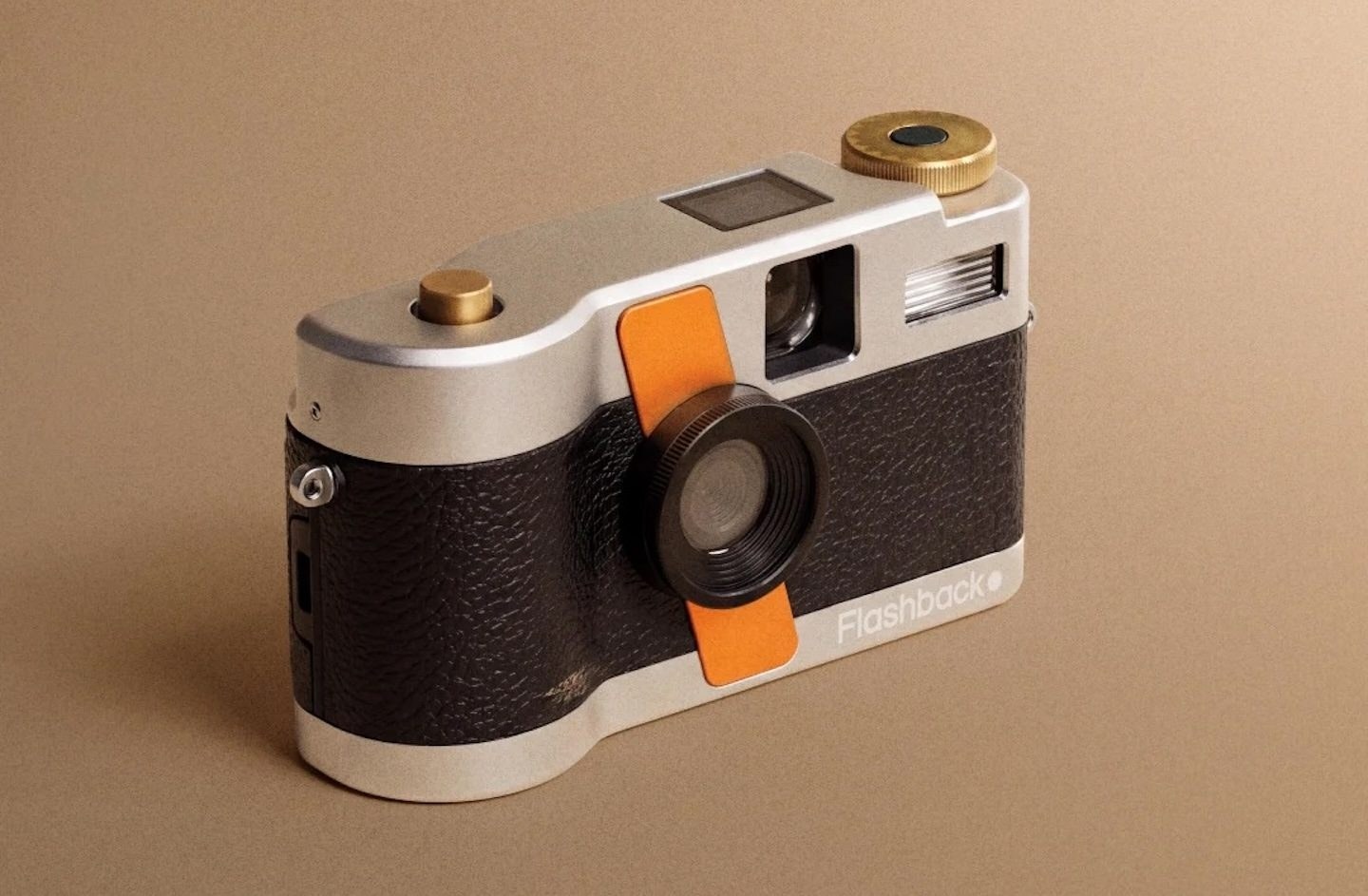
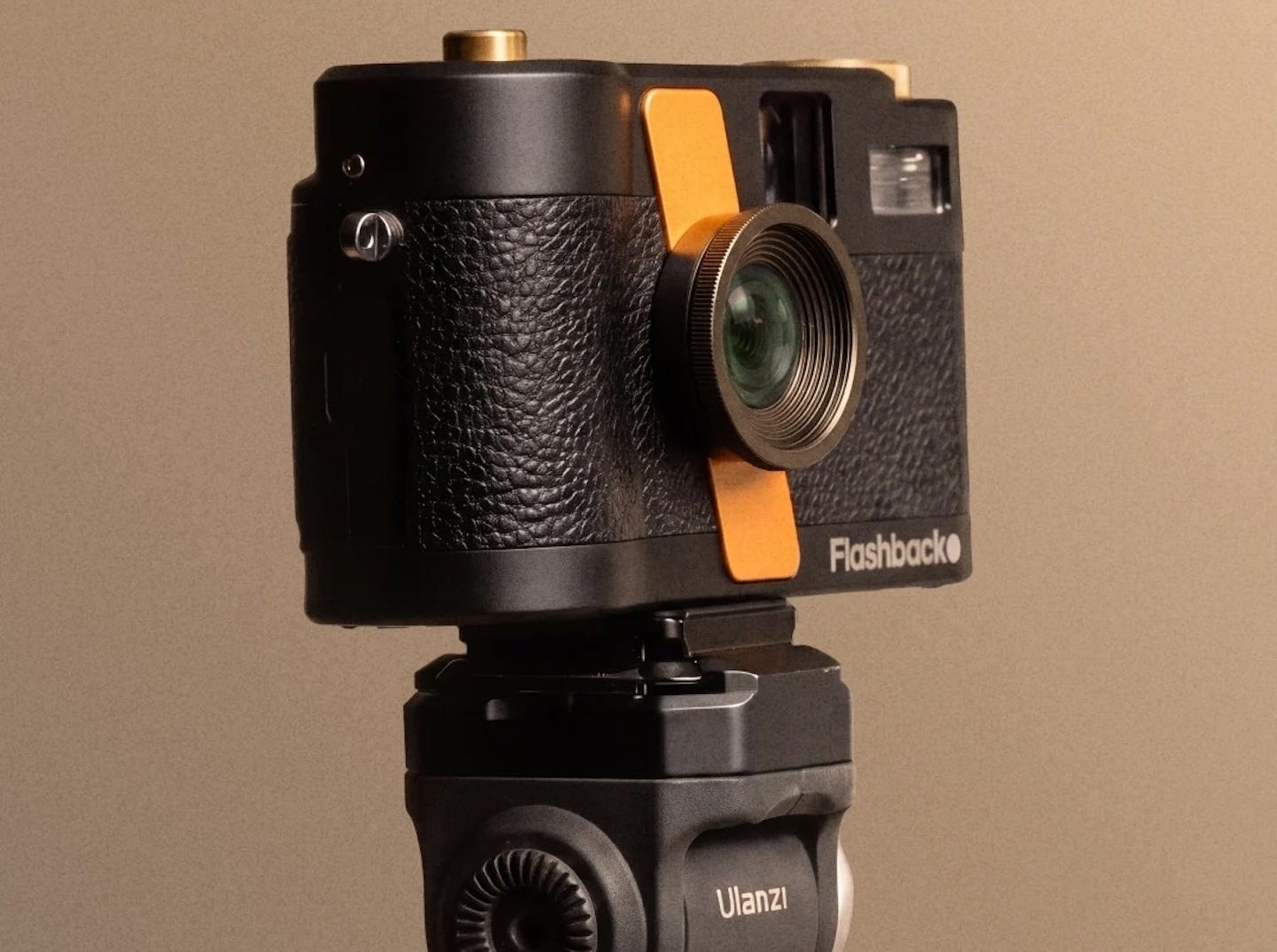
Enter the Flashback ONE75, a device that costs $179 and attempts to cure smartphone fatigue by wrapping a basic digital sensor in an aluminum body, adding a portrait-oriented viewfinder, and forcing you to manually crank a mechanical wind-on lever between shots. It captures 13-megapixel photographs, packs eight built-in film styles, a self-timer, and a tripod mount. It stores everything on internal memory and runs on a rechargeable battery rated for roughly 15 virtual rolls per charge, meaning you can finally throw away those troublesome film cartridges and memory cards.
Manufactured Scarcity on Demand
The ONE75 organizes your digital life into virtual rolls containing up to 27 exposures. A mechanical wind-on control recreates the physical ritual of film cameras, forcing you to advance between frames. But unlike actual half-frame film cameras, the ONE75 uses its 27-shot limit as a digital software constraint rather than a physical necessity, letting you simply begin another roll once your files are transferred.
The ONE75 organizes photographs into virtual rolls containing up to 27 exposures.
Flashback offers two viewing options through its companion app, where Film Camera Mode introduces a 24-hour development delay, while Digicam Mode makes photographs available right after transfer. You can move files to compatible Android and iOS devices through the Flashback app using Wi-Fi, Bluetooth, or a USB-C cable, or plug the camera directly into a computer. For those who want more editing flexibility, the ONE75 supports RAW export in DNG format, though those files must be pulled via a computer rather than the smartphone app.
An Expensive Toy for the Patient
Shelling out $179 for a digital camera that deliberately blocks you from reviewing or deleting photos on the spot is an impressive masterclass in monetizing artificial inconvenience. Buying an old compact point-and-shoot camera on the secondhand market will cost you significantly less while delivering an authentic analog experience, completely free of app subscriptions or manufactured artificial delays.
It is brilliant marketing, really: take a basic 13-megapixel digital sensor, wrap it in a metal shell, and sell the total absence of a review screen as mindful artistry. If you enjoy paying a premium for engineered frustration, this is precisely the device you have been waiting for.