
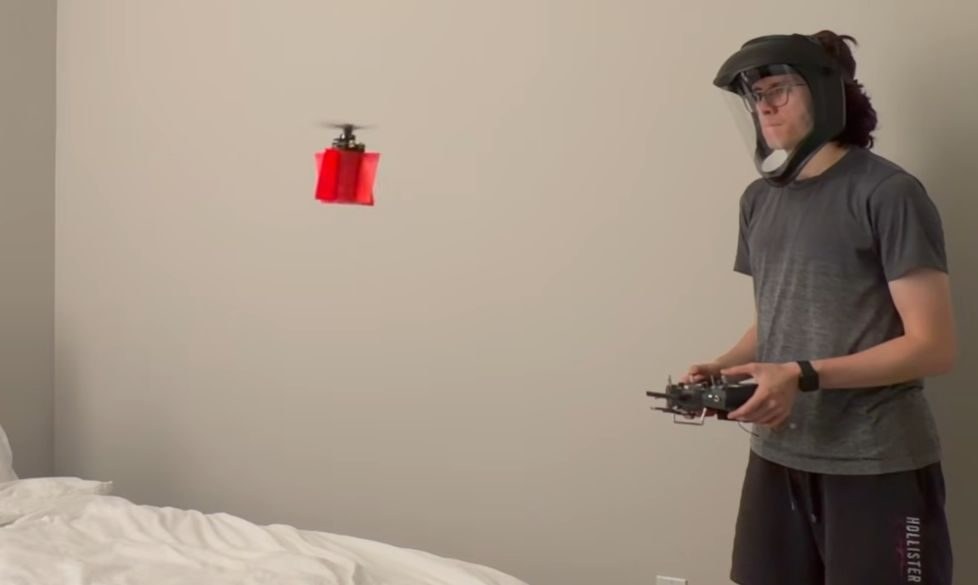
 very commercial drone you can buy relies on four spinning rotors fighting each other to stay in the air, but basic physics says you only need one. The catch is that keeping a single-propeller aircraft stable is a nightmare that defeats almost everyone who tries it. Independent enthusiast Joshua Bird decided to ignore standard manufacturing logic and built a tiny single-propeller drone from scratch, proving that garage engineering can still break established rules.
Technically all that you need in order to make a drone fly is a single motor and single propeller, though realistically it becomes basically impossible to fly it at that point. If you want to spend your money on consumer gear, you get a predictable quadcopter that handles stabilization automatically. Joshua Bird wanted something radically simpler in form, but infinitely more complicated to build.
The Engineering Behind the Madness
Making a single-propeller flying machine work requires throwing out standard drone parts and inventing custom solutions through sheer stubbornness. Joshua Bird used a hinged propeller hub that manipulates the angle of the blades in such a way that both pitch and roll can be controlled if you react quickly enough, paired with a very high RPM. Standard motor electronic speed controllers rely on back EMF to estimate position, which completely failed here because controlling the single propeller drone proved impossible using standard motor electronic speed controllers that do not directly measure the motor’s speed and position.
In the final prototype of the drone such details had to be measured directly
Getting the prototype off the ground required measuring everything directly, with super-fast adjustments to the motor’s speed only possible with custom controller code and a lot of trial and error. Even then the drone would often lose track of its position and crash once more. The breakthrough came not from better motors, but from external help: as Joshua Bird demonstrated, the solution there was to add an infrared beacon in the room and a sensor on the drone, to give it a fixed reference point.
What This Means for Your Next Purchase
If you are wondering whether this means single-propeller toys are hitting store shelves tomorrow, the answer is a hard no. This is an open-source garage experiment, not a retail product you can pick up at an electronics store. You can find the project files so far on the GitHub project page if you want to solder your own nightmares together.
Upcoming changes to the drone design involve improvements like adding a scanner to the drone so that it can autonomously use features in its environment as fixed reference points. Until those DIY navigation systems leave the workbench, stick to your four-motor quadcopter unless you enjoy watching expensive plastic parts crash into your living room floor.