
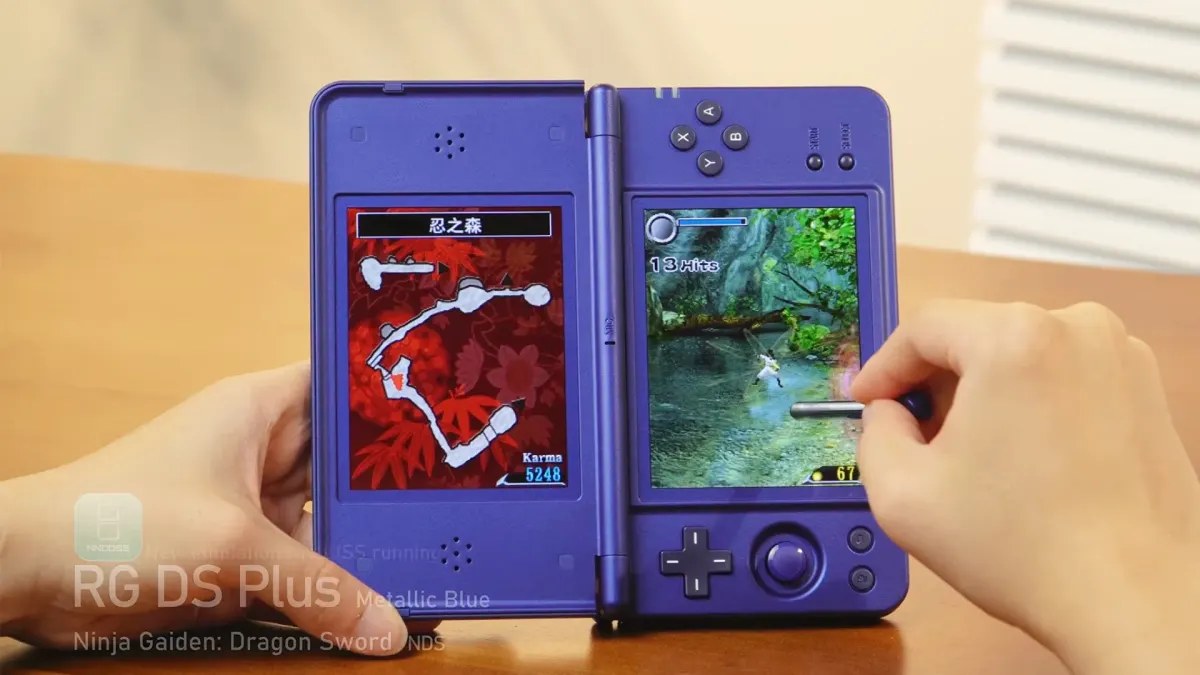
 laying dual-screen handheld classics on a standard single-panel retro handheld is usually an exercise in frustration. Squeezing two displays onto one horizontal screen shrinks the play area to unreadable dimensions or forces clumsy toggle hotkeys. Anbernic revealed an all-new dual-screen clamshell named the RG DS Plus to address this setup directly. According to circulating reports, the device packs the same modest chipset as the original RG DS alongside 1GB of RAM, targeting an aggressive sub-$100 price bracket.
In our view, hitting that sub-$100 price point makes absolute sense for dedicated retro emulation. If you want native two-screen gaming today, your options boil down to overpaying for aging second-hand consoles with degraded batteries and yellowing displays, or spending big on bulky boutique handhelds. Anbernic is offering budget-focused simplicity instead.
Tailored Linux Software
Hardware is only half the battle when working with constrained memory. In a YouTube video showcasing over six minutes of gameplay footage, Anbernic demonstrated the handheld running systems from Nintendo DS to PSP and Sega Mega Drive. The device relies on a custom emulator called NNDDSS for Linux. As Anbernic demonstrated, the Linux-based NNDDSS emulator is specifically tailored to deliver fluid Nintendo DS performance on modest hardware with just 1GB of RAM.
The interface is stripped down to the essentials. While the frontend looks utilitarian, it organizes game ROMs directly for quick navigation without requiring complex setup. When emulating single-screen titles, users can select which display to use while the inactive screen simply shows the console icon.
The Linux-based NNDDSS emulator is designed to provide fluid Nintendo DS performance on Linux hardware with 1GB of RAM.
That straightforward dual-screen management keeps single-panel games from looking distorted. To extend battery life, Anbernic stated that players can toggle the second screen completely off in the settings. Beyond standard emulation, the promotional material also featured footage of Steam game streaming and multiplayer functionality via NetPlay.
The Real-World Verdict
We treat manufacturer gameplay clips with healthy skepticism until production retail units land on our test bench. A curated six-minute video can easily mask frame drops, stylus latency, and thermal throttling under sustained use. However, if the final retail model hits shelves under $100 with dependable out-of-the-box dual-screen emulation, it solves a long-standing headache for casual retro enthusiasts.
Hold off on hunting down inflated, worn-out dual-screen consoles on auction sites this week. Wait for independent teardowns and input-latency measurements to confirm whether that 1GB of RAM holds up over extended play sessions.