
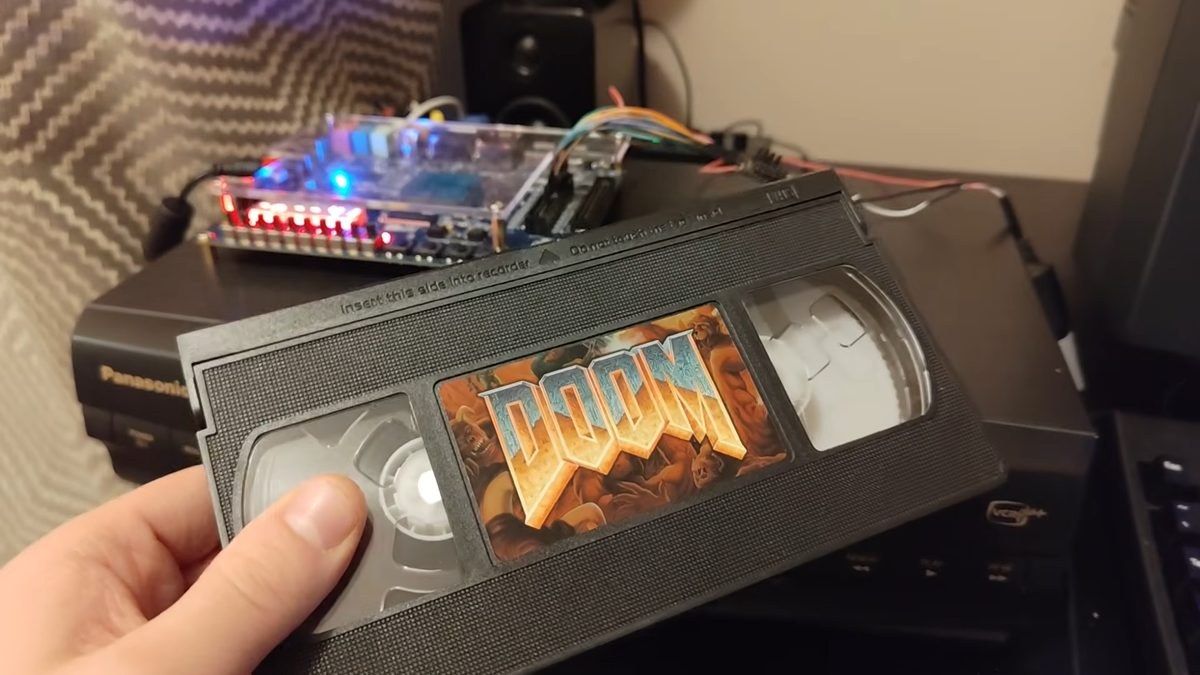
 odern the gaming industry has conditioned us to accept that running a standard shooter requires a storage drive the size of a small planet and a couple of hundred gigabytes of free space. Today, developers compete in optimization laziness, preferring not to shrink textures and code, but simply to expect you to buy yet another fast solid-state drive. While the industry piles up gigabytes and forces you to upgrade your hardware for every single patch, an enthusiast known as Throaty Mumbo decided to remember the nineties in the most perverted way possible—by building a gaming system that loads games from a regular VHS cassette.
The thesis is simple: the cassette stores both the game's program code and several video clips, with versions of Doom, Super Mario Bros, and the cult full-motion video game Night Trap participating in the demonstration. As skeptics rightly point out, behind this garage-built madness lies a fairly sober diagnosis of modern software, which has long forgotten how to fit within reasonable limits and respect the user's system resources.
From a failed rarity to an iron Frankenstein
The history of the idea goes back to 1987, when Worlds of Wonder released the old Action Max console, which operated via a VCR. The concept was stillborn: the player shot at the screen with a light gun, and a suction-cup sensor counted hits, even though the scheme offered almost no interactivity. Throaty Mumbo's DIY experiment almost repeated the fate of its ancestor when the first attempt failed. A Panasonic VCR connected to a microcontroller capture card delivered a mere 3 frames per second and rendered colors incorrectly.
The situation was saved only by heavy-duty hardware, specifically a Terasic DE1-SoC programmable logic board featuring an Intel Cyclone V chip. It decodes the analog video signal from the cassette, outputs the image to a VGA monitor, and uses physical switches to adjust color, tint, and scanline effects. A second board, the Pimoroni PGA2350 powered by an RP2350 chip, handles the logic, while you control the entire mess using a standard Nintendo 64 controller.
Making the cassette think
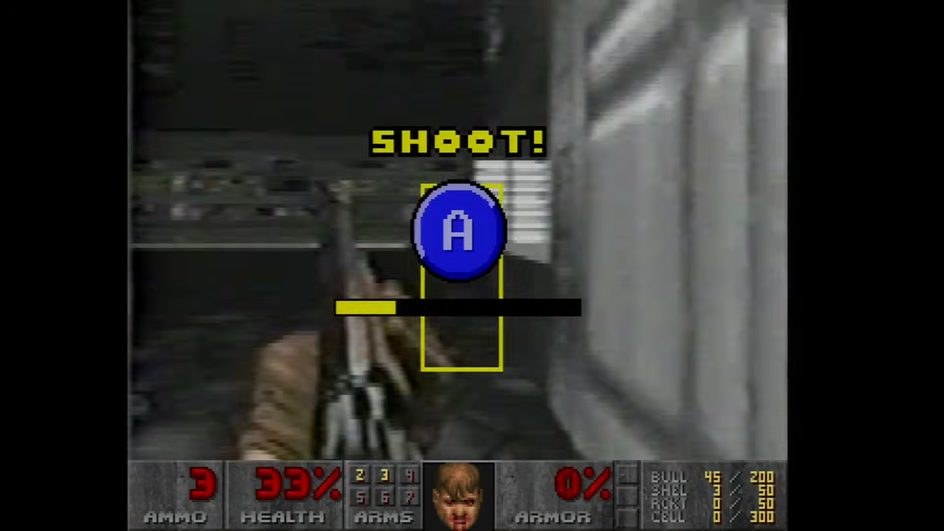
The technical mechanics of the process look like mockery of common sense, but they work flawlessly. The game code is recorded onto the tape as a peculiar 'video QR code': a rapid flash of black and white pixels that the system reads and turns into an executable program. Throaty Mumbo packed eight independent video streams into a single video signal and encoded the audio as a waveform along the left edge of the cassette.
For longer transitions, the board uses an infrared transmitter to command the VCR to rewind the tape to the necessary spot on its own.
As a result, the visuals and sound turn out painfully authentic, though the project inherited the main flaw of old interactive video games. Action choices are scarce, and every time the plot branches, you have to wait while the motor physically rewinds the tape to the right spot. The project is currently marked as unfinished, but Throaty Mumbo has published all the firmware in the GCVHS open repository on GitHub for anyone who happens to have an old VCR gathering dust at home.
The bottom line: the enthusiast proved the viability of a format where video and code live on the same analog tape. It serves as a visual lesson for an industry that forgot about file size, neglected code optimization, and forces us to buy terabyte solid-state drives for simple scripts.