
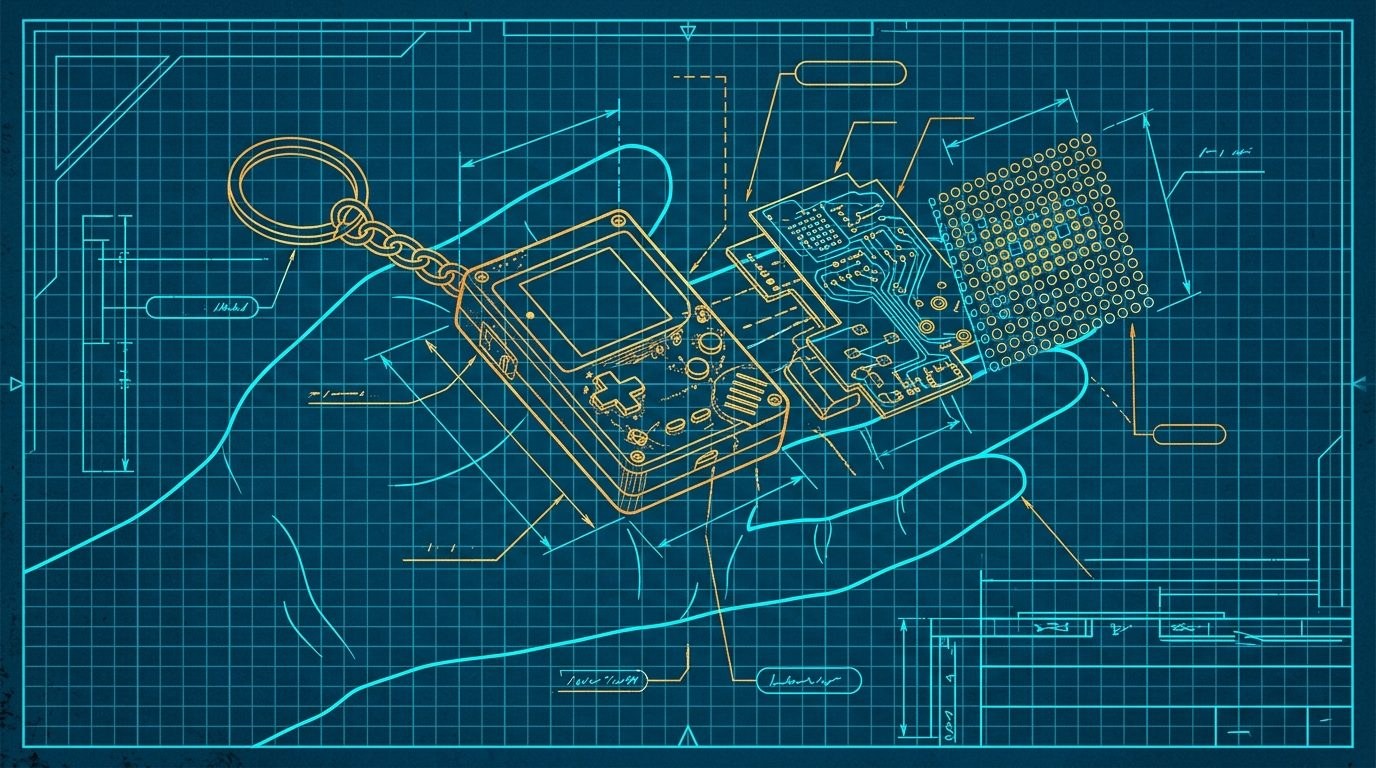
 odern handheld gaming consoles offer high-resolution displays and detailed 3D graphics, but independent maker ItzSunBoi decided to strip away all the digital excess with a tiny, custom-built gaming console that replaces a conventional screen with 165 individual LEDs. You no longer need a pocket-crushing device with a battery-draining screen just to pass the time on a commute, because this keychain-sized hardware proves that old-school limitations spark far more creativity than modern user-interface bloat. If you are tired of portable devices that die by lunchtime and demand constant software updates, this garage-built toy takes a delightfully stubborn step backward.
The project began as an experiment with Charlieplexing, a technique that allows a microcontroller to control a large number of LEDs using relatively few pins. As ItzSunBoi demonstrated, arranging 165 surface-mount LEDs into an 11×15 grid on a custom printed circuit board solves what would normally require an impractical number of connections for a 32-pin microcontroller. By taking advantage of general-purpose input-output pins operating in three states — high, low, and high-impedance — the microcontroller can selectively illuminate all 165 LEDs using just 14 pins.
The technical catch is that the LEDs cannot all be illuminated simultaneously. The firmware must rapidly cycle through them so human persistence of vision makes them appear constantly lit, requiring precise timing when varying the brightness of individual pixels.
the microcontroller can selectively illuminate all 165 LEDs using just 14 GPIO pins.
Beyond the unusual display, the Gigaplex includes physical buttons for controls, an inertial measurement unit for motion-based input, an ambient light sensor that automatically adjusts display brightness, and a piezo buzzer for music and sound effects. A battery and associated power management circuitry make the entire assembly completely portable.
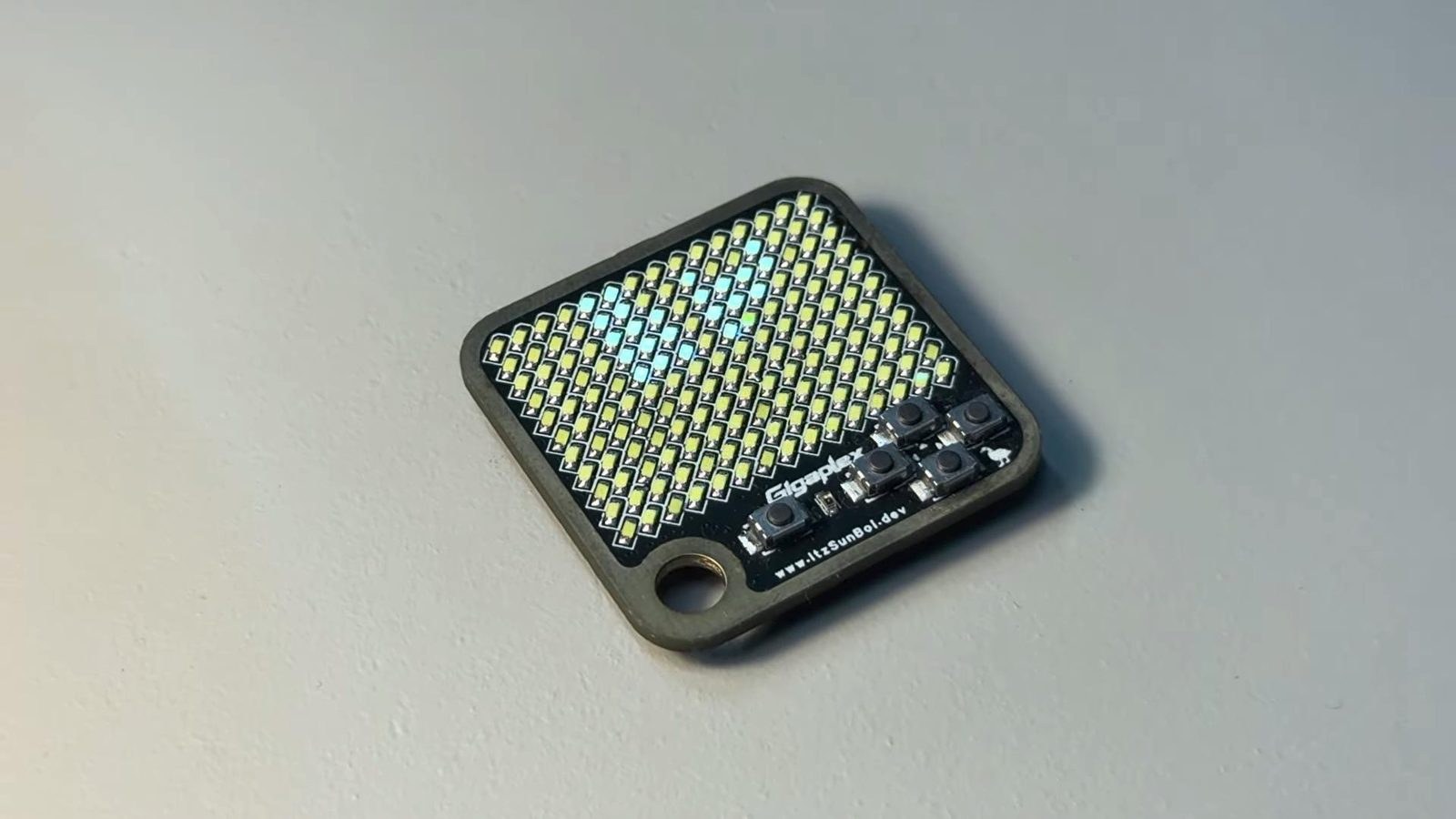
To demonstrate what the hardware can do, the creator programmed a Bad Apple animation with synchronized music. The accompanying audio data was compressed from approximately 41 kilobytes of MIDI data into just 1.9 kilobytes of note events, which the microcontroller uses to generate sound through the buzzer. Altogether, the firmware and assets occupy approximately 51 kilobytes of the available 62 kilobytes of flash memory.
For anyone expecting a polished commercial gaming experience, the Gigaplex misses the mark entirely and looks rather rough in action. Yet for a toy you can keep on your keychain, it shows how strict hardware constraints can produce genuinely charming engineering.
It costs nothing because you cannot buy it, remaining a pure maker experiment rather than a retail product you can pick up at a local store. It changes nothing for your daily tech routine, but it serves as a sharp reminder that the industry's obsession with endless pixel density often forgets the simple joy of pressing a plastic button to clear a row of lights.