
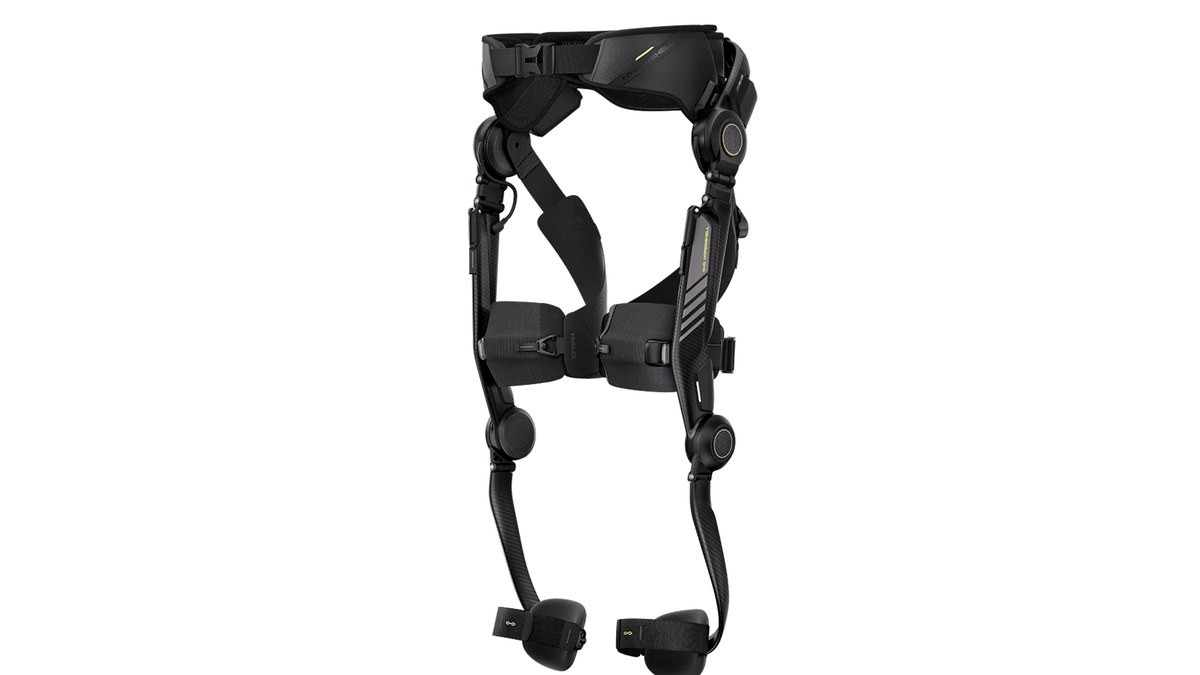
 aving your knees on steep descents and ditching shortness of breath on brutal climbs will set you back $2,299. At IFA 2026 in Berlin, Hypershell unveiled the Halo exoskeleton, mounting electric motors directly onto the knee joints. While previous generations of wearable robotics looked like clumsy medical braces, this rigid power frame is engineered for you to strap on and immediately hit a demanding mountain trail.
Four Motors Instead of Two
Unlike older setups that only supported the lower back and upper thighs, the Halo unloads four joints simultaneously: two hips and two knees. The carbon-and-titanium frame extends continuously from the waist to the shins, distributing pressure evenly across the entire leg. Citing independent certification from SGS, Hypershell claims a 40% reduction in muscle fatigue during walking, running, and uphill climbing.

A Fish-Spine Adaptive Joint handles natural gait dynamics, providing a range of motion of 198 degrees laterally and 167 degrees forward and backward. Under the hood, the HyperIntuition 2.0 algorithm samples movement parameters 2,500 times per second to predict your next step in just 200 milliseconds.
The device supports four joints simultaneously: two hips and two knees.
You can switch modes and tweak power delivery on the go using voice commands via the Shelly AI assistant. In practice, the mechanics are straightforward: the motors give your legs a gentle push forward the precise second your quads and calves start to burn under the weight of a heavy pack.
Battery Life and Real-World Weight
The entire setup weighs 2.6 kg, delivering up to 1,490 W of peak power and boosting travel speeds up to 17 km/h. A swappable 370-gram PocketVolt battery provides roughly 20 km of active range. When folded, the rig takes up less than 8 liters of volume, carries an IP54 dust and splash resistance rating, and takes about 20 seconds to strap on. Since launching in 2021, Hypershell has shipped tens of thousands of units across 70 countries, proving this is a refined mass-production platform rather than raw crowdfunding vaporware.

The Hypershell Halo pulls consumer exoskeletons out of the bulky lab curiosity bracket into practical field gear. For trekkers hauling heavy loads, park rangers, and couriers working long hours on foot, it offers reliable joint protection against premature wear. For casual strolls in a city park, however, a $2,300 titanium rig remains an unjustifiably steep luxury.