
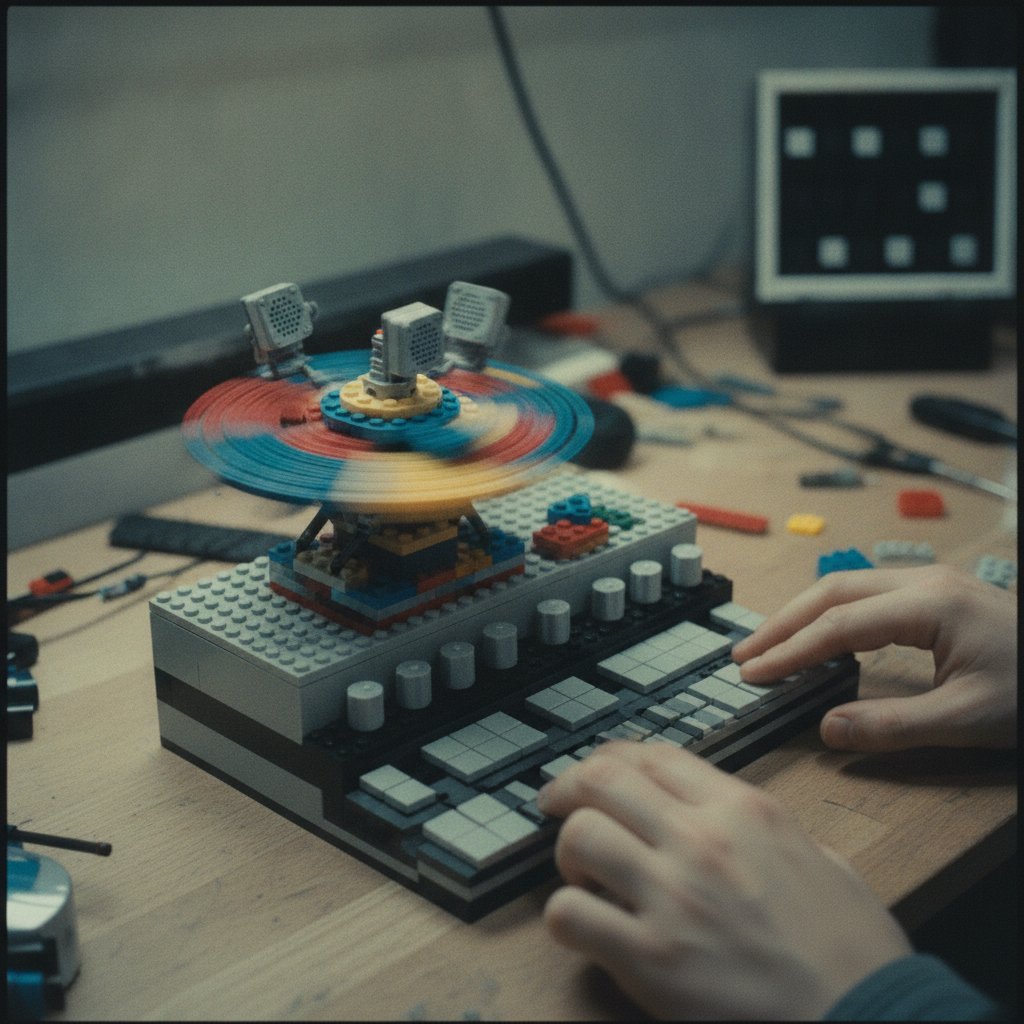
 ost modern beatmaking hardware locks you behind tiny LCD menus, rubber pads, and endless sub-menus. Maker zomb23 skipped that entire digital rabbit hole by turning ordinary toy bricks into a fully mechanical step sequencer. Instead of tapping a glass screen, you arrange green and orange LEGO studs across a revolving barrel to trigger live audio. It looks like a mad-science weekend project, but it solves a genuine frustration: it strips electronic rhythm down to pure physical mechanics that anyone can grasp in seconds.
How the Cylinder Plays Music
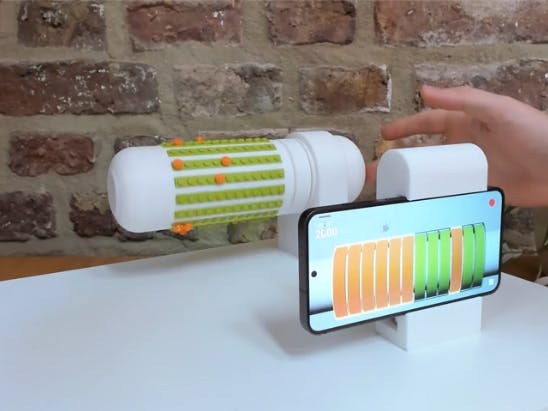
At the core of the build is a motorized spinning cylinder wrapped in rows of green LEGO nibs that serve as a blank acoustic grid. The drum features 12 distinct columns—each representing an individual track mapped to instruments like a kick, snare, or hi-hat—crossed by at least 16 radial rows for the beat subdivisions.
Programming a pattern requires zero software navigation: you simply snap an orange LEGO stud onto a green nib. These orange pieces act as tactile triggers. Stick two orange studs on different columns within the same row, and both instruments fire simultaneously when that section rotates past the front marker.
Spin faster for a higher tempo, or spin the opposite direction to reverse playback.
To translate plastic geometry into sound, a smartphone camera mounted overhead tracks the cylinder using a custom application built on Unreal Engine 5.7 and the Freesound API. As the drum turns, the computer vision algorithm detects the high-contrast orange pieces crossing the trigger line and immediately fires the corresponding audio samples.
Hand Cranks and Motorized Loops
Because the sequencer relies on a continuous cylinder, loops form naturally without tricky quantization settings. Tempo control is completely tactile: spin the hand crank faster to speed up the track, or roll the barrel backward to reverse the entire beat instantly. For steady playback, zomb23 hooked up a small electric motor to keep the rotation locked in time.
While commercial grooveboxes easily run anywhere from $400 to $1,500, this DIY contraption proves that engaging hardware doesn't require proprietary silicon or convoluted firmware. It replaces abstract digital timelines with physical parts you can touch, modify, and rebuild on the fly.