
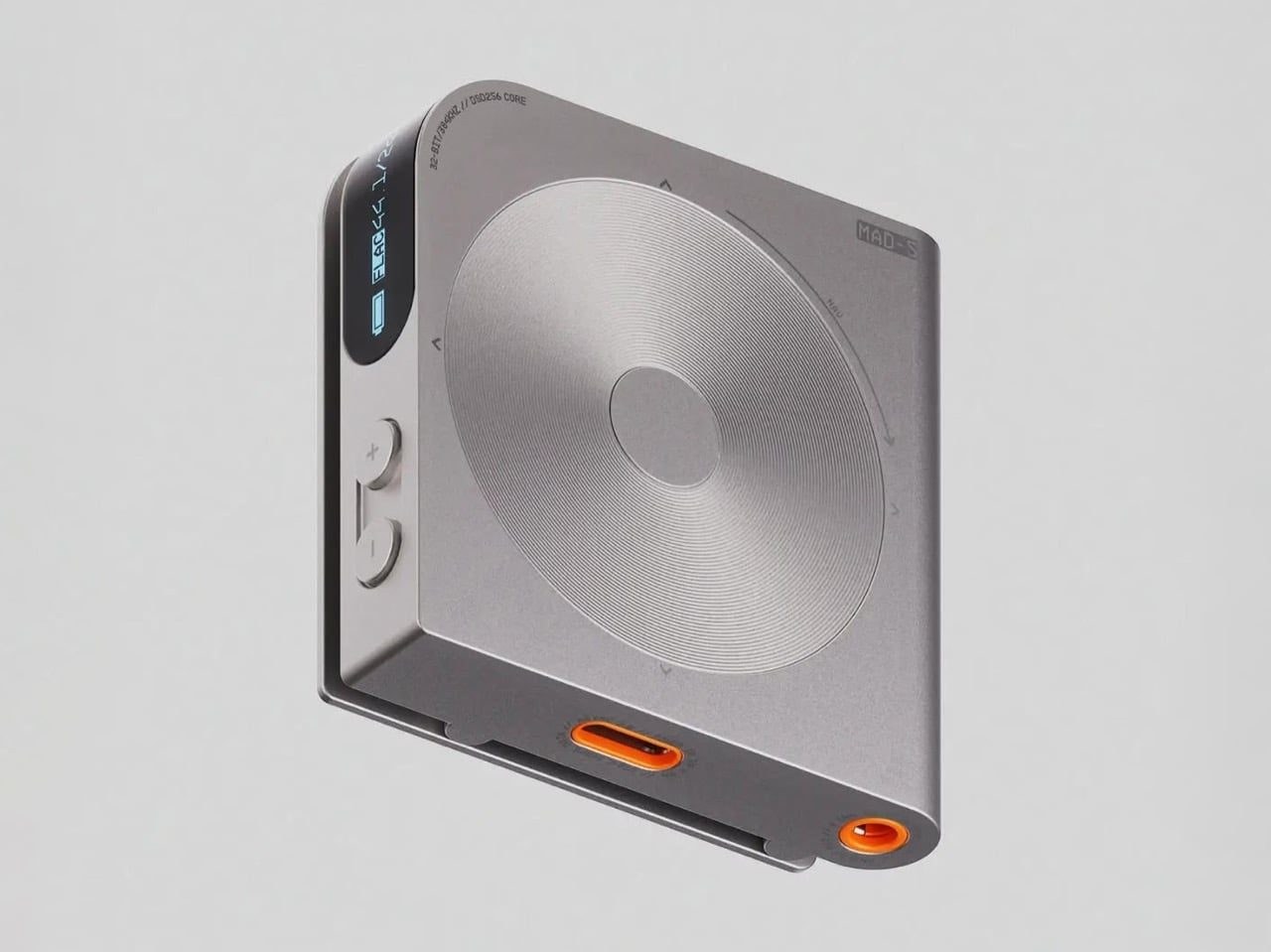
 ulling a glass brick out of your pocket just to check a track title is an ergonomic failure we have silently tolerated for years. Designer Florent Porta has introduced the MAD-5, a square aluminum music player that challenges modern smartphone-driven design with a massive screen obsession by bringing back a forgotten concept: the edge-mounted display. Instead of slapping a flat touchscreen across the entire front panel, the player features a thin blue scrolling ticker along the front edge, displaying track info, format, and playback time.
This idea is directly borrowed from vintage audio gear. Sony killed off the MiniDisc in 2006 with the MZ-RH1, an iconic 83.8 by 84.4 mm recorder featuring an unusual OLED screen (organic light-emitting diode, providing deep blacks and high contrast) mounted on the front edge. Florent Porta used nearly identical square proportions for the MAD-5 and added a wearable clip inherited from late-generation iPod Shuffle models. When you clip an audio player to your jacket or bag, you instinctively look at its protruding edge rather than its face.
A clipped-on player shows you its edge, not its face.
This simple physical reality explains why putting the display on the edge solves everyday convenience problems in a way traditional screens could never hope to achieve.
Physical Controls Versus Smartphone Glare
Apple has previously messed around with tiny clip-on players and regularly missed the mark. The company released the third-generation Shuffle in 2009, stripping every single physical button from the chassis in favor of an awkward inline remote on the bundled headphone cable. Reviewers tore that decision to shreds, forcing Apple to bring back a physical click wheel with the fourth-gen Shuffle just a year later. The MAD-5 completely avoids these past mistakes by leaving direct physical controls right on the device itself.
The Scroll Wheel and Battery
The front-facing scroll wheel on the MAD-5 pays homage to the TP-7 field recorder from Teenage Engineering, even if it lacks motorized mechanisms beneath the engraved aluminum rings. The concept also packs a 1337 mAh battery. Florent Porta has used that exact number in one of his previous products before, making the MAD-5 a deliberate nod to physical minimalism.
The Concept Reality Check
Before you check your wallet, consider the practical gaps. The MAD-5 concept completely lacks mentions of Bluetooth, a balanced headphone output, or memory card support—features modern portable music players treat as an absolute bare minimum.
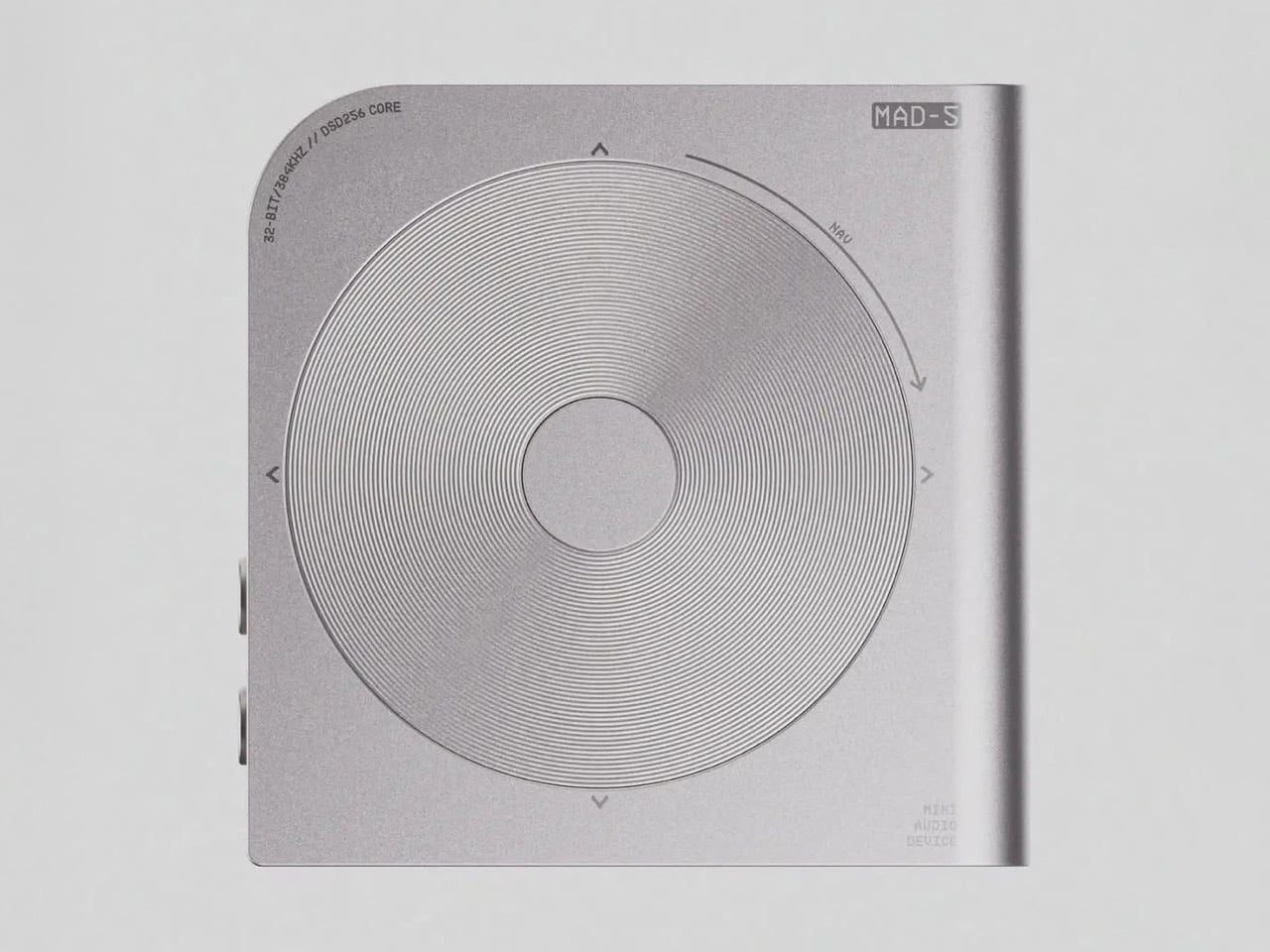
Neither the MAD-5 itself nor its dock exist in actual hardware yet. But as a middle finger to screen fatigue, this project proves a vital point: real ergonomics happen when controls sit where your hands and eyes naturally rest, not when manufacturers cram yet another giant smartphone panel into your pocket.
Strategic context
- Wearables are desperately due for a physical reset away from giant screens.
- Nostalgia for vintage hardware like MiniDisc and early iPods drives fresh industrial design ideas.
- Concept designs often ignore modern wireless standards like Bluetooth to chase aesthetic purity.
Key takeaways
I would not buy a device that lacks basic wireless audio, but the edge-display idea deserves to escape concept art and land in real products.