
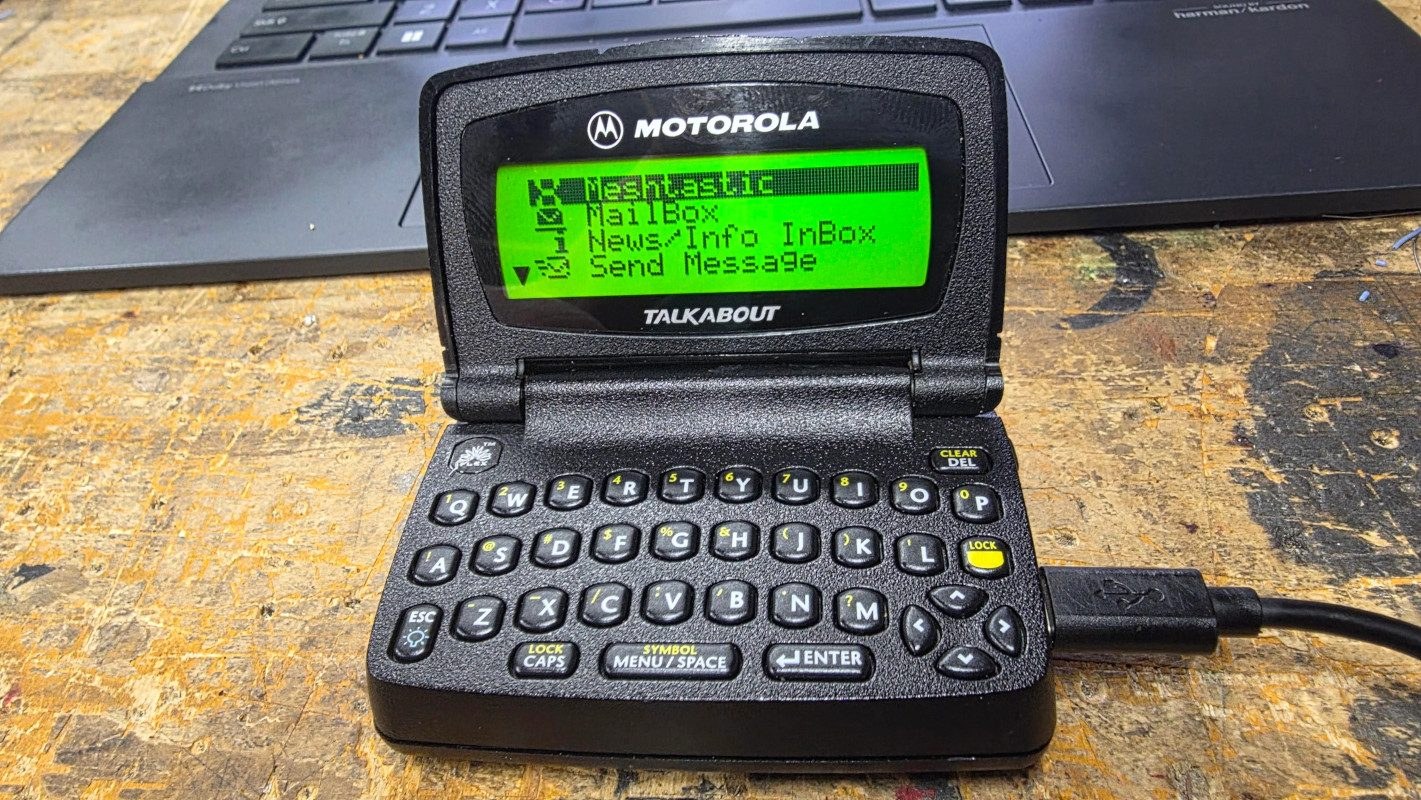
 ext messaging has spent three decades attached to cellular networks, making it genuinely difficult to remember a time when our phones didn't demand a monthly tribute to a telecom giant. Yet an enthusiast operating under the alias [zindustries87] decided that a vintage Motorola T900 two-way pager deserved a second act on the modern Meshtastic network, dragging a piece of 90s plastic kicking and screaming into the era of decentralized emergency radio.
For anyone wondering whether this nostalgic resurrection holds any practical value for a pocket or an emergency go-bag, the short answer is no—unless spending your weekends reverse-engineering obscure silicon sounds like a relaxing hobby.
Under the Hood of a Museum Piece
Reviving a pager from an era when mobile communication was still a novelty required tearing down hardware that lacks any public documentation. Because there are essentially no technical sheets available for the chips inside these relics, [zindustries87] had to completely reverse-engineer both the screen and the keyboard from scratch just to make them talk to modern components.
so the screen and keyboard both were reverse-engineered to work with other hardware.
Inside the cramped plastic shell, the project relies on a Heltec V4 paired with an ESP32-S3, which serves as a compact and popular Meshtastic node. Getting everything wired and programmed to fit inside a chassis designed for Clinton-era paging networks took genuine engineering effort, proving that while the exterior is pure nostalgia, the internal guts are entirely rewritten.
Why This Matters to You
Before hunting down old plastic on auction sites, keep in mind the hard reality of what [zindustries87] actually built. As [zindustries87] points out, the converted Motorola T900 pager is strictly a prototype. It answers the question of whether a vintage form factor can be forced to run off-grid radio protocols, but it does not give anyone a plug-and-play consumer gadget you can buy today.
For anyone looking at reliable off-grid communication during emergencies, messing with undocumented vintage screens is a massive headache compared to buying a modern, ready-made Meshtastic node. However, there is a glimmer of hope for tinkerers: [zindustries87] plans to add a number of other features and possibly build a drop-in PCB replacement for these devices. That means if the maker community actually delivers a custom circuit board replacement, turning old junk drawer relics into independent communicators might one day become an actual product category rather than a one-off garage miracle.
This project stands as a brilliant exercise in stubborn nostalgia rather than a practical gadget for a weekend hike. Leave the soldering iron to the enthusiasts and wait until someone actually sells a finished board that does not require reverse-engineering a pager from scratch.