
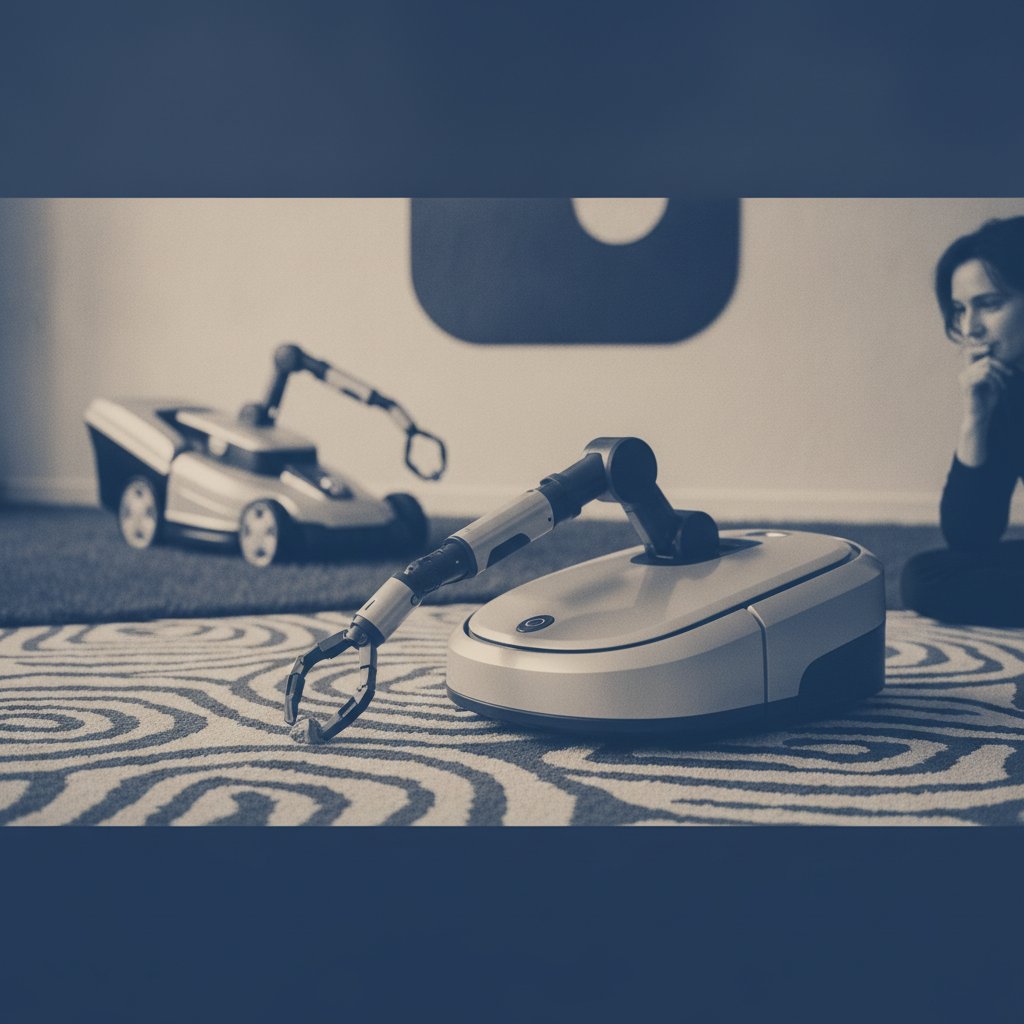
 ousehold robots mastered navigating around chair legs and trimming grass on a schedule years ago, but hardware engineers keep pushing further. At IFA 2026, MOVA showcased a tactile-sensing robot vacuum alongside an outdoor robotic lawn mower equipped with a full mechanical arm.
Strip away the trade-show polish, and this is a textbook attempt to fix routine cleaning hurdles by making hardware overwhelmingly complex. Rather than refining the wheelbase or preventing the chassis from getting stuck in damp ruts, the company bolted a multi-jointed claw directly onto garden machinery.
Mechanics Versus Outdoor Grime
In plain consumer terms: the robotic arm is designed to clear fallen branches and stray debris out of the mower blades' path, sparing you a pre-mowing sweep of the yard. It sounds brilliant on a pristine showroom carpet.
Outdoor conditions are merciless toward exposed joints and moving parts.
Out in a real backyard, garden equipment battles wet soil, sand, standing puddles, and sticky grass sap. Any exposed hinge or unsealed actuator working outdoors quickly turns into a dirt magnet. The moment fine gravel jams this intricate mechanism, you will be back to raking by hand—stuck with a very expensive, broken gadget.
Tactile Vacuums and the Price of Overengineering
The indoor vacuum concept runs into similar structural hurdles: tactile sensing is meant to let the vacuum "feel" walls and furniture legs instead of bumping into them with a mechanical bumper. In practice, this means packing dozens of fragile pressure sensors and micro-actuators along the entire perimeter of a plastic shell.
The engineering rule is simple: the more delicate the moving parts, the faster and more expensively they fail. A hard knock against a heavy sofa corner or contact with a kitchen spill will turn sensitive touch arrays into a repair-shop nightmare. And replacing bespoke sensors comes straight out of the owner's pocket.
Paying to Beta-Test Hardware
Buying first-generation experimental hybrids like these is essentially funding a brand's factory testing on your own dime. Time-tested basic automation with durable rubber rollers and rugged wheels handles everyday chores far more reliably, without demanding a service visit after the first summer storm.
Marketing pitches promised complete autonomy and zero chores through robotic limbs and sense of touch. In reality, buyers get fragile mechanics that demand more care and maintenance than the lawn itself.