
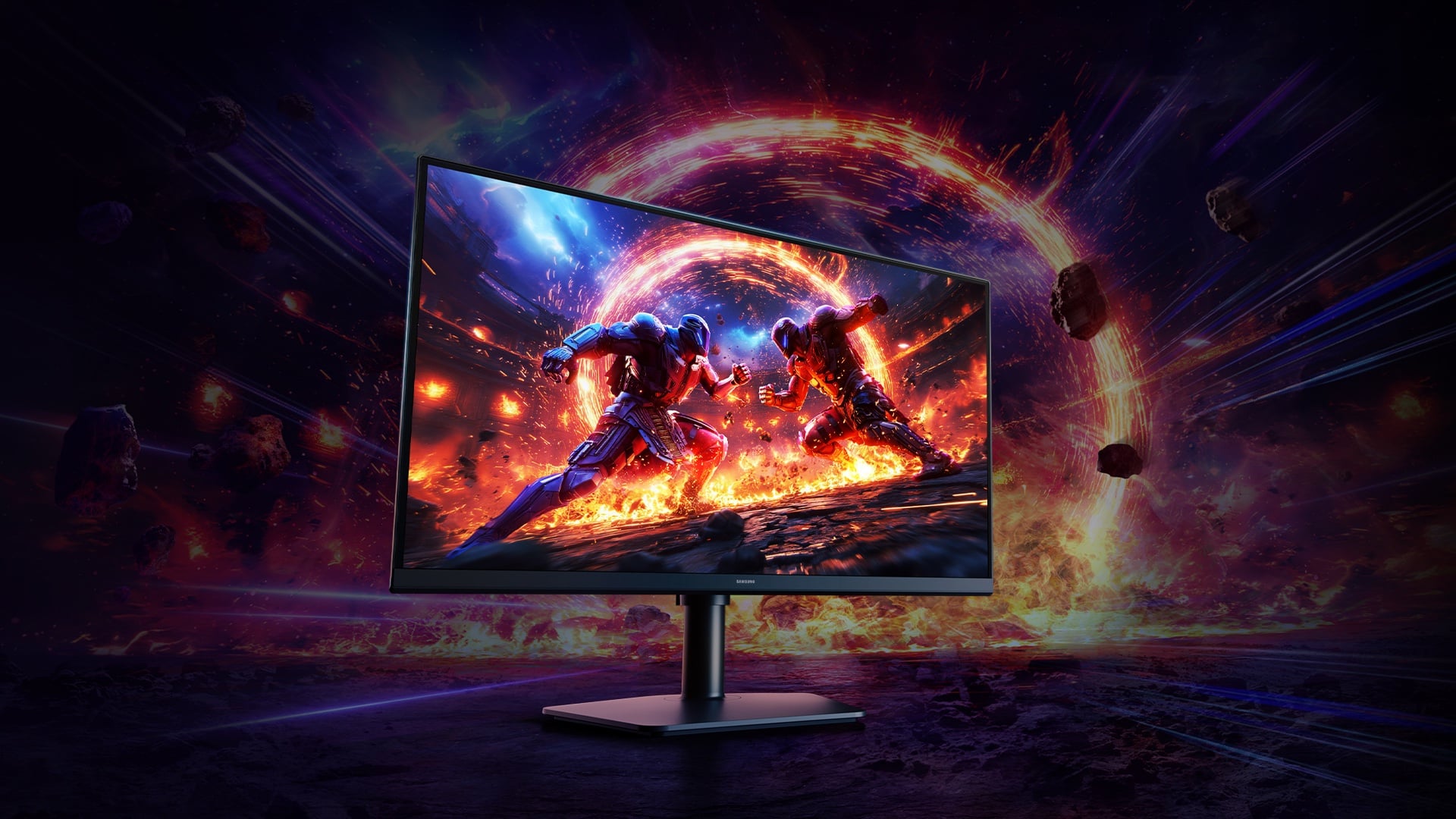
 amsung just unveiled the world's first 1,100Hz gaming monitor at Gamescom 2026 in Cologne, Germany, and on paper, it sounds like an unbelievable breakthrough for competitive gaming. But look past the marketing presentation, and you will see the massive compromise hiding behind that giant number. To actually hit that headline-grabbing 1,100Hz refresh rate on the new 27-inch Odyssey G6 (model number G60H), you have to downgrade your display to blurry, outdated 720p HD resolution.
According to report details from Asif Iqbal Shaik at SamMobile, this 27-inch Fast IPS LCD panel runs at a native QHD resolution of 2560 x 1440 pixels at up to 600Hz. If you want the full 1,100Hz, you are effectively trading modern visual clarity for a smeared, low-resolution image just to make the screen refresh faster.
To actually hit that headline-grabbing 1,100Hz refresh rate, you have to downgrade your display to blurry HD resolution.
Dropping down to 720p HD on a 27-inch desktop monitor means stretched, pixelated visuals that look completely out of place in a modern gaming setup, turning a premium display into a muddy retro grid.
Diminishing Returns and Actual Hardware
Beyond the resolution penalty, physics and human perception hit hard limits here. The jump from 60Hz to 144Hz is instantly obvious to anyone because animations become dramatically smoother and motion blur disappears. However, leaping from 360Hz or 500Hz panels up to 1,100Hz shaves off fractions of a single millisecond in frame delivery time—a marginal gain that human eyes simply cannot register outside of esports lab testing.
Setting aside the 1,100Hz stunt mode, the hardware specifications are otherwise solid for competitive play. The monitor features a 1ms response time, supports both HDR10 and HDR10+ formats for high dynamic range visuals, and includes AMD FreeSync Premium along with NVIDIA G-SYNC compatibility to eliminate screen tearing. Connectivity covers the basics with standard DisplayPort and HDMI ports. Samsung plans to launch the Odyssey G6 globally in the second half of 2026, though official pricing remains unannounced.
Chasing four-digit refresh rates at the expense of resolution is a pure marketing gimmick rather than a genuine visual upgrade. Running this monitor in its native QHD mode at 600Hz delivers sharp, hyper-responsive gameplay without wrecking image quality. Paying a premium for 1,100Hz only to squint at blurry 720p visuals makes zero practical sense for your desk.