
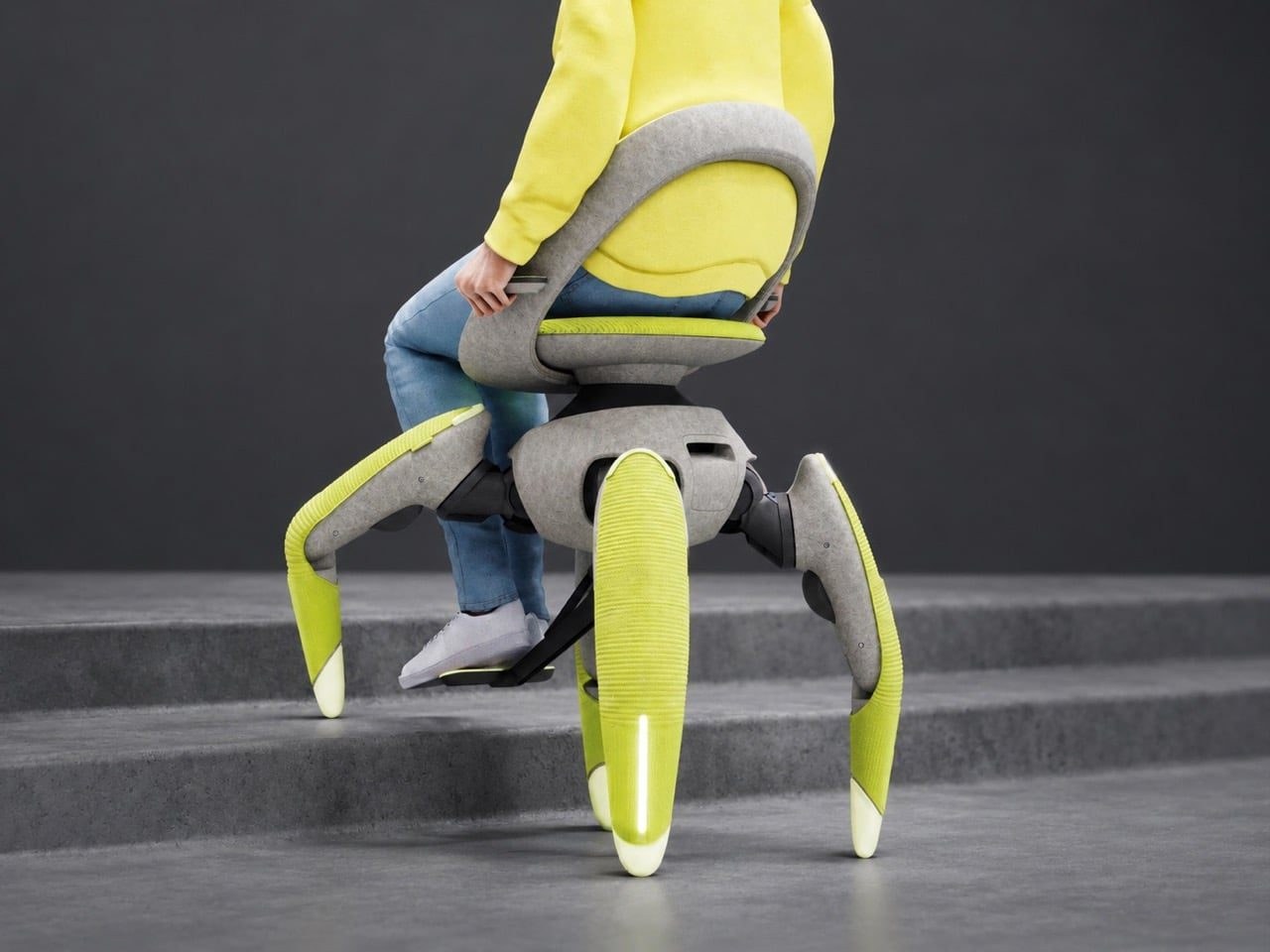
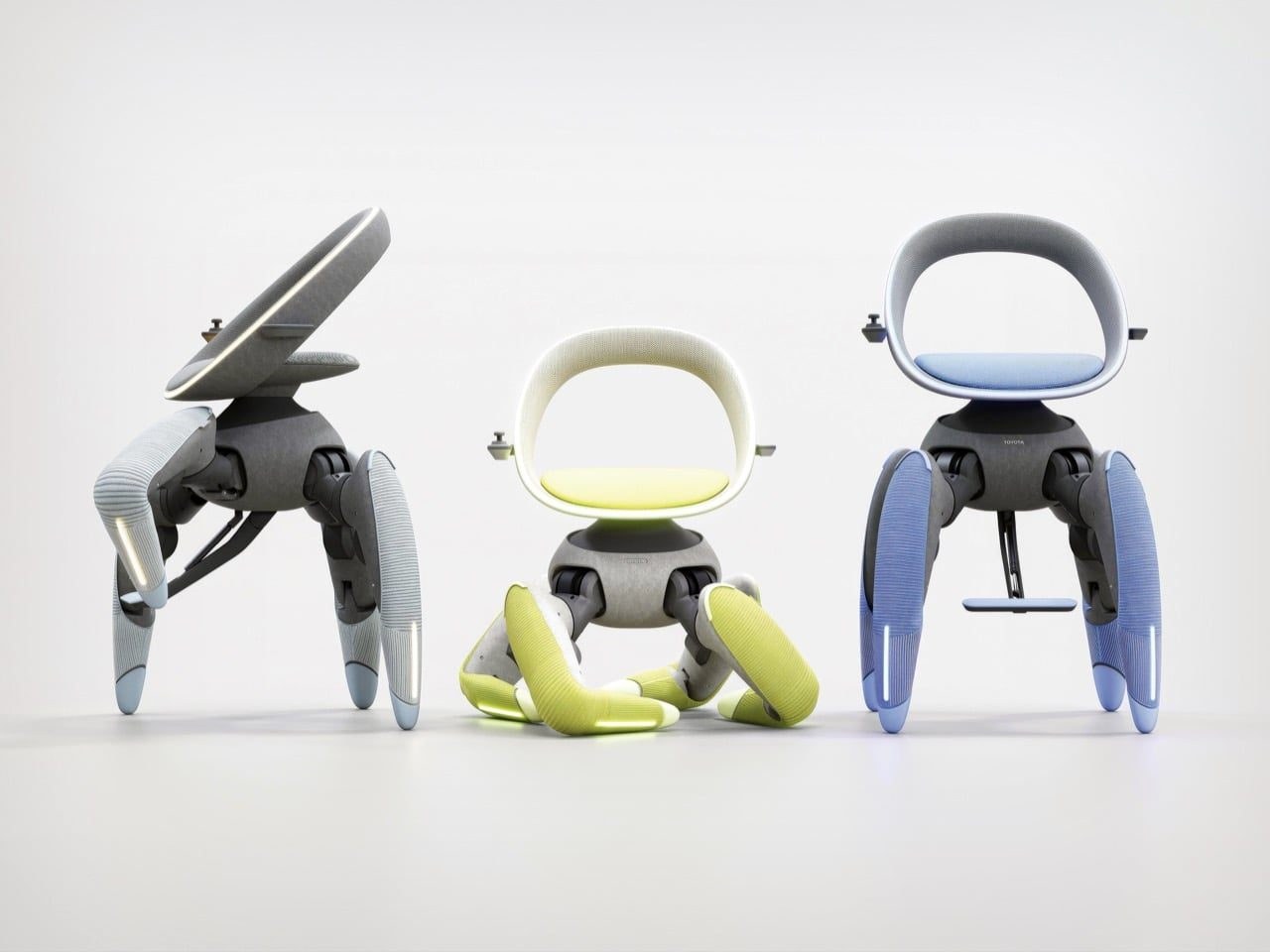
 tairs create psychological barriers long before they create physical ones, and Toyota's design brief admits as much. When a traditional wheelchair encounters a staircase, it stops cold, forcing the rider to plan every daily route entirely around avoiding steps. Toyota took this precise frustration and engineered a machine called walk me, a four-legged robotic chair built to climb stairs, shuffle sideways in cramped spaces, and lift its seat to eye level with standing pedestrians. Designed by Misako Kawata under team lead Takashi Nishimura, walk me drops traditional wheels for four robotic legs intended to link indoor floors, outdoor paths, cars, and public transit without treating standard building architecture as a personal insult.
Toyota debuted walk me at the Japan Mobility Show as a concept, and the machine recently bagged the 2026 Red Dot: Luminary award, the highest honor at the Red Dot Award: Design Concept. The device takes its posture cues from omotenashi, the Japanese hospitality ethos, meaning its stance resembles a polite bow rather than cold hospital gear. The hip housing and seat shell read like a high-end lounge chair, ribbed chartreuse legs add a sharp pop of color, and 3D-knitted fabric covers the mechanical joints to give the body a warm, felt-like silhouette.
Toyota started out as a loom maker under Sakichi Toyoda, so wrapping a high-tech walking robot in knitted fabric reads as a direct family tradition. The company even traced its robotics roots back to the Toyoda Automatic Loom Type G during its exhibition. Beneath the soft textile exterior sits a topologically optimized internal frame that keeps the entire structure strong and remarkably light while staying completely hidden from view.
Toyota took walk me from idea to working prototype in just 10 months, which is wild for a machine that has to balance a human being on four legs.
AI gait control and low-waste metal additive manufacturing made that development pace possible, compressing years of traditional research into mere weeks, as stated by Toyota. The company calls the chair its North Star for human-centered technology aimed at delivering dignity, hope, and independence alongside plain physical movement. Red Dot’s concept award honors prototypes and creative ideas rather than shipping retail products, which means the Luminary prize measures pure design vision rather than store-shelf readiness.
For anyone looking at the actual market availability, the reality check hits immediately. Toyota has announced no price or release date for walk me, leaving it strictly as a concept with no current production plans. While rival machines like Hyundai’s Elevate walking car chase rescue missions and rugged trails, and Kawasaki’s CORLEO robot horse offers a rideable quadruped for off-road thrills, Toyota's machine points its robotic legs at living room staircases and everyday indoor terrain.
It remains an award-winning concept that you cannot buy, put in your home, or find in a medical catalog today. Toyota built walk me from idea to working prototype in just 10 months, but turning a design showcase into an assistive device for actual hospitals and narrow apartments requires navigating medical equipment certification, high parts costs, and real-world battery endurance that a trophy simply cannot solve.