
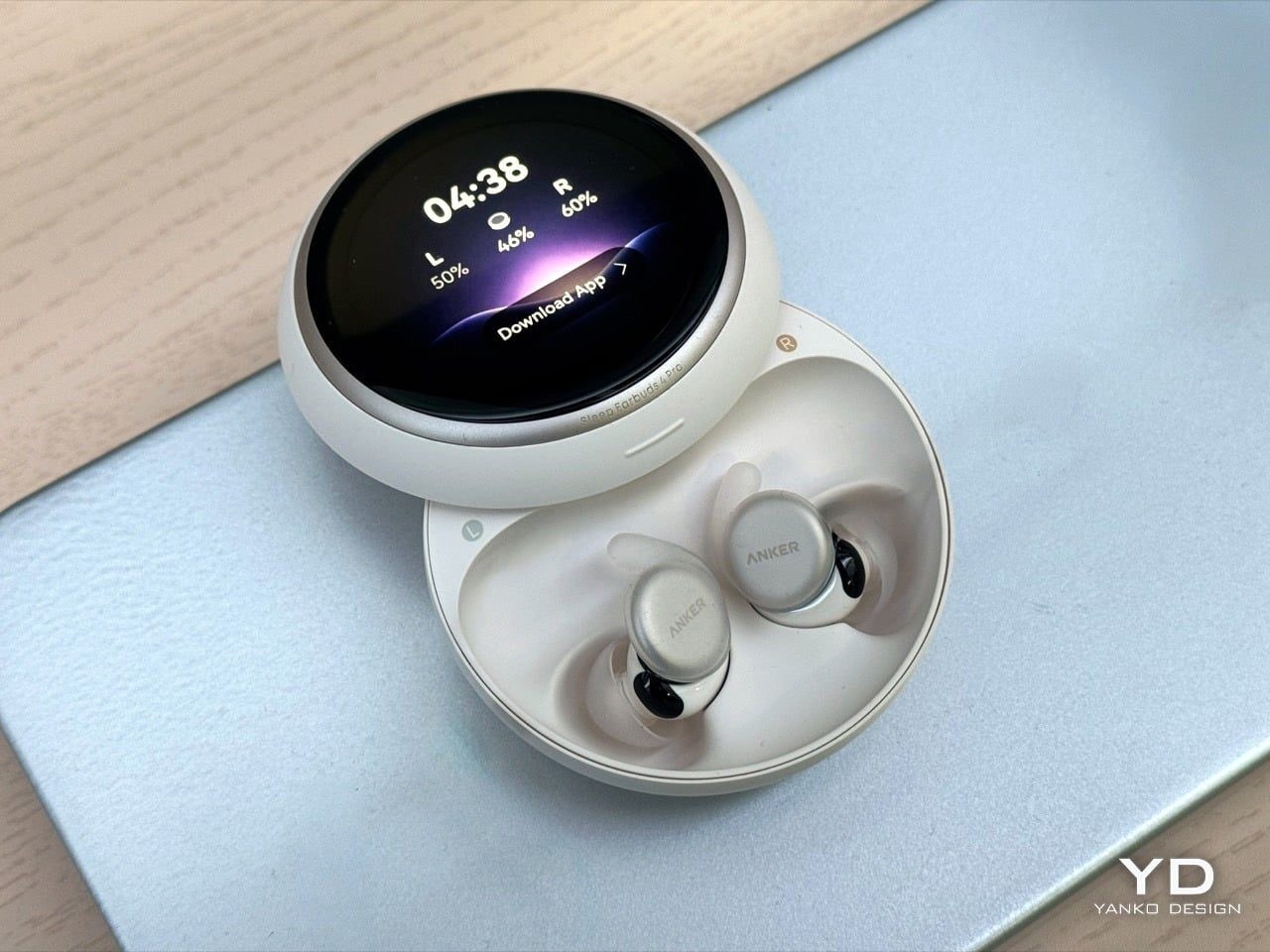
 rying to fall asleep with standard wireless earbuds jammed into your ear canal is a reliable way to wake up with bruised cartilage. When your skull pins a standard plastic stem against a mattress for eight hours, conventional audio hardware fails immediately. Anker's Soundcore Sleep Earbuds 4 Pro sidestep that mechanical trap by ruthlessly cutting down the in-ear footprint: each bud is reduced to a flat, three-gram disc anchored by a soft silicone fin. Sitting 20 percent flatter against the head than the older Sleep A30, they finally allow side sleepers to bury their heads into a firm pillow without fighting ear-canal pressure.
To trim the buds down to mere grams, Anker shifted the actual computing muscle into the bedside charging case. The case houses dedicated processing silicon, onboard local storage for offline soundscapes, and a circular AMOLED touchscreen showing battery levels, alarms, and playback toggles.
The case is the brain here, with its own screen, chip and local storage, while the buds have quietly demoted themselves to sensors you happen to wear.
Offloading all controls directly to the bedside hardware serves a clean, practical purpose: you can tweak white noise or check the time without lighting up a smartphone display and sabotaging your sleep cycle right before drifting off.
Adaptive Snore Masking and Biometric Loops
Instead of playing an indifferent, looped static track until morning, the Sleep Earbuds 4 Pro make the bedside case double as an acoustic sentry. An integrated microphone continuously monitors ambient room frequencies, dynamically altering the masking tone and pitch as your partner's snoring shifts volume and cadence. The setup does demand specific bedroom geography: Anker recommends placing the case within two meters of the snoring culprit and aiming the mic directly at them.
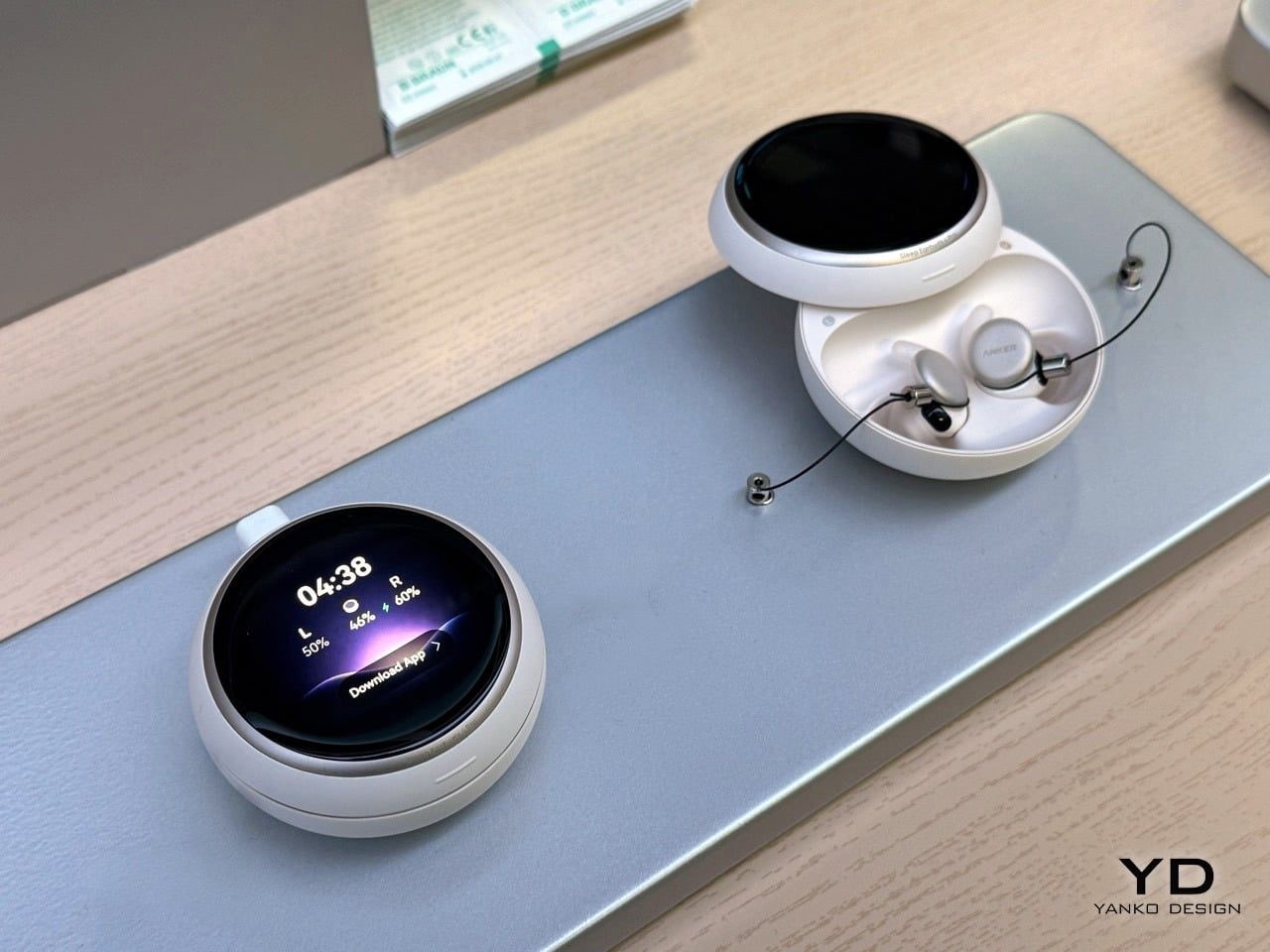
Inside the ear canal, Anker embeds a 100 Hz optical photoplethysmography (PPG) sensor to track real-time heart rate and heart rate variability (HRV). That stream feeds into the BioSync engine, which monitors physiological stress roughly every five minutes and automatically shifts soundscape tempo and binaural frequencies to coax you back into deep sleep.
The $120 Pro Surcharge Tradeoff
When these hit shelves in November 2026, Anker will charge $349.99 for the Sleep Earbuds 4 Pro, compared to $229.99 for the standard Sleep Earbuds 4, which ditch both the PPG sensor and the AMOLED case. That $120 premium creates a bizarre trade-off for sleep-tech buyers.
The base $229.99 model relies on its case microphone for crucial household safety alerts—ducking masking audio into full transparency mode the second it detects a crying baby or an active fire alarm. Bizarrely, the $349.99 Pro variant packs in biometric tracking and standalone screen controls, but strips away that life-saving emergency pass-through feature entirely. Paying top dollar earns you advanced sleep vitals, but costs you the simple peace of mind that your sleep earbuds will let you hear a smoke detector in the middle of the night.