
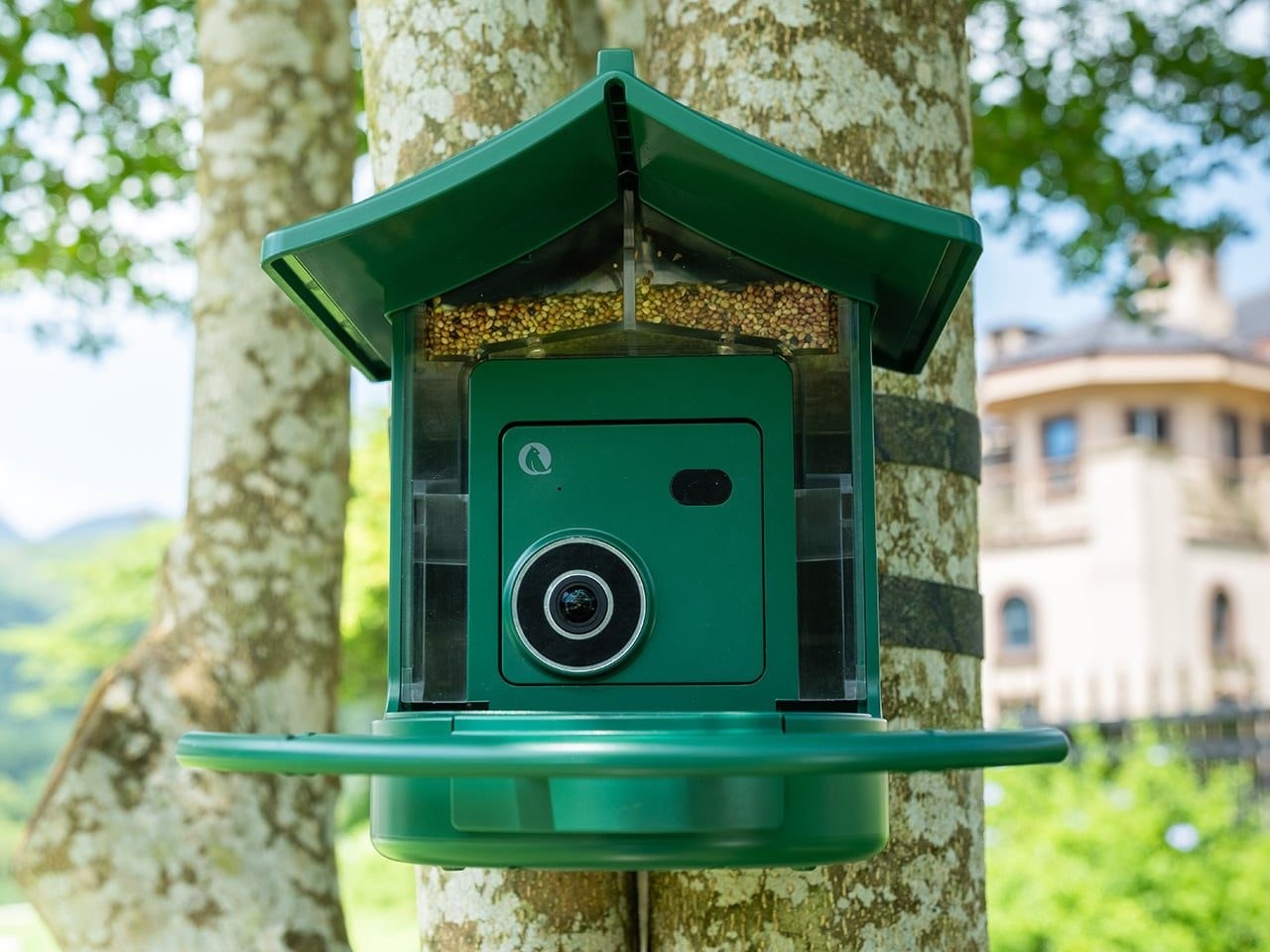
 mart bird feeders have taught us that watching local tits and sparrows steal sunflower seeds can become an addictive daily habit—provided you live within fifteen metres of your home router. Models like Bird Buddy and Netvue Birdfy have brought AI species recognition (computer algorithms for video analysis) straight to our phones, but they suffer from one excruciating flaw: they flat-out refuse to work anywhere your home Wi-Fi signal drops. If you wanted to place a camera by the far row of trees, near the lake, or somewhere on a spacious country plot, your expensive smart feeder instantly turned into a plain wooden box.
BirdVue set out to smash this exact problem with the FEED 1, priced at $179 (down from its original $299). Running on 4G LTE networks and dual-band Wi-Fi with an embedded eSIM (a virtual electronic SIM card), this device goes wherever cellular coverage reaches, meaning you can finally set up your wildlife observation post deep in the garden instead of huddling by the kitchen window. The Wyoming-based company behind the device has managed to build a gadget that shifts the entire category from backyard novelty to a tool for serious remote wildlife observation.
Key takeaways
The main engineering victory here is the combined connectivity. The FEED 1 supports 4G LTE networks and dual-band Wi-Fi simultaneously, using the built-in eSIM for cellular data without needing to hunt for a physical SIM card. Installation options are equally flexible: it features a hanging hook, mounting straps, and a support bracket, so you can dangle the feeder from a branch, strap it to a tree trunk, or mount it on a pole depending on where the birds actually gather. You are no longer chained to your home network coverage zone.
Powered by 4G LTE networks and dual-band Wi-Fi with an embedded eSIM, the FEED 1 works anywhere cellular coverage reaches
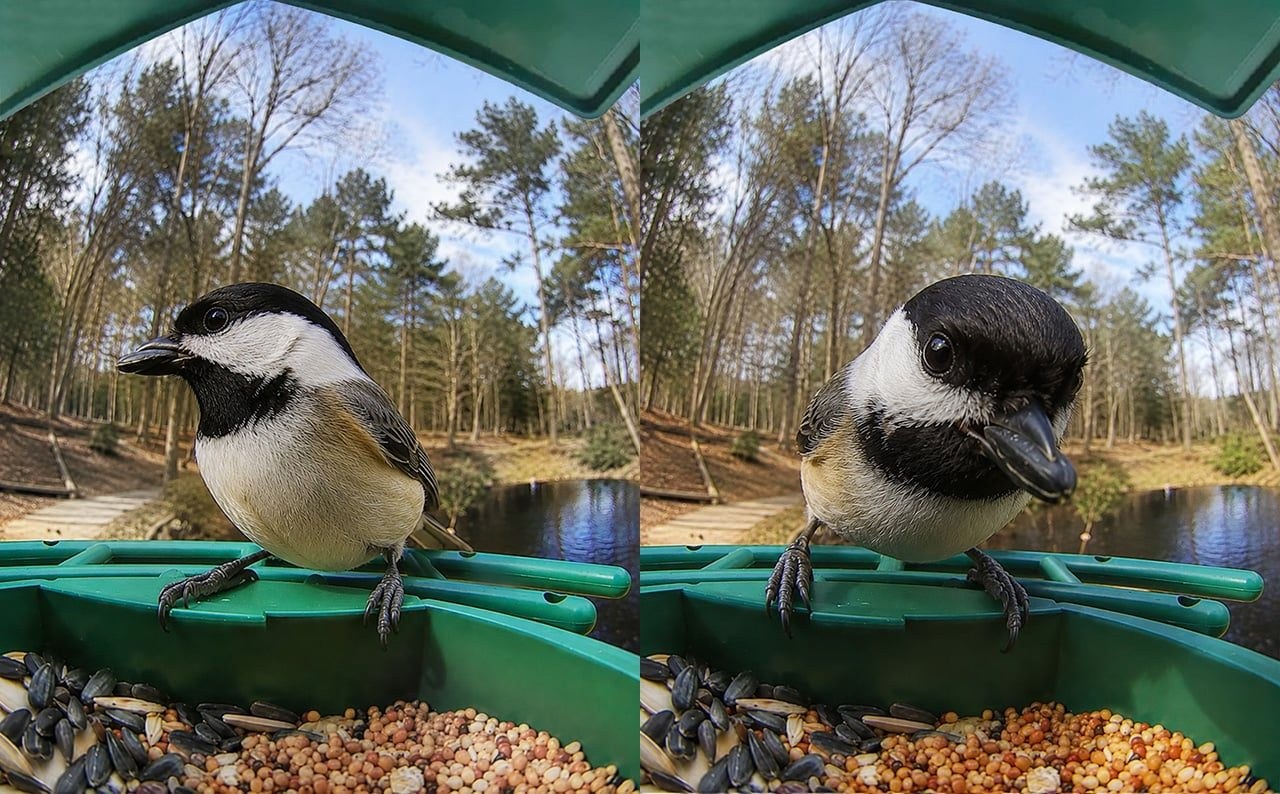
Traditional smart feeders rely on passive infrared sensors (heat sensors) that register thermal traces only after a bird has landed on the perch, frequently triggering false alarms from wind-blown leaves or shifting sunlight. BirdVue solved this by embedding a millimeter-wave radar (a high-precision radio wave sensor) in the body. According to manufacturer details, the radar triggers with millisecond speed the exact second a bird enters the detection field, recording actual approaches and landings in rain, fog, or low light, while the camera focuses specifically on birds in flight rather than empty perches.
Strategic context
The device has the proportions of a proper birdhouse with a dark green finish that looks more like garden decor than an outdoor security camera. Two 3W solar panels recharge a 5,200 mAh battery, and IP65 weatherproofing (complete protection against dust and water jets from any direction) lets you use the unit outdoors year-round.
The AI layer goes far beyond simple species identification: the device maintains a visit log, automatically cuts short highlight reels, and tracks feed levels in real time, letting you top up seeds remotely straight from your smartphone. But before you rush to place an order, remember that a cellular gadget with an eSIM involves ongoing data costs that traditional Wi-Fi feeders never demanded.
Key takeaways
Dropping $179 on a solar-powered remote camera that bypasses home network limits sounds entirely reasonable if you actually have land where cellular service reaches. Just remember that placing your feeder miles away from a router means paying for mobile data just to watch sparrows peck at seeds.