
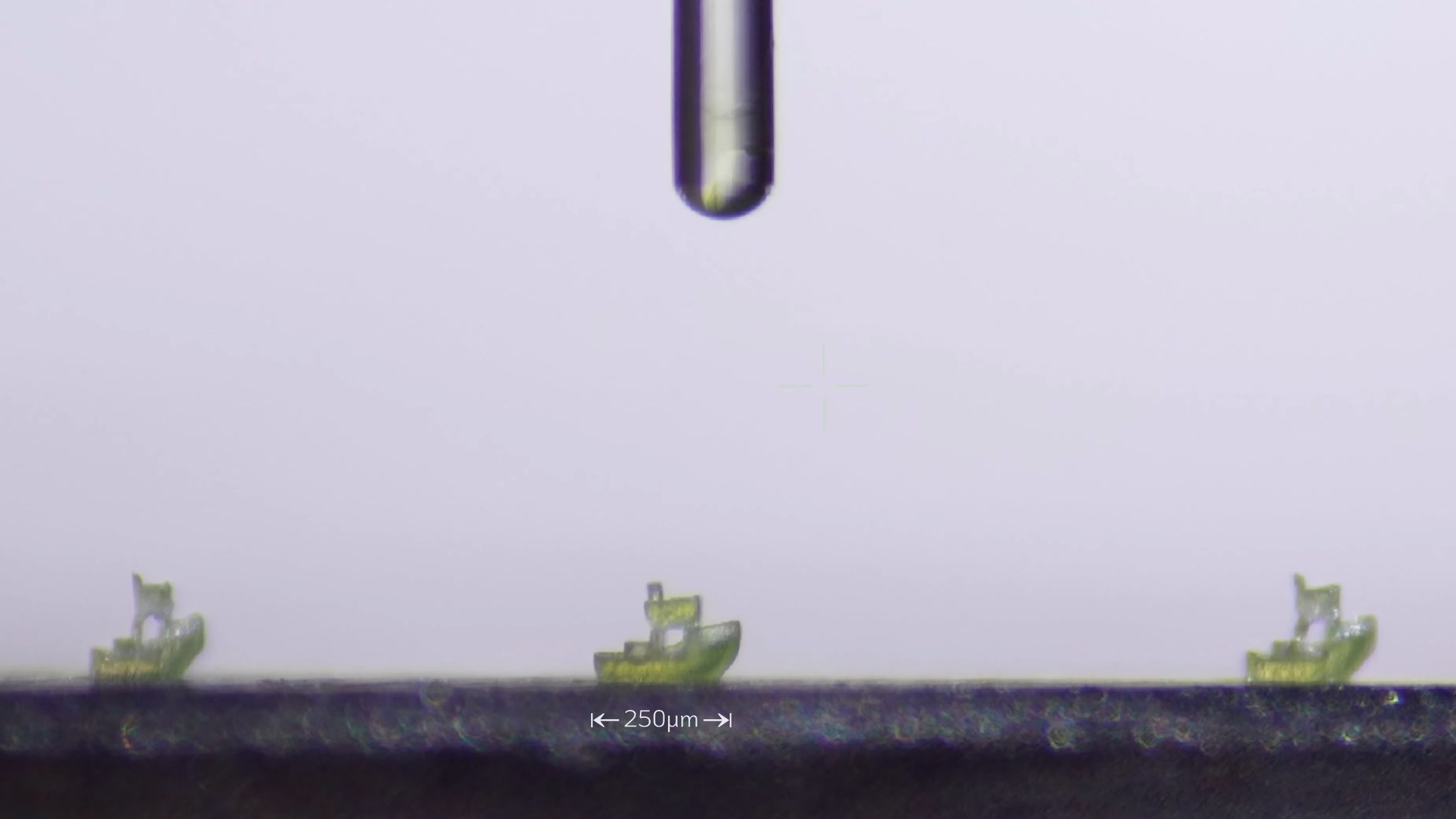
 ommercial two-photon polymerization and micro-SLA rigs can sculpt objects at sub-micron scales, but their six-to-seven-figure price tags keep them locked behind cleanroom doors. An independent maker operating under the handle Diffraction Limited just shattered that barrier, building a desktop micron-scale resin printer from scratch using off-the-shelf optical parts and a pantry spice.
The hardware couples an inexpensive 405-nm laser diode directly to an optical fiber mounted on a precision micromanipulator. With the fiber core measuring just three microns across, the focused beam cures an ultra-narrow resin cone that shears away cleanly as the manipulator traces standard slicer toolpaths across a glass substrate.
Early prototypes suffered from severe light bleed: ultraviolet photons penetrated too deeply into the vat, destroying vertical resolution. Instead of ordering costly specialized industrial light blockers, the builder extracted curcumin from kitchen turmeric powder using alcohol and blended it into standard photopolymer resin. The household dye absorbed excess UV scatter so effectively that the rig cleanly printed sub-micron test models, including a Stanford bunny dwarfed by a human hair and 150-µm-long 3D Benchy boats.
Beyond the novelty of kitchen-chemistry engineering, this opens a viable pathway for DIY microfluidic chips, micro-optics, and microelectronics prototyping without relying on institutional grants or industrial lithography gear.