

 f you ever wondered how to run a functional microcomputer without wall power or chemical batteries, the answer turns out to be an open flame. As spotted by Hackster, creator PickentCode on YouTube designed and built a working cyberdeck that pulls its operating power entirely from heat. The build pairs a miniature Stirling engine directly with an ESP32 microcontroller, creating a computing setup that runs for as long as you keep fuel burning beneath its piston.
The thermodynamic setup is mechanical until the final stage: an open flame heats the air inside a piston, forcing it inward, while cooler outside air chills the chamber and retracts the cylinder.
"As long as you have access to a flame, the PC will keep going."
This rapid expansion cycle spins an attached flywheel, driving a miniature generator to produce the electrical current needed to power the ESP32 board. Watching the assembly cycle at full speed looks violent enough to shake the mechanism apart, but it produces just enough continuous electricity to keep the chip humming.
Raw machine code in a wooden shell
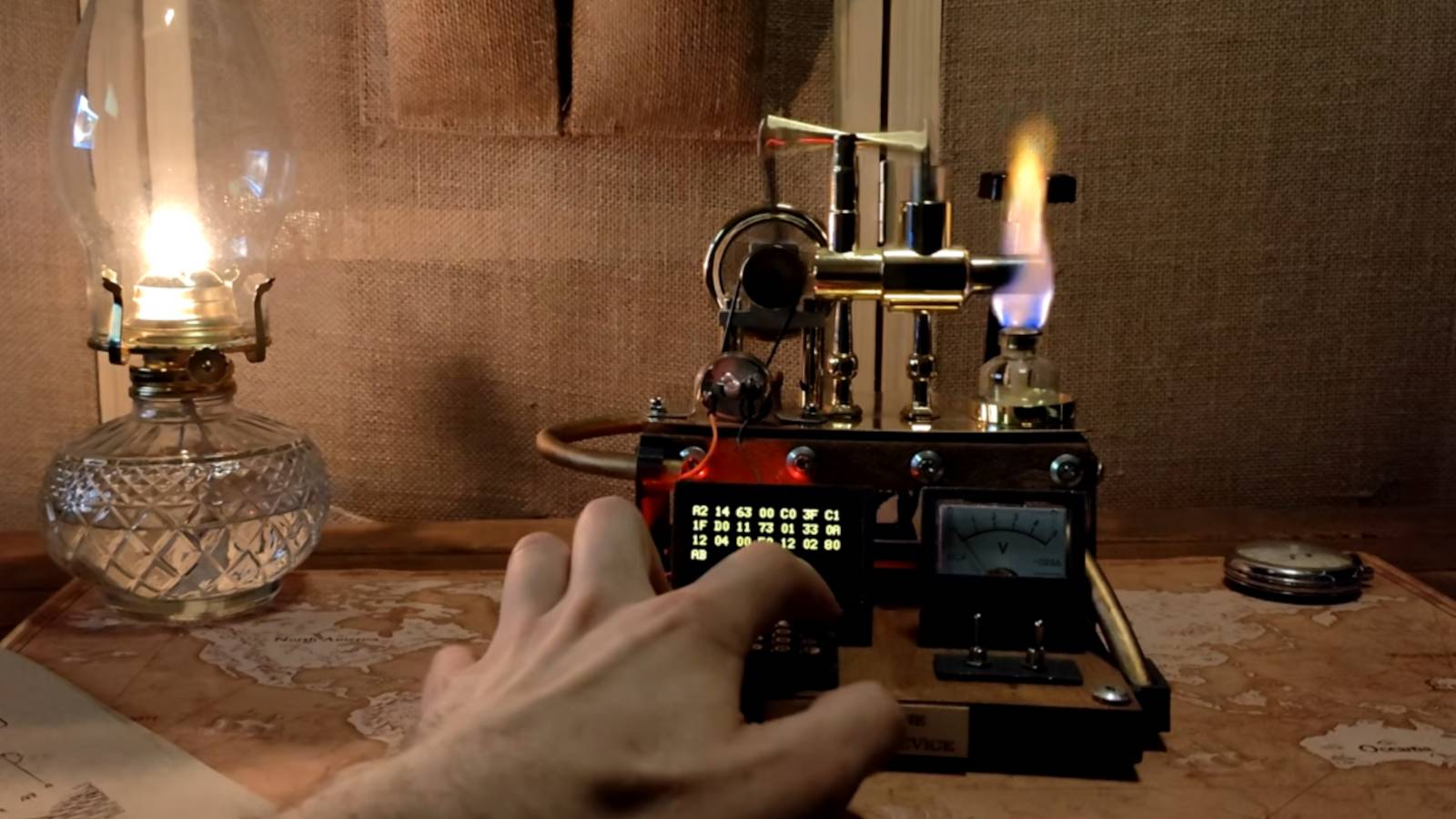
To house the project, PickentCode crafted a custom Victorian-style wooden chassis treated with wood oil, using a blue laser alongside Floyd-Steinberg dithering to engrave a detailed portrait of Robert Stirling directly into the grain. Yet the rig is far from a non-functional steampunk display piece.
The real engineering payoff lies in how the ESP32 copes with unstable, minimal juice. To bypass the power-hungry bloat of heavier operating environments, the system executes raw low-level machine code directly on the microcontroller. Stripping the software stack down to bare metal slashes power consumption enough to keep the terminal responsive despite a wildly unconventional generator.
DIY cyberdeck builders often chase battery density or solar trickle, but relying on direct thermodynamic conversion offers a grounding lesson in physical computing limits. You are never going to replace your daily laptop with a burner and a flywheel. Still, proving that modern microchips can execute custom user code purely off hot air is a masterclass in aggressive software optimization and real-world autonomy.