
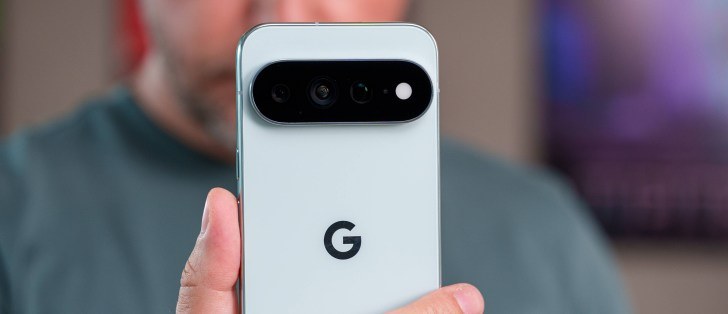
 he Google Pixel 11 Pro XL arrives in familiar armor, retaining Gorilla Glass Victus 2 panels, an aluminum chassis, and an IP68 rating for water and dust resistance. What changes immediately in hand is the 6.8-inch 120Hz OLED panel. Google pushed peak brightness to 3,600 nits—a spec designed for blinding direct sunlight, though keeping the screen pinned at maximum output will drain the 5,115mAh battery far faster than everyday indoor scrolling.
Inside, the device runs on a 3 nm Google Tensor G6 processor paired with Android 17 and a promise of seven major OS updates. Google clearly tuned the silicon for power efficiency and on-device Gemini AI processing rather than raw gaming dominance.
The specific Imagination GPU inside the Tensor G6 isn't widely supported, and it even lacks support for hardware ray tracing.
According to technical breakdowns, that graphical omission means serious mobile gamers miss out on dedicated lighting hardware, leaving the processing focus squarely on daily responsiveness, thermal stability, and local machine learning tasks.
Optics and Battery
Photography hardware shows a selective tune-up rather than an overhaul. The rear module keeps the familiar 50 MP wide main shooter and 48 MP ultrawide lens, but the 48 MP 5x telephoto camera adopts a larger physical sensor. That extra surface area captures more light during handheld telephoto shots in dim conditions, backed by an updated Best Capture AI processing pipeline.
Power delivery relies on that 5,115mAh cell with 45W wired charging and 25W wireless support. Memory configurations scale across 256GB with 12GB RAM, 512GB with 16GB RAM, and 1TB with 16GB RAM using fast UFS 4.x storage.
For everyday buyers holding a recent flagship, this is a textbook evolutionary polish. You get a brighter screen outdoors and sharper handheld zoom in low light, but with identical primary optics and a GPU that skips hardware ray tracing, there is little financial reason to ditch last year's device for incremental AI tricks.