
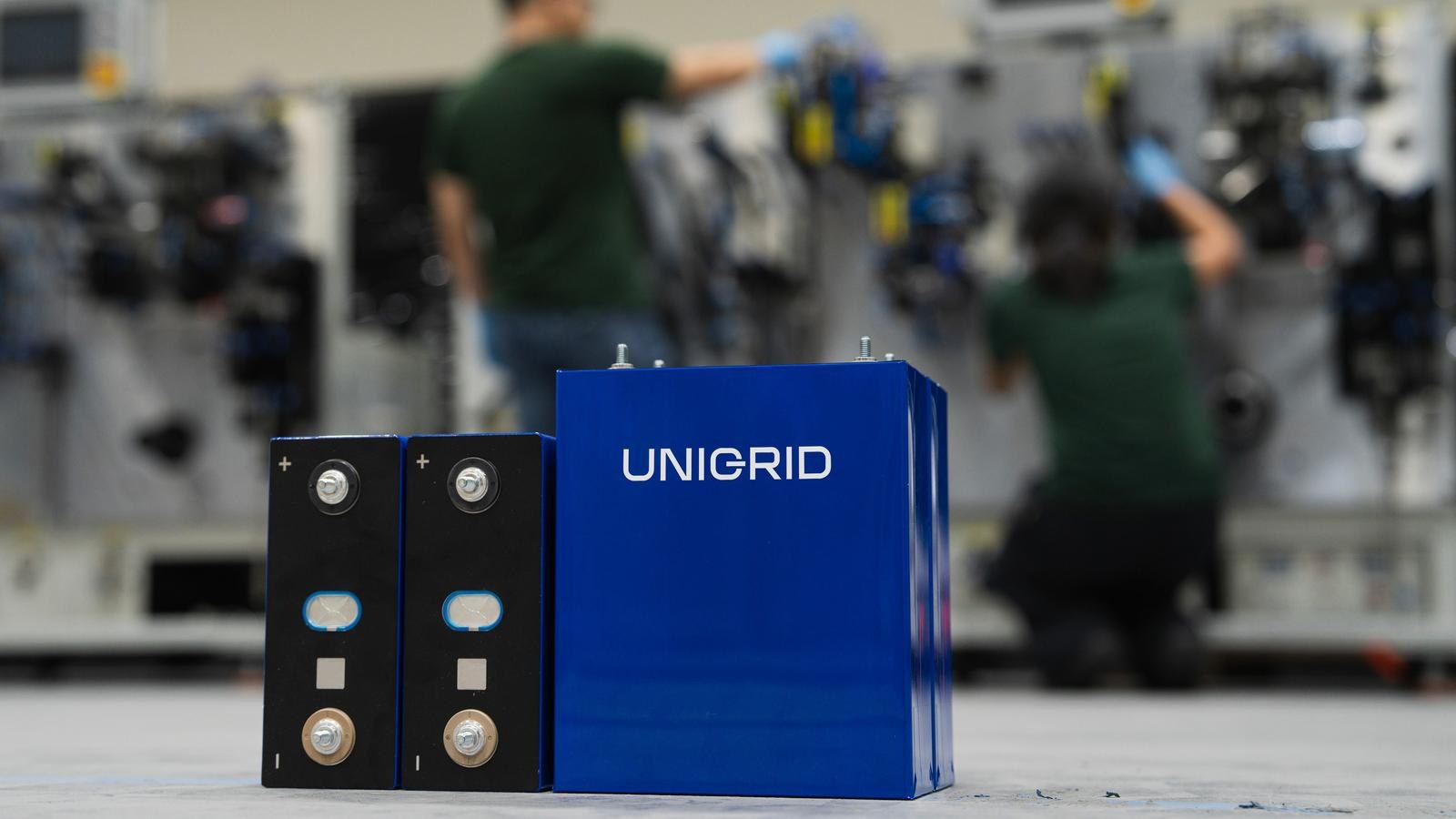
 he biggest drawback of modern lithium-ion batteries is their volatile temperament. A punctured casing or minor overheating is enough to trigger a violent chain reaction: toxic smoke, sudden flare-ups, and a gutted garage. That is why major automakers are actively hunting for calmer alternatives. Hyundai Motor has completed testing sodium-ion batteries developed by US-based UNIGRID under its ZER01NE Accelerator program. Engineers evaluated massive 210 Ah cells based on sodium chromium oxide (NCO) chemistry, and the results speak for themselves: the units easily withstand extreme temperatures from -20 °C to 60 °C, as well as 100% deep discharge with zero risk of thermal runaway.
25 Years of Service Without Costly Metals
In plain terms, these batteries do not require complex liquid cooling loops or heavy-duty air conditioning just to prevent energy storage stations from catching fire on a scorching afternoon. According to UNIGRID, stationary sodium storage setups will be significantly simpler and more reliable. Furthermore, sodium is vastly more abundant than lithium, and the NCO chemistry completely eliminates expensive, scarce metals like nickel and cobalt.
The developer claims NCO cells can deliver up to 30,000 cycles while retaining 80% of their initial capacity, potentially translating to roughly 25 years of operational life in stationary systems.
By comparison, standard lithium iron phosphate (LFP) cells typically degrade after just a few thousand cycles. A quarter-century of continuous operation without meaningful degradation makes sodium an exceptionally strong contender for home backup storage or industrial energy hubs.
Why Smartphones Will Stick with Lithium
Setting aside the excitement, a practical question remains: why are store shelves still packed exclusively with lithium? The answer comes down to basic physics. Sodium is noticeably heavier than lithium and offers a lower energy density per kilogram. Squeezing this chemistry into a pocket device would turn a sleek phone into a heavy brick. Pocket gadgets will rely on lithium for the foreseeable future. However, for home uninterruptible power supplies or industrial battery energy storage systems (BESS), weight is largely irrelevant—a half-ton metal cabinet in the basement is not going anywhere.
Hyundai is already planning to deploy these stationary systems across its manufacturing facilities worldwide under the Green Factory initiative, aiming to store cheap off-peak power and hedge against grid blackouts. Factories and utilities will be the first to reap the benefits of fireproof sodium chemistry. Everyday consumers will need to wait: the industry will refine the tech and scale up mass production before sodium packs finally make their way into residential garages.