

 ost DIY retro mods start with someone taking a Dremel to a perfectly preserved piece of history, gutting its soul to shove in a Bluetooth speaker. Hardware enthusiast fregacmols took the civilized route instead: turning an authentic rotary telephone into a fully functioning desktop cellular phone without drilling a single hole or modifying its original shell.
Rather than destroying the vintage hardware, the phone simply plugs directly into an external Subscriber Line Interface Circuit (SLIC) module. This interface board does the heavy lifting by recreating the electrical environment of a traditional landline. It pipes voice audio and control signals straight into a Lilygo ESP32-S3 microcontroller, which acts as the project's brain and directs a dedicated cellular modem.
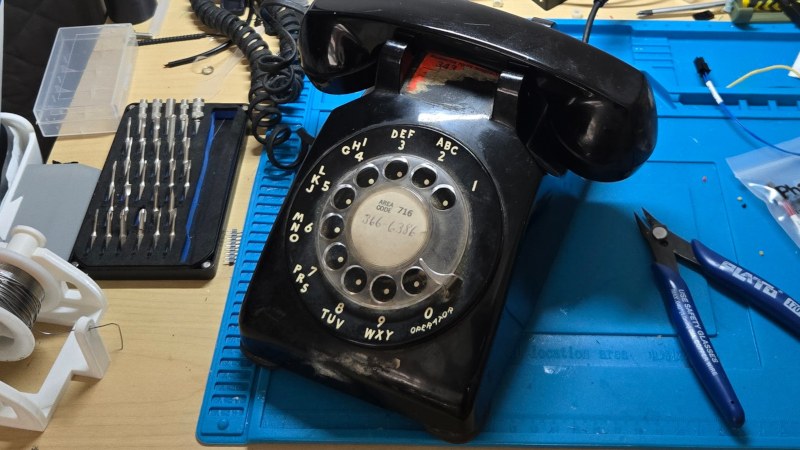
In hands-on practice, the illusion is seamless. Pick up the heavy handset, and you get an authentic dial tone; spin the mechanical rotary dial, and the pulses are instantly translated into outbound cellular calls. When someone rings your number, the board pushes the necessary voltage to strike the phone's physical brass bells with full, glorious resonance. There is no touch screen, no endless push notifications, and zero butchered vintage parts—just an undeniably tactile desktop cell phone that gives obsolete mechanical engineering a second life.