
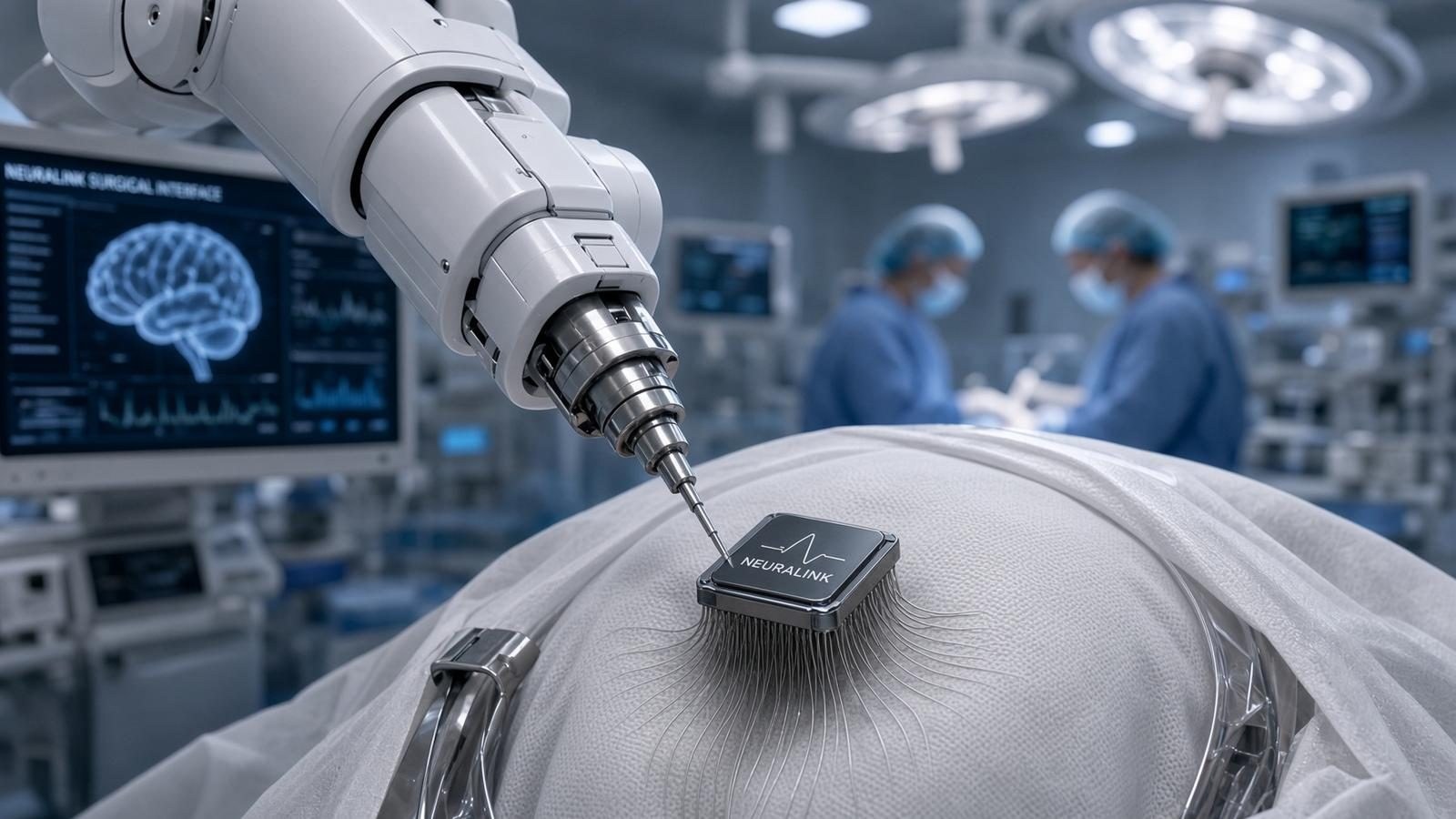
 hen you think about operating a computer, the absolute last thing you want to consider is surgical intervention in your own skull. While the tech industry argues over which plastic gamepad feels better in your hand, the Neuralink project is quietly and methodically turning science fiction into the dry statistics of medical protocols. For the average buyer choosing between a thirty-dollar wireless mouse and an ergonomic trackball, this neurobiology feast is not coming to your local electronics store anytime soon. Still, what is happening here changes the very standard of how humans can issue commands to machinery.
Numbers over fantasies
Mechanically, it is straightforward: instead of inventing new sensors or making patients spend all day straining their imagination just to shift a pixel by two centimeters, the developers took a massive accumulated array of information and fed it to algorithms. Neuralink clinical trial participants have already logged over 50,000 hours of implant use. This is a gigantic array of disjointed impulses where an outsider would see only random noise. Neuralink pre-trained a foundational brain-computer interface model on this data using self-supervised neural encoders. Artificial intelligence processes this entire noisy mess from inside the skull, turning chaos into clean instructions for the operating system.
They transform unstable and noisy signals of individual neural impulses into more stable representations.
Even without a medical degree, the result is obvious: the decoders stopped crashing every single day and are maintaining stability for weeks at a time. For some participants, the necessary calibration time dropped from 10 minutes a day to 10 minutes a week. The system no longer demands daily tweaking, transforming from a finicky laboratory instrument into a tool that simply works.
Cursor teleportation
Logically, the most striking effect of these fifty thousand hours of testing is how the cursor now moves across the screen. The neural network learned to anticipate human intent, eliminating the need to trace out trajectories. Neuralink also demonstrated cursor control where the pointer immediately jumps to the intended target without forcing you to manually drag it across the screen. This cuts out tedious dragging and saves precious fractions of a second.
Moreover, the company reported a new cursor control speed record of 11.32 bits per second.
Eleven-plus bits per second sounds modest to anyone used to megabytes, but for direct thought-to-monitor transmission, it is a breakthrough. According to Neuralink’s estimates, this metric beats the results of most people without motor impairments. Put simply, a person with a chip in their head starts moving a cursor faster than a healthy user with an ordinary office mouse. Moving forward, the company plans to combine data from different participants, achieve single-step or zero calibration, and build a software interface for working with the motor cortex.
Key takeaways
It is far too early for the average buyer to run to a clinic for a chip — the technology remains a deeply experimental medical solution rather than a consumer gadget. However, the accumulated dataset and clever movement-prediction algorithms will inevitably migrate into mainstream electronics of the near future, making device control instantaneous.