
 vidia has officially confirmed that DLSS 5 will launch on September 3 at 9 pm PT inside NBA2K27. Following an earlier announcement this year and a leaked DLL inside the game just days ago, the technology is rolling out exclusively for RTX 50 Series desktop GPUs, RTX 50 laptops, and the GeForce NOW cloud service. Older graphics cards are officially left out in the cold. For a feature marketed as the next massive leap in gaming visual tech, picking an annualized sports simulator as the debut vehicle is an odd flex. According to Nvidia, a close partnership with 2K and Visual Concepts is designed to deliver an authentic sports experience, turning digital basketball into the first real test of whether generative graphics belong in high-end PC gaming.
Generative Lighting Meets Severe Performance Hits
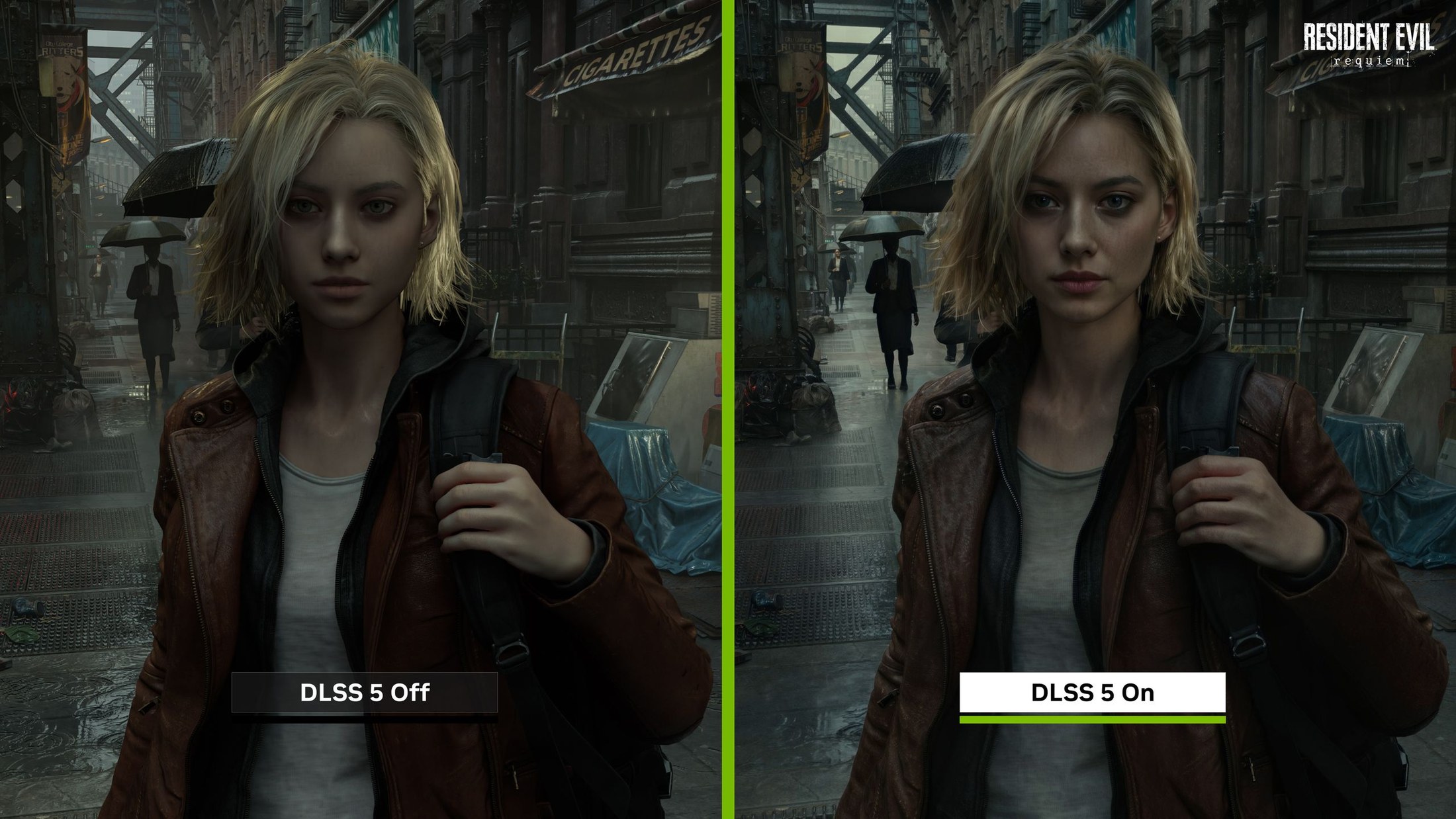
Behind the marketing phrase "3D-guided Neural Rendering," DLSS 5 works by predicting how complex visual elements should appear in the real world based on color buffers, motion vectors, and input frames. In plain English, instead of traditional rasterization doing the heavy lifting, an AI model calculates how light naturally passes through players' ears, catches their hair, and illuminates skin while maintaining scanned facial geometry from real-world athletes. In typical fashion, Nvidia CEO Jensen Huang framed this as an epochal milestone for the industry:
"the GPT moment for graphics — blending hand-crafted rendering with generative AI to deliver a dramatic leap in visual realism while preserving the control artists need for creative expression."
Yet this neural makeover comes with heavy baggage for actual gameplay. DLSS 5 is extremely resource-intensive, with initial testing pointing to severe drops in baseline frame rates when the feature is enabled. While Nvidia released in-house benchmarks alongside the launch announcement, the data raises immediate red flags: the company pointedly shared 4K performance numbers solely for the top-tier RTX 5090 and RTX 5080. When generated frames introduce noticeable input latency and dynamic artifacting during fast breaks, trading raw responsiveness for AI-inferred ear lighting becomes a steep tax on players. Nvidia is using a flagship sports franchise to force an expensive hardware upgrade cycle, but until neural rendering proves it won't ruin competitive timing, nobody should be rushing out to buy an RTX 50 card.