
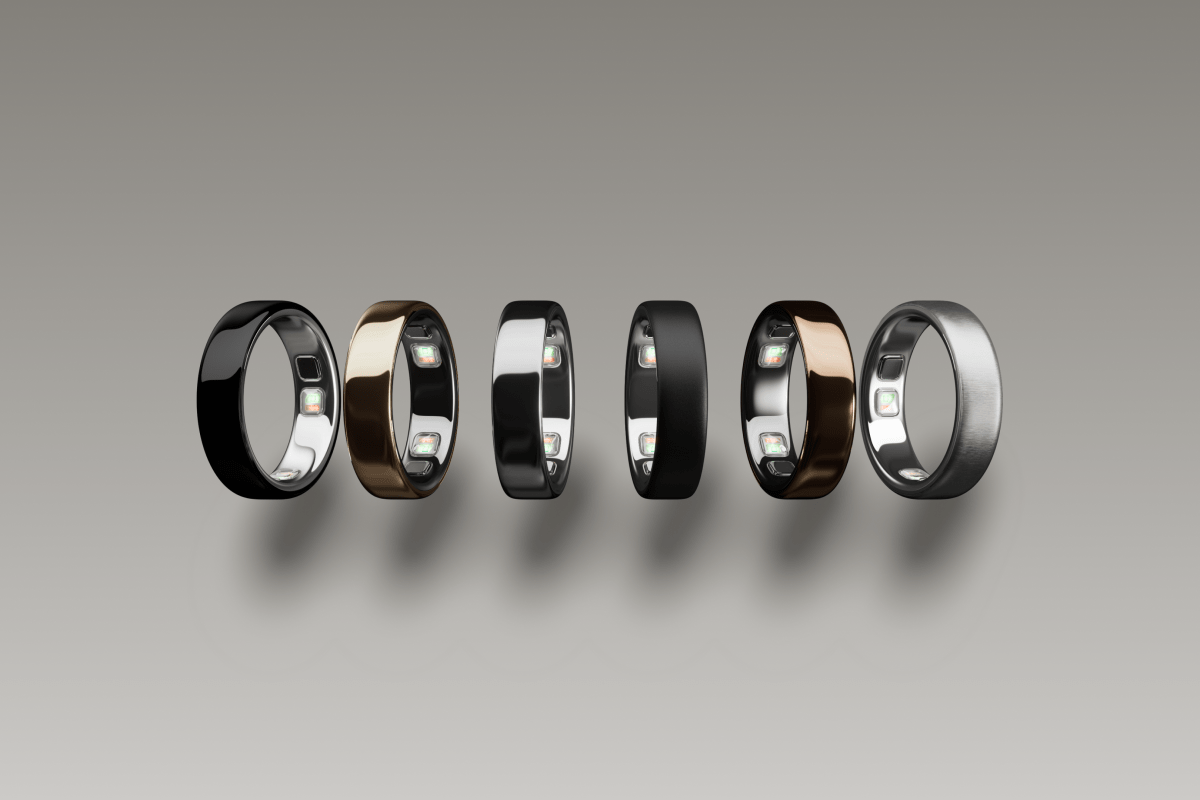
 mart ring pioneer Oura is preparing a United States public listing that could value the Finnish company north of $16 billion while raising up to $3 billion as soon as next month, according to Bloomberg. That is a massive leap from the $10.9 billion valuation it secured last September after closing an $875 million Series E round backed by Fidelity, ICONIQ, Whale Rock, and Atreides, alongside early investors like Dexcom, The Chernin Group, Forerunner Ventures, Coatue, and Temasek. For an outfit of 900 employees operating between Oulu and San Francisco, the expansion looks formidable on paper.
The commercial engine behind those numbers is pure subscription momentum: Oura generated $500 million in revenue in 2024, hit roughly $1 billion in 2025, and internal projections place 2026 revenue near $2 billion, according to disclosures following its confidential IPO filing in May. But public investors are not pricing a titanium band at $16 billion because of metallurgy. They are buying the recurring subscription cash flow extracted from locking your daily biometric readouts behind a monthly paywall.
The Wearable Arms Race
The landscape around your fingers and wrists is no longer an uncontested playground. Samsung entered the ring category two years ago with its Galaxy Ring, leveraging pure manufacturing muscle without forcing an immediate monthly toll. Meanwhile, fitness band rival Whoop, valued at $10 billion in March, executed its own pivot by moving beyond elite athletes to chase mass-market health metrics, including hormone monitoring and blood-panel testing for thyroid function and perimenopause.
Oura charted the exact same course, shifting away from its original biohacking tech-executive niche to rebrand as an indispensable sleep-and-recovery lifestyle companion.
"Oura has followed a similar path, evolving from its starting niche of biohacking CEOs into a more mainstream sleep-and-recovery brand."
Yet as these smart rings attempt to displace classical smartwatches by promising screen-free convenience, the legal and economic reality for everyday buyers looks considerably sharper.
Promises at the Lab Door
The fundamental friction for consumers sits in the gap between wearable marketing and clinical measurement. A proposed class action lawsuit filed in San Francisco accuses Oura of misleading buyers regarding sleep-tracking precision. The complaint argues that while Oura markets exact sleep staging, genuine clinical staging requires electrodes placed across the scalp and eye sensors inside an accredited laboratory.
In a statement to TechCrunch, an Oura spokesperson rejected the lawsuit's allegations, stating the company will defend its technology and pointing out that while the ring is not a medical device, its sleep algorithms have been validated against polysomnography in multiple peer-reviewed studies. For the regular shopper weighing a $300 to $500 piece of smart jewelry against an Apple Watch, the message from Wall Street is crystal clear: the hardware purchase is merely the admission fee, and the real cost of ownership is renting your own biometric data forever.