
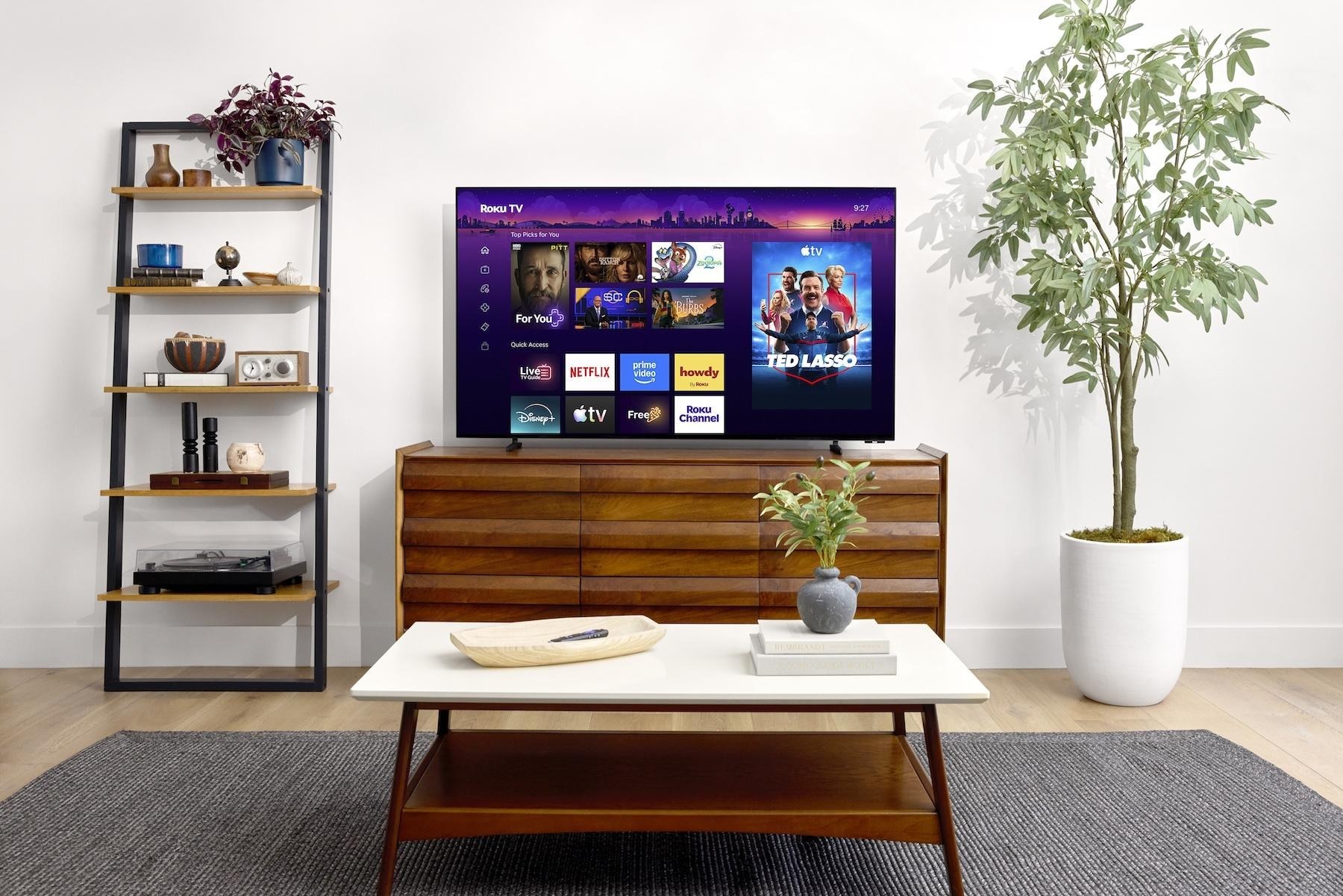
 uying an OLED panel used to mean handing over serious cash to LG, Sony, or Samsung while pretending the dent in your checking account didn't sting. That comfortable oligopoly just hit a wall. As John Higgins reported for The Verge, Roku has rolled out its first-ever OLED television, the Roku Pro Series, bringing self-lit pixel black levels straight into the midrange price bracket. While LG, Samsung, and Sony with its newly announced Bravia 6 lineup continue to guard their high-margin territory, Roku is deliberately undercutting all three traditional heavyweights on sticker price.
Exclusive to Amazon for 2026, the standard Roku Pro Series starts at $999 for 55-inch and 65-inch sizes. For that money, you get a genuine 120Hz refresh panel, four full HDMI 2.1 ports, and support for both Dolby Vision and HDR10+.
Roku comes in cheaper than Sony, LG, or Samsung with an intriguing OLED option.
Gamers are not getting shortchanged either. Roku packed the base set with auto low latency mode, FreeSync Premium, and variable refresh rate support. The company even added a backlit remote alongside a physical remote finder button directly on the TV chassis for whenever the controller disappears between couch cushions.
The Real Trade-Offs in Living Rooms
Roku can afford this aggressive pricing because it doesn't need to make its fortune on hardware margins; it monetizes you over years through home screen ad slots, promoted content, and app royalties. That business model forces Korean and Japanese legacy brands into an uncomfortable corner, eroding the juicy margins of their entry-level OLED tiers.
If you want more hardware brightness to compete with daytime glare, Roku is rolling out a secondary tier called the Pro Series LX in October. According to Higgins, the LX tier is roughly twice as bright as the base set, adds a polarizer to tame living room reflections, and bumps variable refresh rate support up to 144Hz. Those upgrades raise the price tag to $1,299 for 55 inches and $1,599 for 65 inches. The trade-off is clear: you save upfront cash on premium display tech, but you pay with Roku's ad-heavy interface on your living room wall.