

 or just $10 to $30, online marketplaces promise an impregnable fortress: a padlock featuring a fingerprint scanner, water resistance, and a smart chip. Forget physical keys—just tap your finger to unlock. It sounds impressive, but in practice, trusting such a gadget with valuable possessions is downright dangerous.
As hardware teardowns by security analysts reveal, the primary flaw of budget biometrics comes down to basic physics. The strength of any security system is always determined by its weakest link. Marketers can endlessly praise sensor readout speeds while the mechanical frame shatters on contact with a simple rock.
The anatomy of a cheap padlock
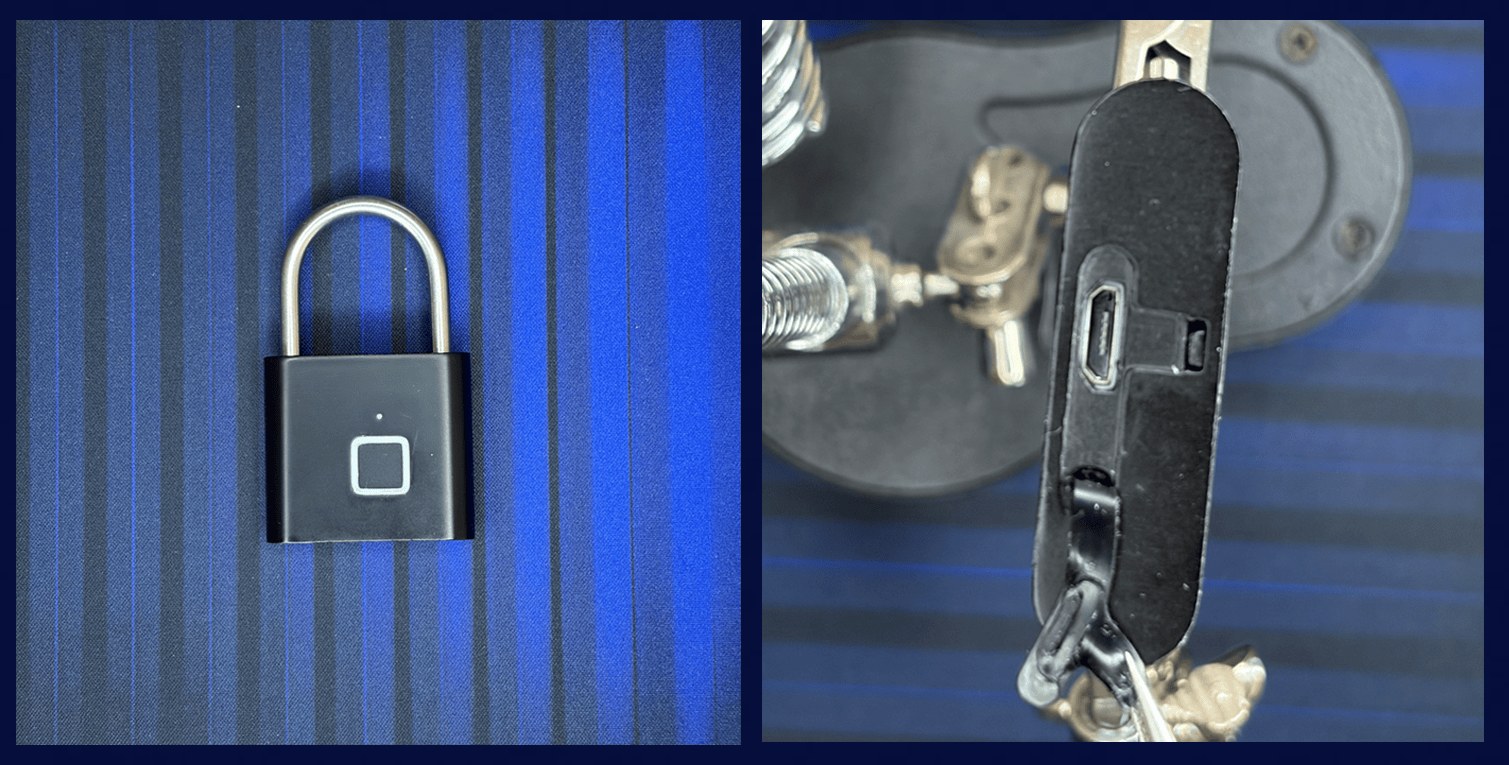
To realistically evaluate smart padlock security, hardware analysis expert Denis Astafiev tested three models across different price tiers. First in line was an unbranded Chinese padlock priced around $10 with a fingerprint scanner and an exposed charging port. Next came the PS-Link PS-SY12, running on standard batteries for roughly $18. Rounding out the trio was the reputable ABUS Touch at around $25—a solid metal design from an established brand that picked up a Red Dot Award in 2022.
Hardware security audits always move from the simplest attack vectors to the most complex. No thief will bother intercepting microcontroller signals or spoofing optical sensors when a lock can be forced open with crude tools in three seconds.
A device's real-world security is defined not by its most advanced feature, but by the weakest link in the entire assembly.
That is why experts first assess obvious physical vulnerabilities: emergency reset bypasses, wide gaps around the shackle, brittle plastic covers, and direct circuit access through an open charging port.
Brute-force vectors over high-tech hacks
The internal engineering on budget models is shockingly crude. The sub-$10 unbranded padlock relies on a brittle silumin alloy casing that crumbles under a single hammer blow. The PS-Link model features plastic side panels that pop off with a screwdriver, exposing the delicate latching mechanism. Generous clearances around the shackle allow attackers to bypass the internal solenoid using a thin shim or an ordinary paperclip—completely bypassing the scanner.
Using these smart gadgets on a garage, a storage shed, or a bicycle is wishful thinking. At best, they suit a gym locker to keep sneakers away from opportunistic bystanders, but they offer zero resistance against any deliberate physical attack.
Key takeaways
- Budget biometric padlocks priced between $10 and $30 sell an illusion of security, falling far short of basic mechanical deadbolts.
- Attackers do not hack the fingerprint sensor; they exploit plastic housings, weak alloys, and unshielded shackle gaps.
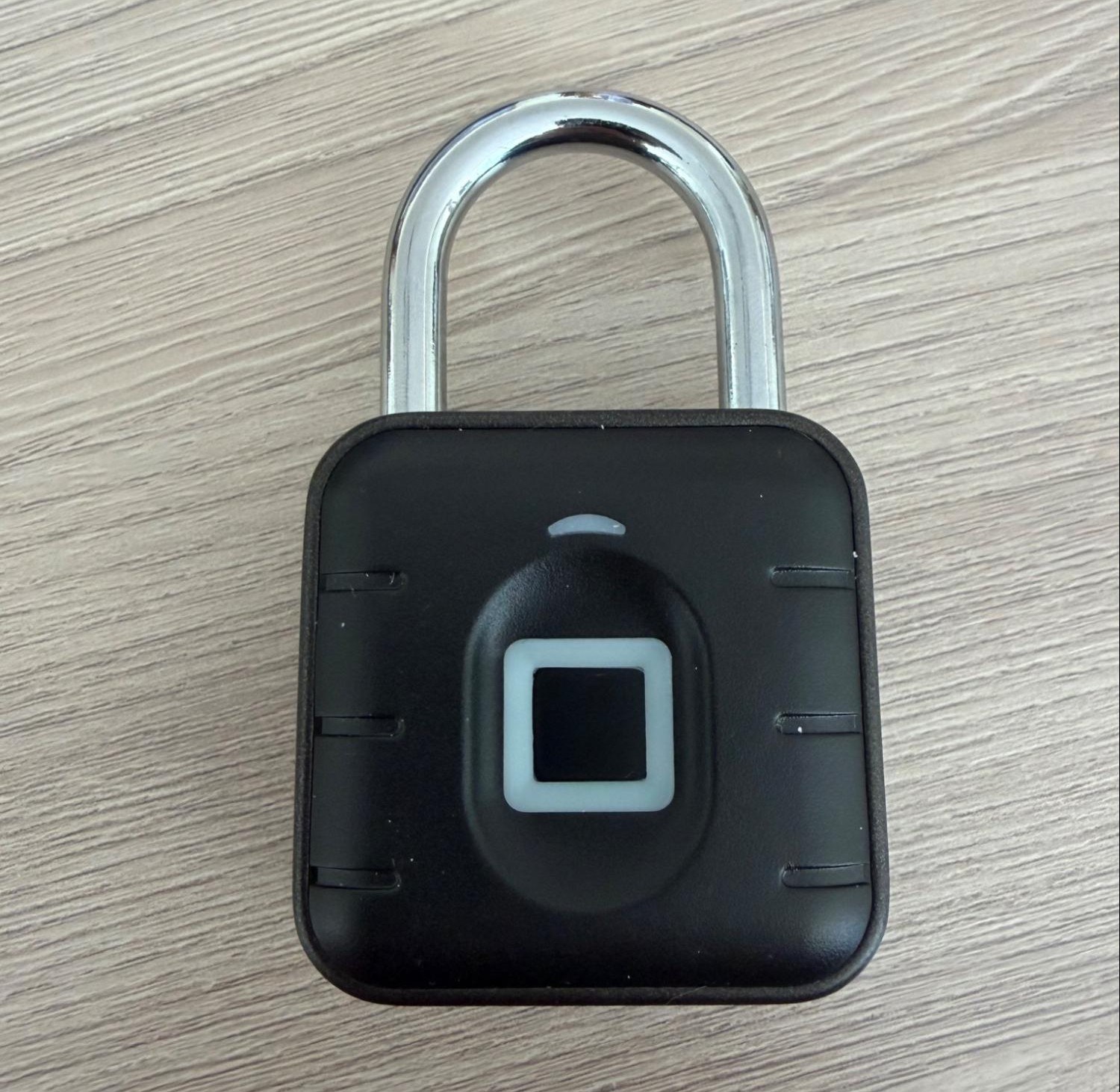
- These devices work fine for gym lockers, but trusting them with high-value property is an unnecessary risk.