
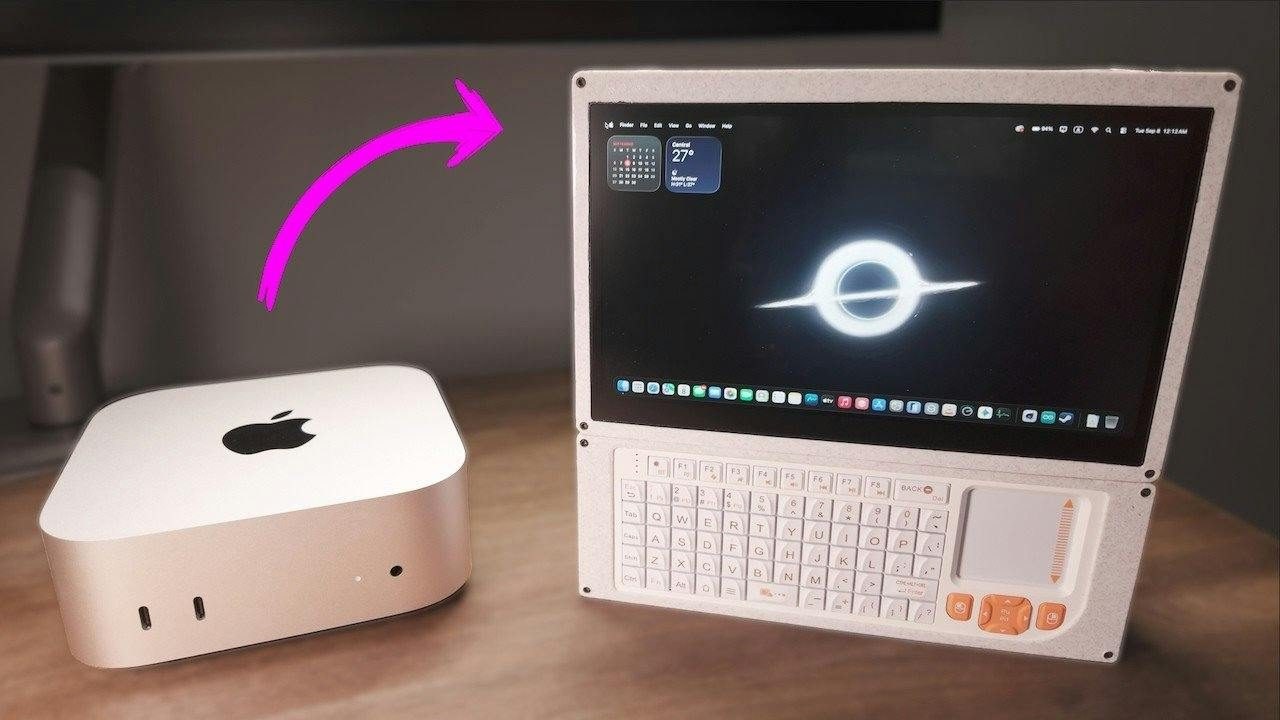
 ost homemade portable computers settle for underpowered Raspberry Pi boards, sacrificing serious computing muscle just to fit inside a backpack. Hardware modder Shing Solutions decided against that compromise by gutting a base Apple M4 Mac mini and packaging its mainboard into a fully autonomous handheld cyberdeck.
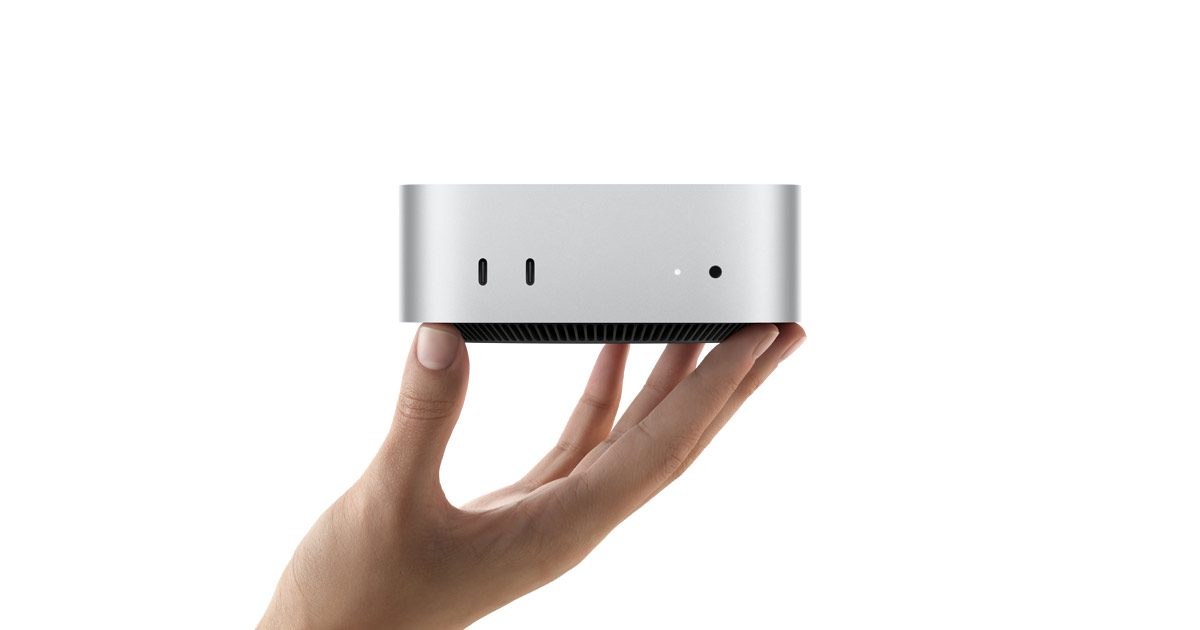
To keep performance intact without melting the casing, Shing Solutions stripped the Mac mini down to its core circuit board while deliberately preserving Apple's factory heatsink and blower fan. Sacrificing that stock cooling setup for a flatter chassis would have shaved off bulk, but keeping the original thermal assembly ensures the M4 silicon pushes heavy workloads without throttling or burning your palms. The entire board and cooling array sits inside a custom 3D-printed shell dubbed the Mac Nano.
"Rather than permanently attaching it to the cyberdeck, the Mac Nano slides into the back on rails, almost like a giant Game Boy cartridge."
This modular cartridge setup lets the core computer slide out on rear tracks, leaving a clean path to drop in upgraded motherboard assemblies whenever Apple updates its silicon.
Controls, Display, and Power Engineering
Up front, the build pairs a 7-inch, 120 Hz IPS touchscreen with a miniature hardware QWERTY keyboard and trackpad. Shing Solutions ripped out the keyboard's internal battery and wired it straight to an internal USB bus to reclaim internal clearance. Side rails latch onto genuine Nintendo Joy-Cons, wired internally via harvested Nintendo Charging Grip boards to bypass Bluetooth latency, while Steam handles controller mapping around macOS's lack of native wired Joy-Con support. Hooking everything together required fabricating a bespoke three-port USB hub from two cannibalized USB 2.0 splitter boards.
Powering desktop-tier silicon off a portable pack requires serious electrical gymnastics. Shing Solutions engineered a custom battery sled with four high-drain 18650 cells pushing roughly 36Wh of usable power, yielding about six hours of real-world endurance thanks to the M4's remarkable power efficiency. A reworked uninterruptible power supply board handles hot-swapping between the battery pack and wall power without forcing a reboot, pausing for a three-second validation safety check whenever AC power reconnects. A Seeed Studio XIAO ESP32S3 microcontroller, paired with two thermistors and a DFRobot INA219 sensor, constantly tracks system draw and cell thermals.
You cannot buy this in an Apple Store, and nobody is replacing their MacBook Air with a 3D-printed brick. Yet projects like this expose a major shift: Apple Silicon has made desktop-grade performance efficient enough to run untethered in your palms for hours, laying down a formidable blueprint for the next generation of handheld gaming PCs.