
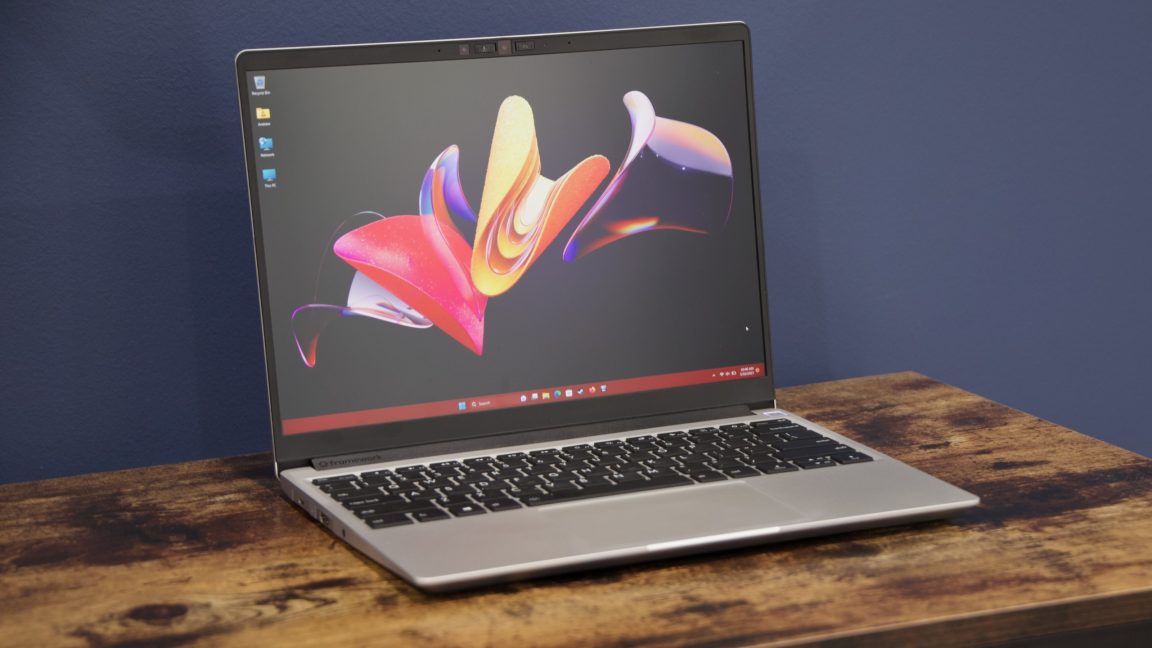
 f you deploy or carry a Framework Laptop 13 powered by AMD Ryzen 7040 series silicon, halt all pending firmware pushes immediately. In June 2026, Framework rolled out BIOS 3.20 to backport motherboard support for newer hardware peripherals—specifically a haptic touchpad and revamped speakers engineered for the higher-tier Framework Laptop 13 Pro. The patch was also meant to squash a bug where the Battery Extender status misreported state after reboots, hibernation, or expired shutdown timers. Instead, the update is hard-locking systems mid-flash, reducing mainboards to inert slabs of silicon.
While some users managed to skate by, dozens of reports confirm catastrophic stalls during the flashing process. Forum member Sven documented the failure mode in July: a persistent black screen under the Framework logo, an immobilized two-dot progress bar frozen for over three hours, and an unresponsive power button that ignores hard resets. In a statement to Ars Technica, Framework admitted it is tracking reports of installations resulting in non-bootable boards and is probing the root cause.
The Irony of Repairable Hardware Hampered by Firmware
The irony cuts deep for a brand whose entire identity rests on user agency and modular repairability. When closed, low-level firmware crashes mid-flash, modularity cannot save you; dead silicon is still dead silicon. Community grievances regarding erratic BIOS flashing on Ryzen 7040 units stretch back to at least March 2025, but BIOS 3.20 brought the architectural oversight to a crisis point when early support tickets routed out-of-warranty users straight to the checkout page for costly out-of-pocket mainboard replacements.
Software developer and blogger Guanzhong Chen highlighted the severity of the flaw after bricking his own unit, noting that the bug appears to display garbage memory directly to the display before locking up. Modular screws and swappable ports are meaningless when the proprietary microcode running underneath lacks basic fallback safeguards.
Vendor Policy Shifts and Recovery Modes
Framework is now shifting its warranty stance under escalating pressure. In a statement provided to Ars Technica, the company confirmed it will replace bricked in-warranty mainboards and make explicit exceptions for out-of-warranty hardware whenever an official, stable-channel BIOS update kills the board. Framework is also retrofitting a Crisis Recovery Mode—a low-level recovery protocol present on its Desktop line—to eventually protect the Framework Laptop 12, 13, and 16 fleets.
For enterprise IT administrators and individual power users alike, an immediate moratorium on BIOS 3.20 is the only rational operational choice. Framework must prove it can deliver a bulletproof flashing pipeline and crisis recovery fallback before enterprise fleets risk another routine firmware update.