
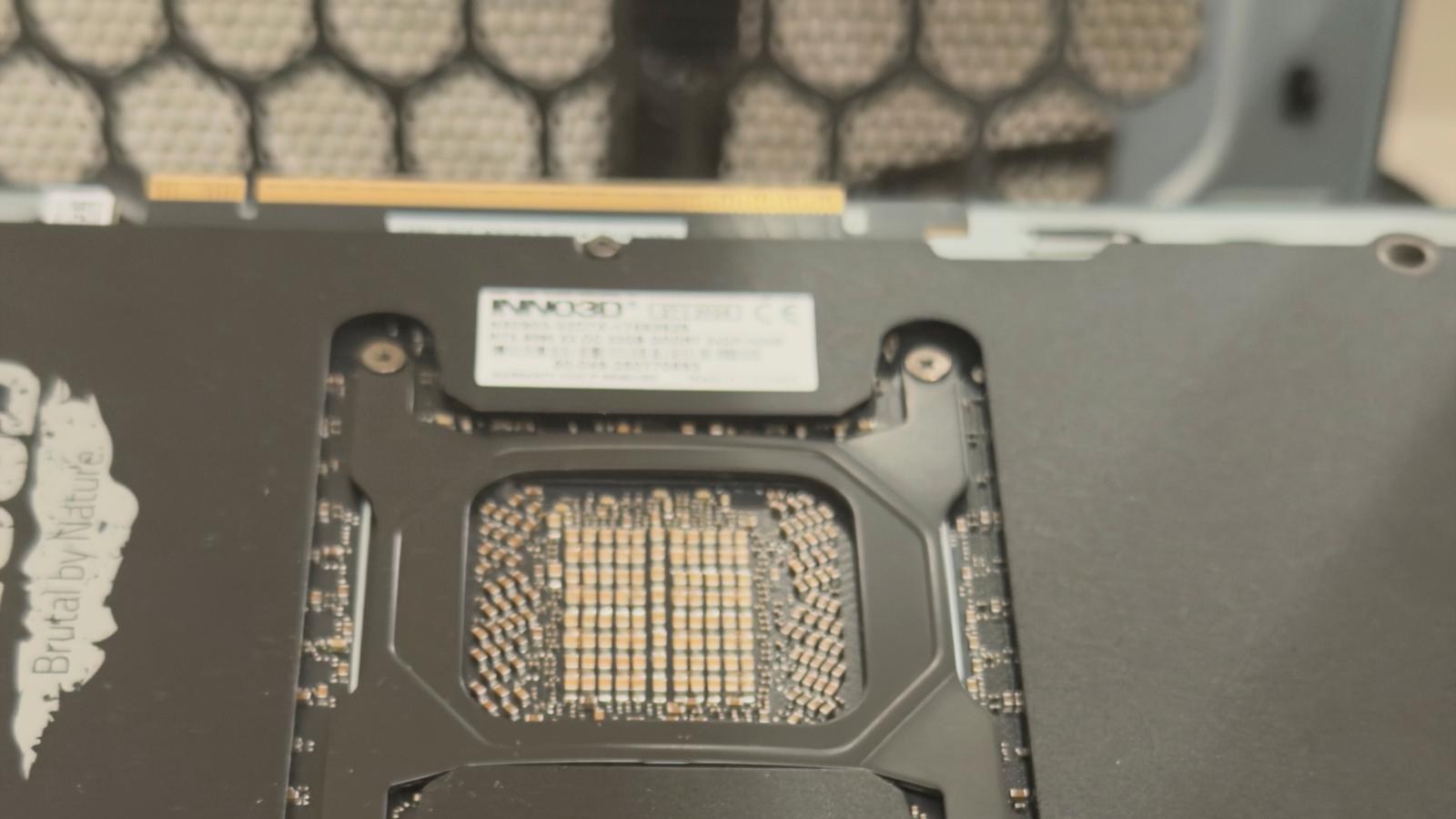
 top-tier graphics card priced like a used car has suddenly decided to turn a prebuilt desktop into an expensive grill. Japanese researcher Yoichi Ochiai shared footage of his Alienware Aurora rig, where a flagship INNO3D GeForce RTX 5090 burst into open flames during a routine workload. The fire did not just scorch the PCB—it left a thick layer of soot across the interior walls of the branded chassis. There was no extreme overclocking or brutal stress testing involved; the system was operating under normal everyday conditions.
The Fire Starts on the Board
Naturally, initial suspicion fell on the notorious 16-pin power connector, already famous for melting incidents in the previous generation. However, this time, experts at Uniko's Hardware analyzed the damage and reached a troubling conclusion: the power connector remained completely intact. The ignition point was located directly on the printed circuit board, specifically within the power delivery circuitry for the high-speed GDDR7 memory.
The root cause of the fire was a critical failure in the internal memory VRM, not the external power plug.
Adding fuel to the fire, a nearly identical incident occurred just days earlier with an AX Gaming GeForce RTX 5080, where components burned out in the exact same power sector. Ironically, both INNO3D and AX Gaming build their cards on essentially identical reference board layouts. While the affected 5080 owner received a warranty replacement, the underlying concern remains: when the board components themselves catch fire rather than external plugs, it points to a systemic engineering miscalculation in the race for maximum clock speeds.
What This Means for Your Build
Modern flagship GPUs have reached power consumption and thermal output levels where even a microscopic flaw in component trace routing can trigger a pyrotechnic display. Cramped OEM cases, even those carrying premium badges like Alienware, physically struggle to dissipate hundreds of watts of heat trapped in stagnant PCB zones.
Unless you run complex neural network training around the clock, opting for ultra-high-end graphics cards today poses genuine risks to your wallet and home interior. For those committed to buying a monster like the RTX 5090, compact builds are out of the question: hardware this demanding requires a massive, high-airflow case, straight-through fan ventilation, and constant monitoring of component temperatures that ordinary buyers never previously had to worry about.