
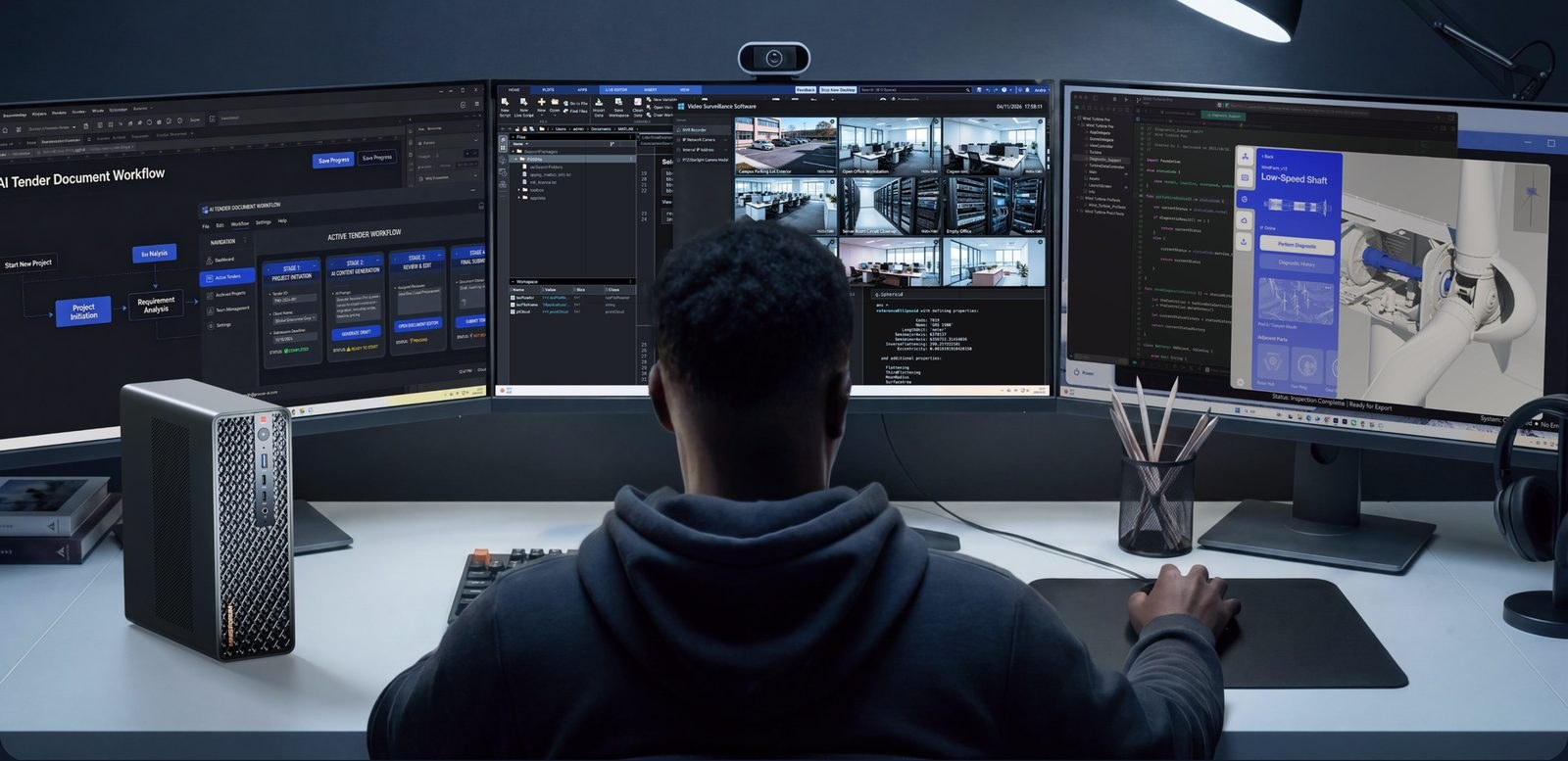
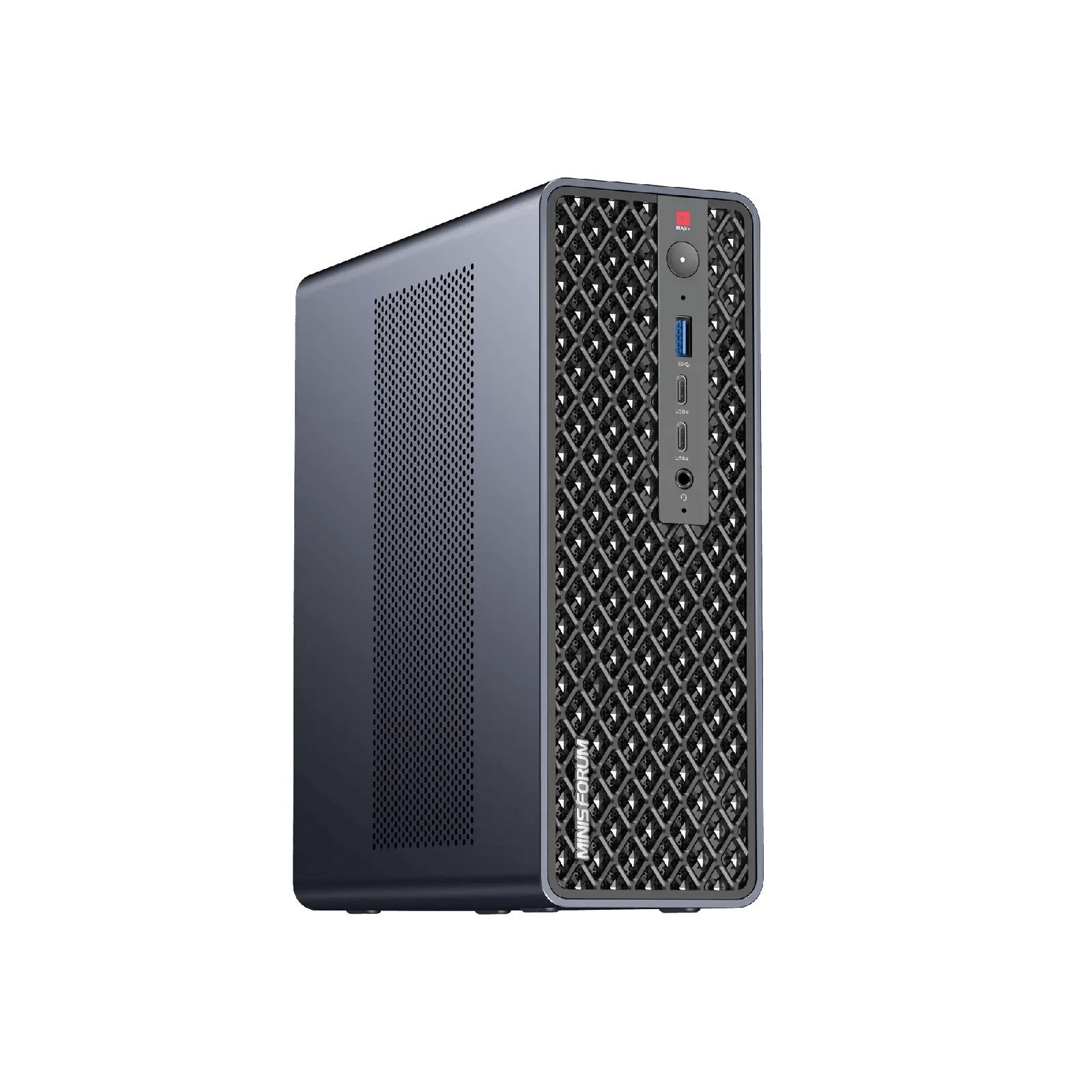
 pending $7,399 on a small desktop calls for a better explanation than corporate murmurings about artificial intelligence. The Minisforum MS-S1 MAX-P495 tries to provide one with 192GB of unified memory, allocating up to 160GB to its integrated graphics. If the local language model you want to run keeps crashing from memory starvation, that is a much more useful starting point than any generic processor badge. The US store currently lists the Ryzen AI Max+ PRO 495 configuration with 192GB of RAM and a 2TB solid-state drive for $7,399, putting it squarely in the price bracket of a reliable second-hand hatchback rather than a casual impulse buy for your home office.
What the extra memory actually buys
Unified memory is simply a shared pool that the processor and graphics chip access together. The P495’s advertised 160GB graphics allocation comes directly out of that 192GB total, meaning you do not get 192GB of system RAM plus a separate 160GB graphics card on top. Compared with the earlier MS-S1 MAX and its maximum 128GB configuration, that is a 50% increase in total capacity, and Minisforum states the maximum graphics allocation rises from 96GB to 160GB. For a heavy workload that exceeds the older machine’s memory limits, this difference dictates whether your project fits on a single system or requires a cluster.
Capacity lets you hold more data, but processing power determines how quickly you can work through it. More memory will not automatically make a smaller model generate answers any faster, nor does having 160GB available to integrated graphics make this equivalent to a dedicated desktop graphics card with the same capacity. AMD specifies LPDDR5X-8533 memory on a 256-bit interface, while the previous MS-S1 MAX used LPDDR5X-8000, meaning the rated transfer speed increase is a modest 6.7%—far smaller than the dramatic jump in raw capacity.
In its October 8 announcement, Minisforum reports running DeepSeek V4 Flash 284B at Q4 quantization on one system at approximately 12 tokens per second.
That figure refers to the model’s parameter count rather than answer quality or speed. Quantization describes a reduced-precision representation that lowers memory requirements, and since the model file, working memory, and conversation context all need room, a large RAM figure alone does not establish which settings will run comfortably. Minisforum also quotes approximately 16 tokens per second for Qwen3.5-397B on two linked machines, and its four-system example uses DeepSeek-R1 671B Q4, pointing to a stated 380GB model size that demands distributed hardware.
Ports, expansion, and everyday reality
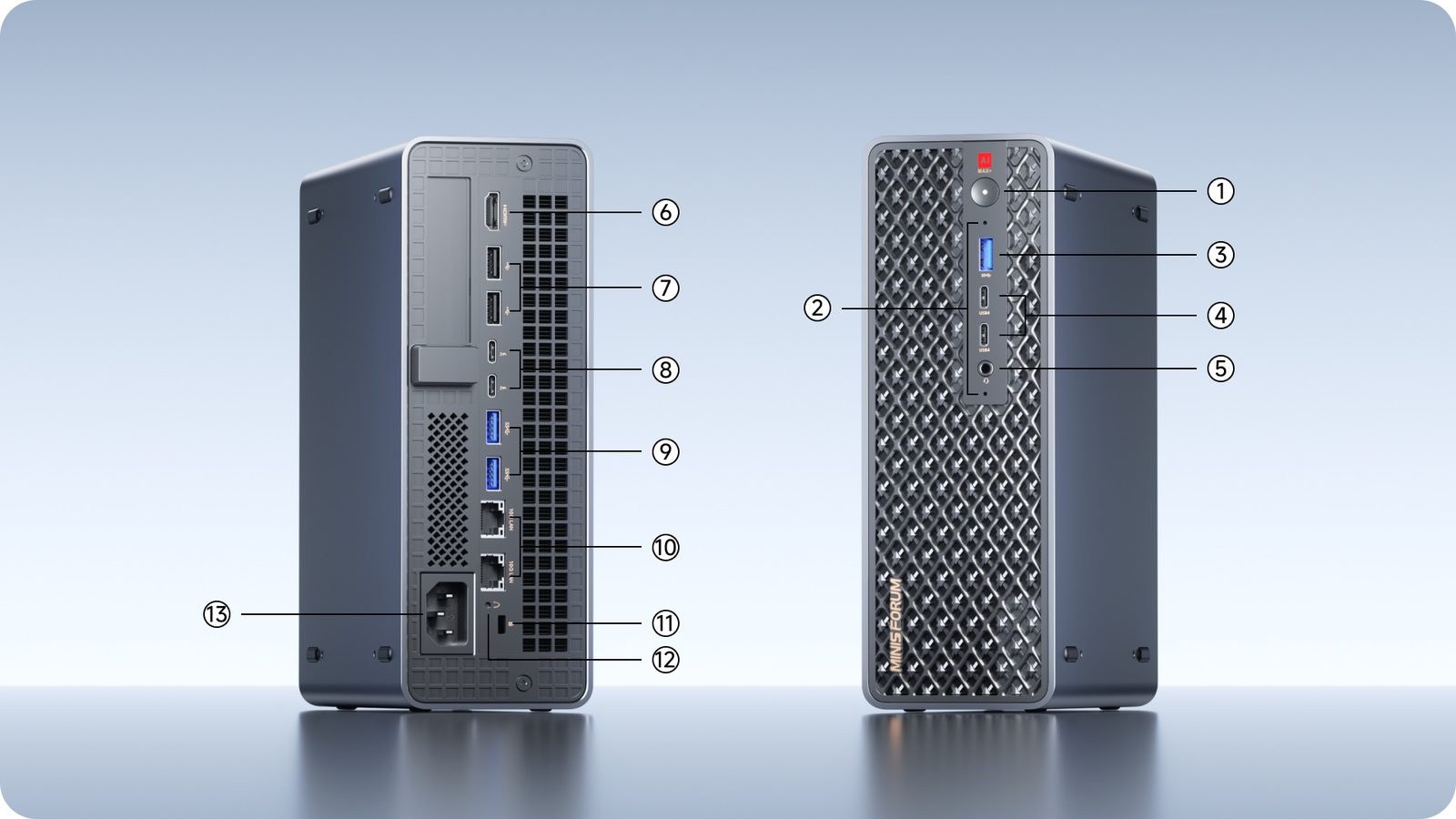
The P495 measures 222.1 by 206.3 by 77.1 millimeters, and its internal 320-watt power supply mercifully keeps a separate power brick off your desk. There are two 10-gigabit Ethernet ports for fast wired networking, two rear USB4 v2 ports rated at 80Gbps, two front USB4 ports rated at 40Gbps, Wi-Fi 7, and Bluetooth 5.4.
This is a far more convincing purchase for a developer who can name the exact workload needing that extra memory than for someone simply shopping for a powerful mini PC.
That peak rating is not a casual chatbot speed test, and it tells you very little about how much of your chosen application will actually run on the neural processing unit. A developer keeping a massive model local for privacy reasons has a clear, rational motivation to investigate this hardware, but for everyday office work, the price remains difficult to justify. If your models already fit comfortably on a smaller-memory PC, capacity alone is a weak reason to drop $7,399, but for workloads that routinely exceed older hardware limits, 192GB offers a rare room to keep your heavy lifting entirely on one compact desk.