
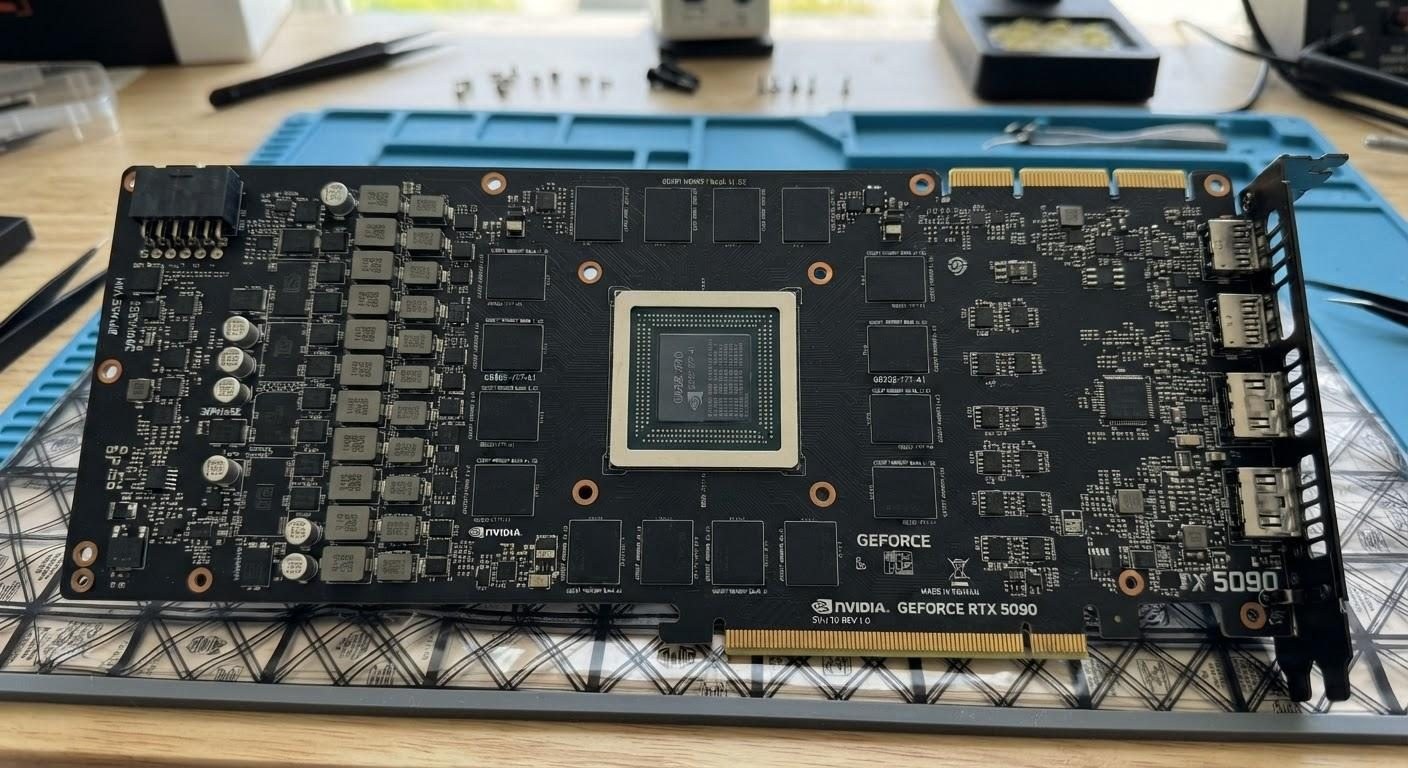
 aying a couple thousand euros for a flagship graphics card only to end up with a high-end heatsink and fans is the harsh reality of today's European secondhand market. Several cases of stripped-down GeForce RTX 5090 graphics cards have surfaced in Germany. Scammers surgically desolder the most valuable components: the GPU itself and the high-speed GDDR7 memory modules. On the outside, there is zero sign of tampering: factory warranty seals remain intact, the copper fins gleam, and the heft in your hands gives a false sense of security. Without disassembling the cooler or plugging it into a PC, spotting the dead board is impossible.
Overclocker Roman Hartung (der8auer) exposed the first incident. A buyer jumped at a Palit GeForce RTX 5090 GameRock OC listed for €1,800 against a retail price hovering near €5,000. The deal went down in person, face-to-face, but without a test bench. Once home, the buyer discovered a completely bare PCB hidden under the massive cooling assembly. Soon after, a second victim surfaced on the Hardwareluxx forums, having paid €2,250 for an identical hollow dummy from the same seller. The scammer had a polished cover story, authentic store receipts, and claimed it was just an "extra unit." The discrepancies showed up later: on one card, the PCB serial number did not match the box, while on the other, the board markings had been filed off.
Chasing a bargain left these buyers with nothing more than donor parts for replacement fans. The takeaway for the secondhand GPU market is straightforward: ignore intact factory stickers, original receipts, and clean exterior inspections. The only real insurance against buying an expensive paperweight is running a full load stress test before handing over any cash.