
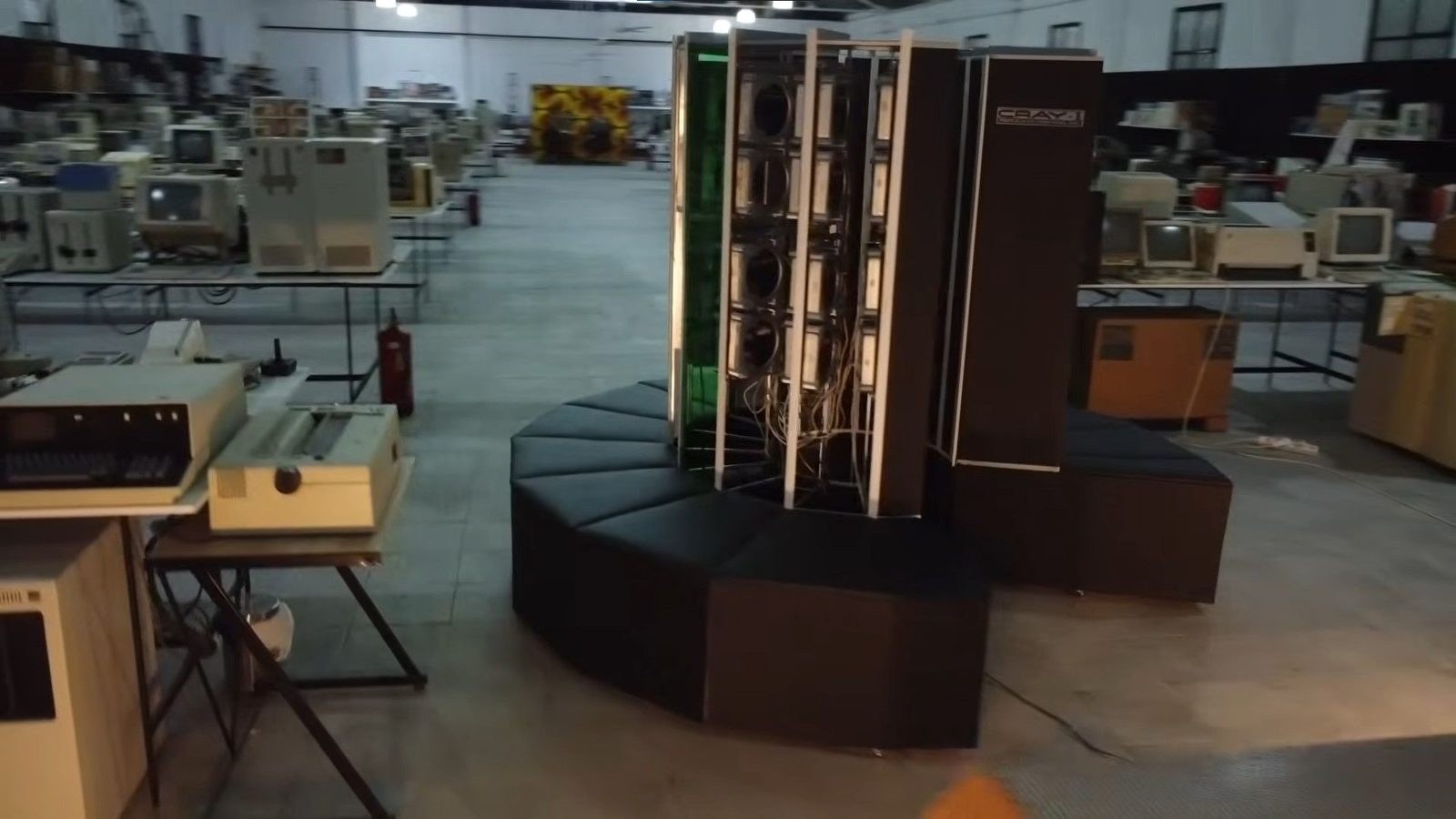
 hile marketing departments spend millions trying to convince you that your laptop is hopelessly obsolete the moment a new model drops, garage engineers are quietly proving otherwise. Spain’s Museo de Historia de la Computación has built a working replica of the legendary Cray-1 supercomputer using 30 secondhand Mac Minis, turning a pile of electronic waste into a monument against planned obsolescence.
According to Tom's Hardware, the 18-month project commemorates the 50th anniversary of both the Cray-1’s first operational run in Los Alamos and Apple’s founding. The makeshift cluster packs 25 dual-core i5 units and five quad-core i7 machines from the 2012–2014 era. Together, they muster 70 processing cores delivering a peak performance of 1.5 TeraFLOPS — roughly 9,375 times faster than the original 1976 Cray-1, which topped out at 160 MegaFLOPS. After one quad-core unit dropped offline, the cluster's current output sits at a modest 1.3 TeraFLOPS.
What this means for you
For anyone tired of endless hardware upgrade cycles, this experiment is a rare dose of reality. If machines from a decade ago can team up to embarrass a multi-million-dollar institutional supercomputer of the past, your current laptop or desktop has plenty of life left in it. You do not need a new processor to answer emails, edit photos, or browse the web, regardless of what corporate slide decks claim.
The original Cray-1 is considered the first commercially successful supercomputer, with 80 systems sold during its heyday, as Tom's Hardware noted. It crunched massive datasets for weather forecasting, aerodynamics, and nuclear physics. Its secret weapon was vector processing, a specialized technique that handles long streams of data at once. Today, as Tom's Hardware points out, that once-esoteric method is standard inside every basic smartphone and laptop chip.
The replica has 70 cores from the 30 Mac Minis, and of course, vector processing has since become the norm and a standard feature of modern CPUs.
There is also the matter of sheer infrastructure. The original Cray required a dedicated room housing a 20-ton refrigeration compressor just to keep its circuits from melting. The Mac Mini replica, by contrast, relies entirely on passive cooling through a custom convection-tower design. It runs almost silently, with the only noticeable hum coming from the Ethernet switches — and the museum even plans to swap those for silent models, as Tom's Hardware reported.
The flip side of the experiment
Before you clear out your closet and try to network a dozen old laptops into a backyard data center, remember why this belongs in a museum rather than a home office. Building a functional cluster requires wrestling with complex parallel computing protocols like MPI (Message Passing Interface), and running the setup on macOS Mojave is an exercise in software archaeology. It is a stunning art installation, not a practical replacement for a modern workstation.
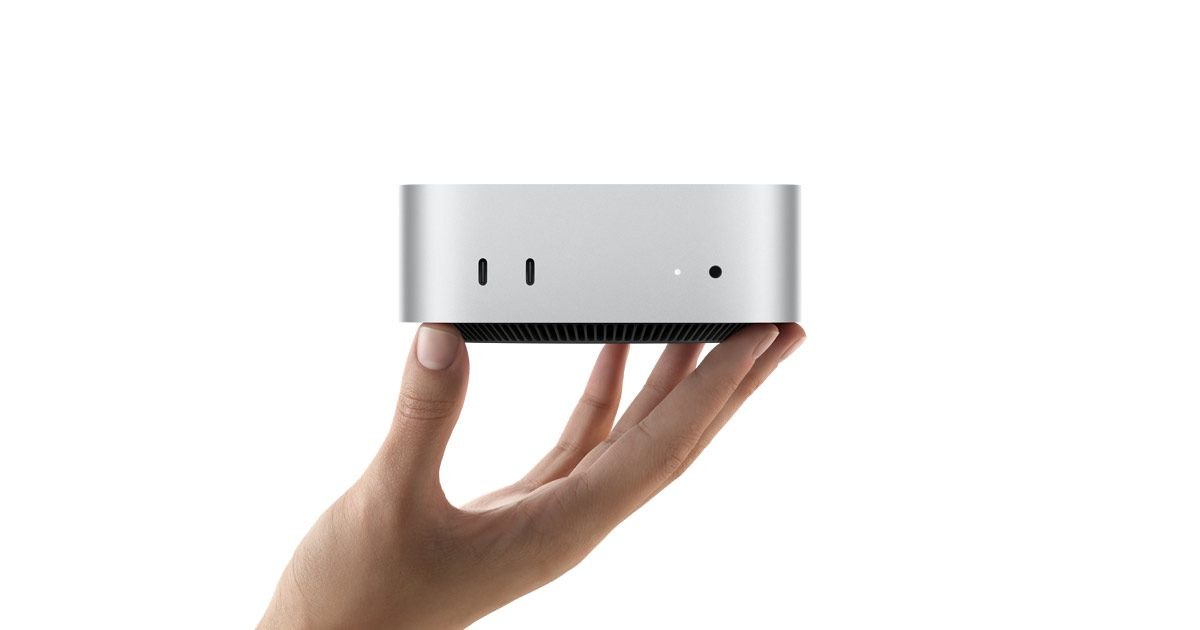
To complete the illusion, the museum built a retro-style control terminal straight out of a 1970s sci-fi film: a heavy metal desk with an embedded keyboard and multiple angled screens displaying matrix multiplication problems, as Tom's Hardware described. But the team isn't stopping at nostalgia. According to Tom's Hardware, they plan to launch a crowdfunding campaign to buy 70 to 80 modern M4 Mac Minis to fill the remaining chassis slots and crack the TOP500 supercomputer rankings.
This project serves as a sharp reminder that well-built consumer hardware outlives the artificial timelines dictated by manufacturers. That forgotten desktop gathering dust on your balcony isn't garbage yet — it's just waiting for a better excuse to run.